SteelSeries - Arctis Prime Wired High Fidelity Gaming Headset for PC, PS5, PS4, Xbox X|S, and Xbox One - Black
- Key Specs
- Connection Type: Wired
- Water Resistant: false (Resists some degree of water penetration.)
- Built-In Microphone: true
- Carrying Case: false
- Microphone Features: Retractable, Noise cancelling
- Headphone Fit: Over-the-Ear
- Adjustable Headband: true
- Compatible Platform(s): Windows, Xbox One, Xbox Series S, Xbox Series X, PlayStation 5, PlayStation 4, Nintendo Switch
- Voice Assistant Built-in: Not Applicable (A digital assistant built into the device that uses voice commands to answer questions and control smart devices.)
- General
- Product Name: Arctis Prime Wired High Fidelity Gaming Headset for PC, PS5, PS4, Xbox X|S, and Xbox One
- Brand: SteelSeries
- Model Number: 61487
- Color: Black
- Audio
- Sound Isolating: true
- Minimum Frequency Response: 20 hertz (Describes the maximum range of frequencies or musical tones a product can reproduce, from very low tones to very high treble tones. The minimum frequency or musical tone the speaker can reproduce. High treble tones have higher frequencies while low tones and deep bass have lower frequencies.)
- Maximum Frequency Response: 44 kilohertz (Describes the maximum range of frequencies or musical tones a product can reproduce, from very low tones to very high treble tones. The maximum frequency or musical tone the speaker can reproduce. High treble tones have higher frequencies while low tones and deep bass have lower frequencies.)
- Driver Size: 40 millimeters
- Connectivity
- Connection Type: Wired
- Connector Size: 1/8 in. (3.5mm)
- Detachable Cord: true
- Features
- Water Resistant: false (Resists some degree of water penetration.)
- Waterproof: false (Designed or treated to be impervious to water in certain situations. Products are tested under controlled laboratory conditions and then assigned an Ingress Protection (IP) rating to denote the degree of protection from water ingress. The level of protection may decrease over time with natural wear of the product.)
- Built-In Microphone: true
- Carrying Case: false
- Microphone Features: Retractable, Noise cancelling
- Controls: Volume, Mute
- Body Metrics Measured: Not Applicable
- Bone Conducting Technology: false
- Lighting Type: None
- Design
- Headphone Fit: Over-the-Ear
- Style: Gaming
- Adjustable Headband: true
- Foldable Design: true
- Compatibility
- Compatible Platform(s): Windows, Xbox One, Xbox Series S, Xbox Series X, PlayStation 5, PlayStation 4, Nintendo Switch
- Voice Assistant Built-in: Not Applicable (A digital assistant built into the device that uses voice commands to answer questions and control smart devices.)
- Material
- Ear Cushion Material: Vegan Leather
- Headband Material: Steel
- Warranty
- Manufacturer's Warranty - Parts: 1 year
- Manufacturer's Warranty - Labor: 1 year
- Other
- UPC: 810052980140
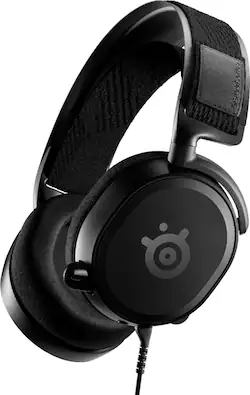
Every aspect of the Arctis Prime headset was meticulously designed with a single goal in mind: victory. Co-developed with the world's leading competitive players, the Arctis Prime headset has advanced high fidelity audio drivers, lightweight durable metal construction, noise-isolating ear cushions, noise-canceling Discord-certified mic, detachable 3.5mm cable, on-headset controls.
- High Fidelity Audio Drivers: Advanced sound drivers calibrated for maximum detail separation at the highest competitive levels of gameplay
- All-Platform Capability: Made for all gaming platforms, including PC, PS5, PS4, Xbox Series X|S, Xbox One, and Switch via the universal 3.5mm wired connection.
- Discord-certified ClearCast Microphone: Advanced bi-directional mic design for superior noise cancellation and crystal-clear voice comms
- Lightweight Aluminum Alloy and Steel Construction: Lightweight steel and aluminum alloy construction offers maximum durability and a consistent fit
- Noise Isolating Leatherette Ear Cushions: Premium soft ear cups allow you to hear less background noise so you can focus comfortably
- On-headset Controls: Easily adjust volume on-the-fly and mute the microphone directly on the headset without fumbling with the cable or settings in the heat of battle.
- Detachable 3.5mm Cable: Universally compatible with all gaming platforms and detachable cable at both ends for easy transport and damage protection
Whats Included
- Arctis Prime Headset
- Product Manual
Product Manuals
Q: Does this headset connect properly to the xbox series x controller ?
A: Yes, it comes with a 3.5 mm jack with an extension cable for pc using audio and mic.
Q: My steelseries pros+DAC are broke at the earcup. Can i use these with the DAC as a replacement?
A: Yes, this should work, but you'd need an adapter (GameDAC 3.5mm adapter) to convert from the 3.5mm on the Prime headset to the GameDAC port.
Q: What is the length of the cable?
A: The main cable is 4ft (3.5mm connector) and there is an extension cable for PC which adds another 6ft (Dual 3.5mm). The maximum for PC is 10ft if you combine them.
Q: Is this compatible with Steelseries GG?
A: I'm sorry but the headset connects through 3.5mm headphone jack so it wont work, Find a headset with a USB hookup and that will work.