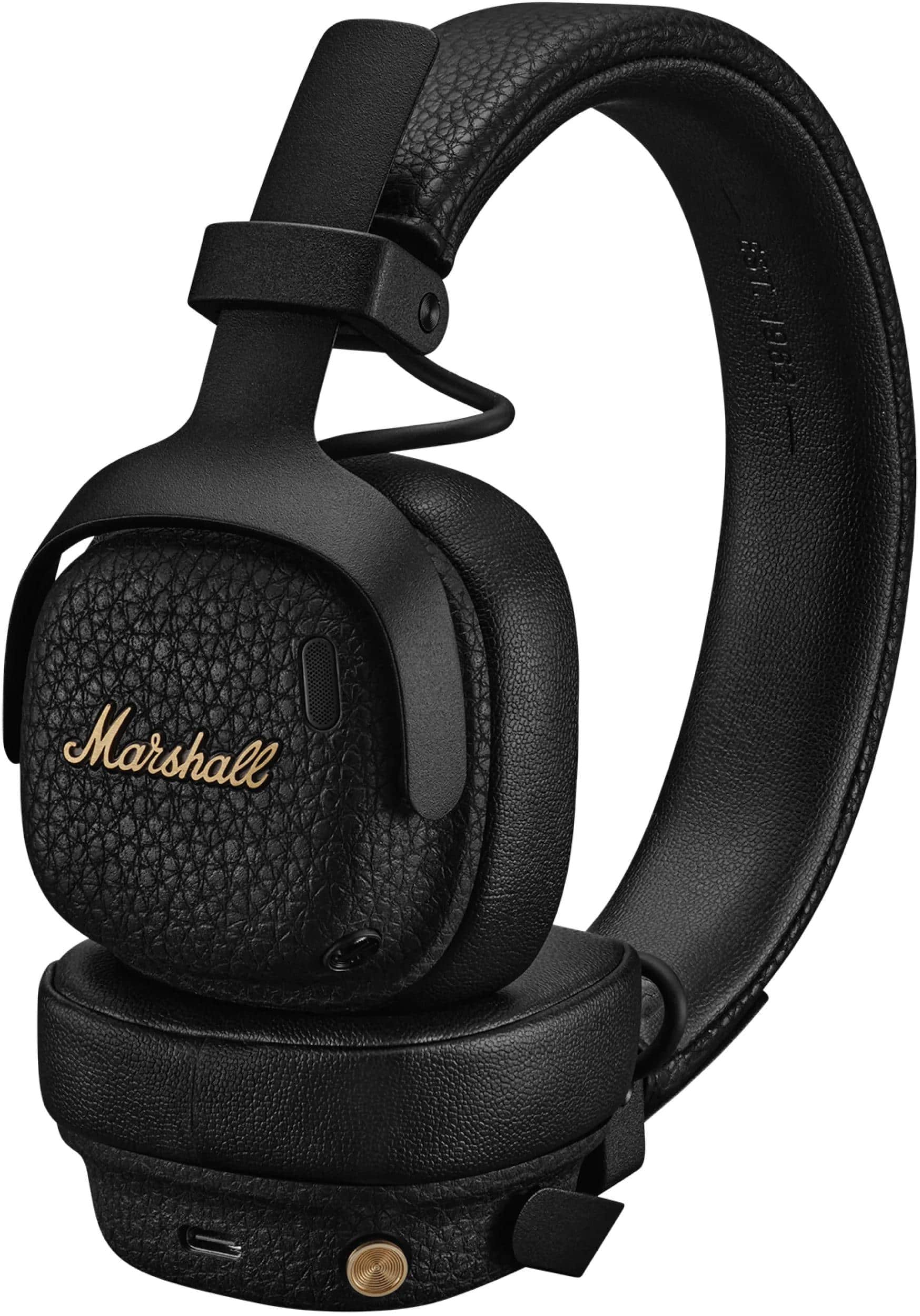
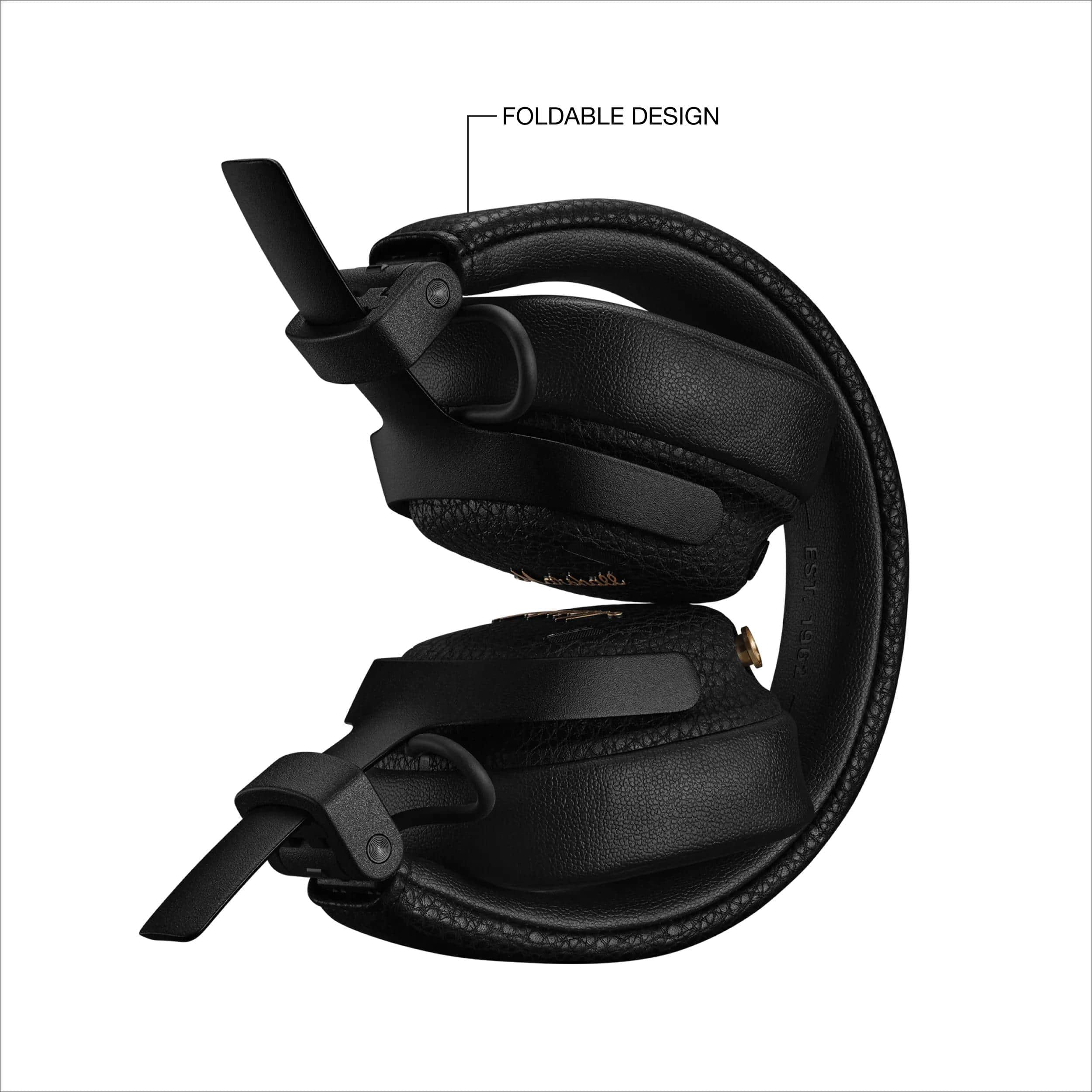
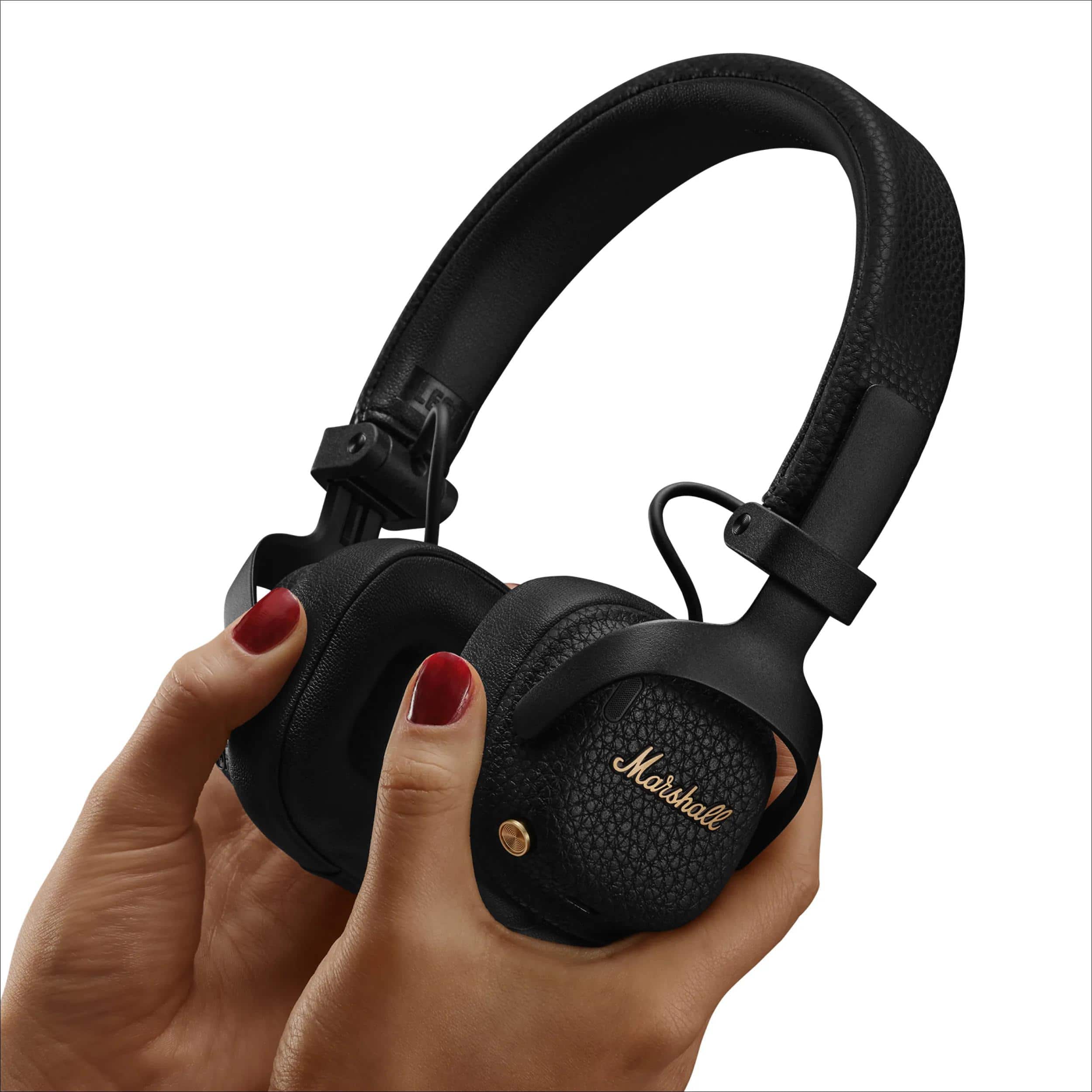
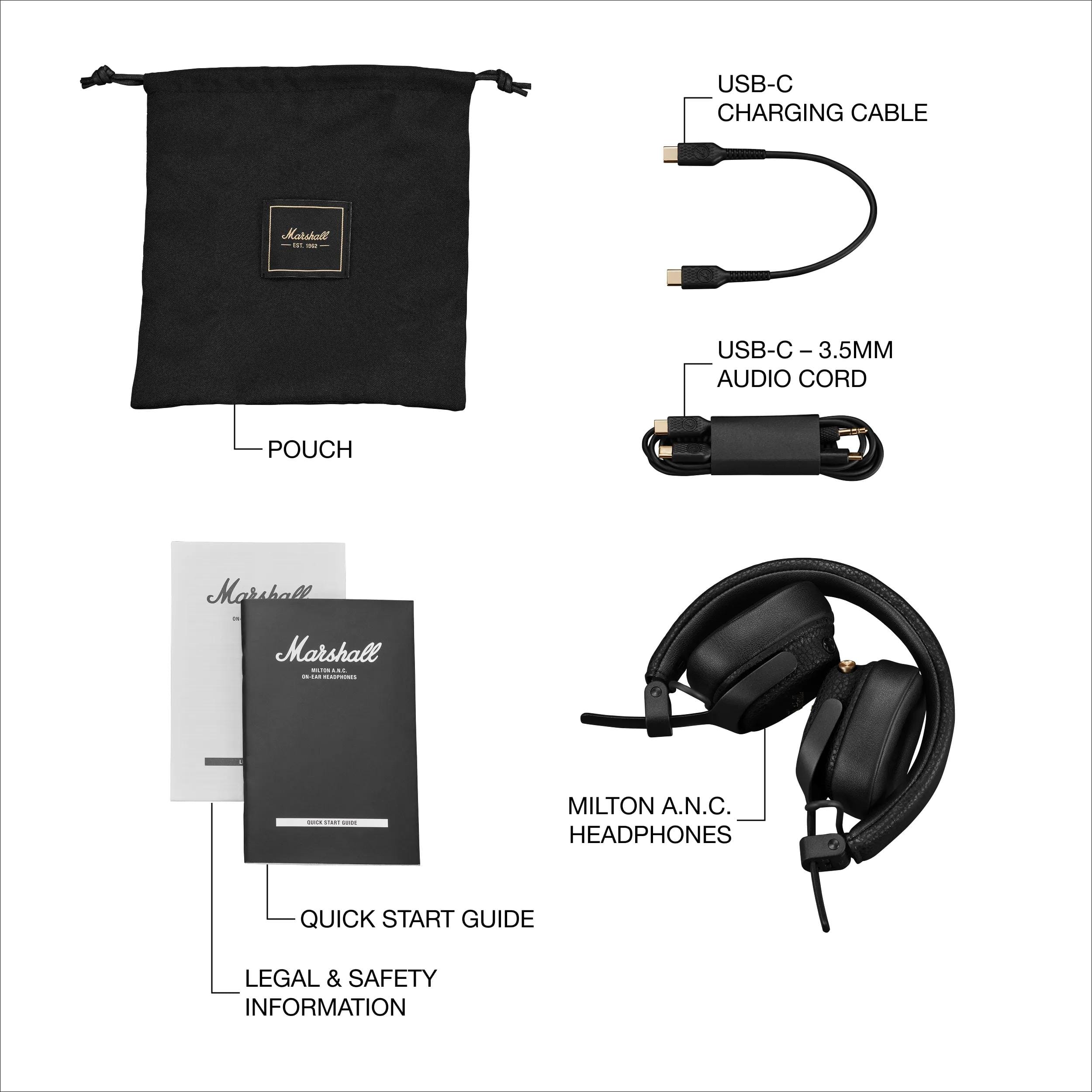
A:AnswerMilton is foldable in the same way as Major. Due to being slightly larger in size it is slightly larger than Major when folded but it is very portable and perfect for travel. With the included soft pouch, it’s perfect and safe in a bag for travels or commuting.
A:AnswerMilton works well to use for phone calls and online meetings. We have included environmental noise cancellation microphones (ENC microphones) to help to reduce surrounding noise.
A:AnswerFirst time / pairing mode from off:
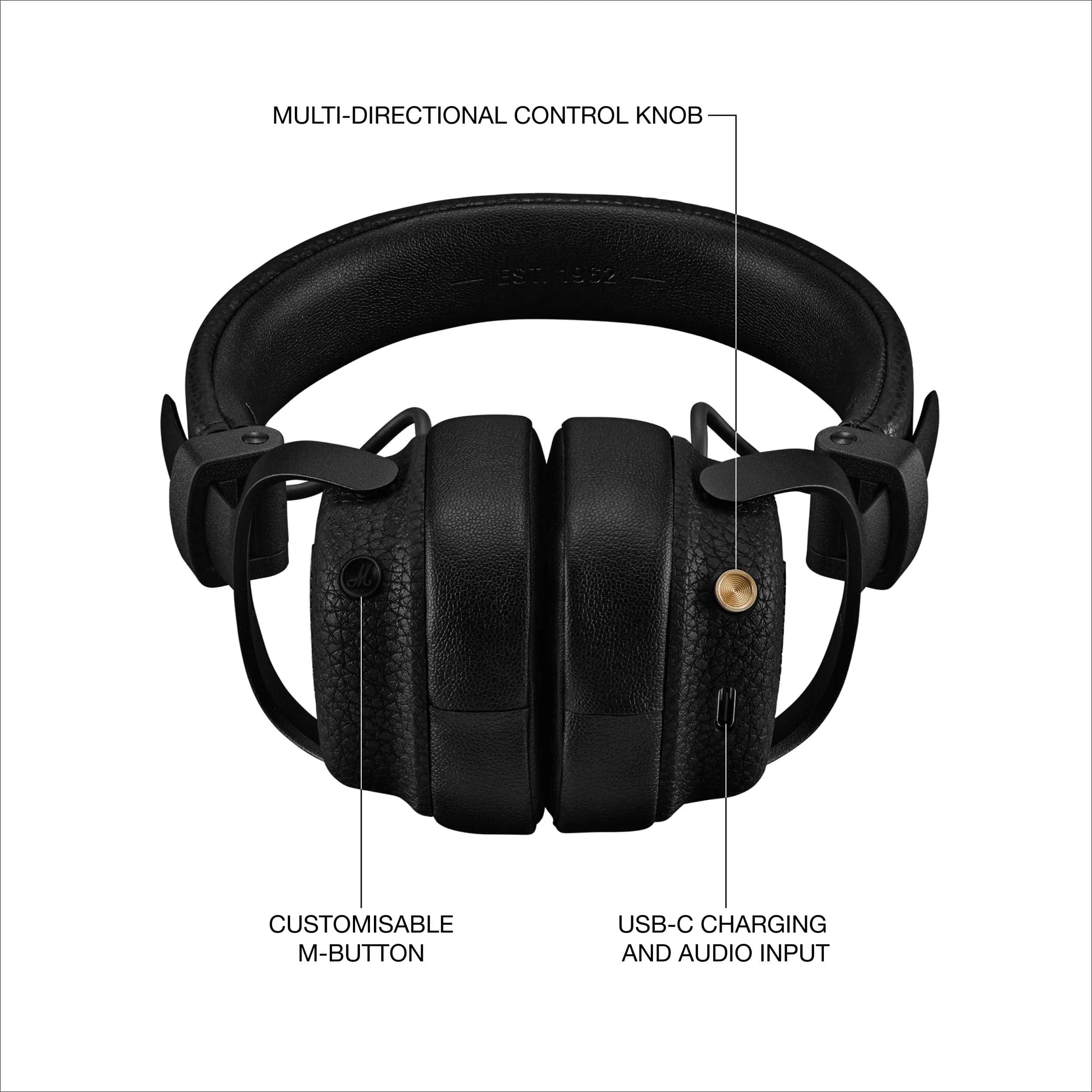
Turn the headphones off, then press and hold the control knob until the LED changes to a slow blue pulse — that means pairing mode is active. Then select “Milton A.N.C.” from your device's Bluetooth list.
If the headphones are already on / adding new BT device:
Double-press the control knob and the LED turns to a slow blue pulse, then select "Milton A.N.C." from your device's Bluetooth list.
Good to know:
The headphones can connect to two devices at a time and remember up to 8 previously paired devices. When in range, they'll automatically try to reconnect to the last connected device.
A:AnswerYes, Milton can be used with a USB-C audio cable. We include a USB-C to 3.5mm audio cable in the box. Milton also works with USB-C to USB-C audio cables.
If the battery is empty Milton will not be possible to listen to with the audio cable.
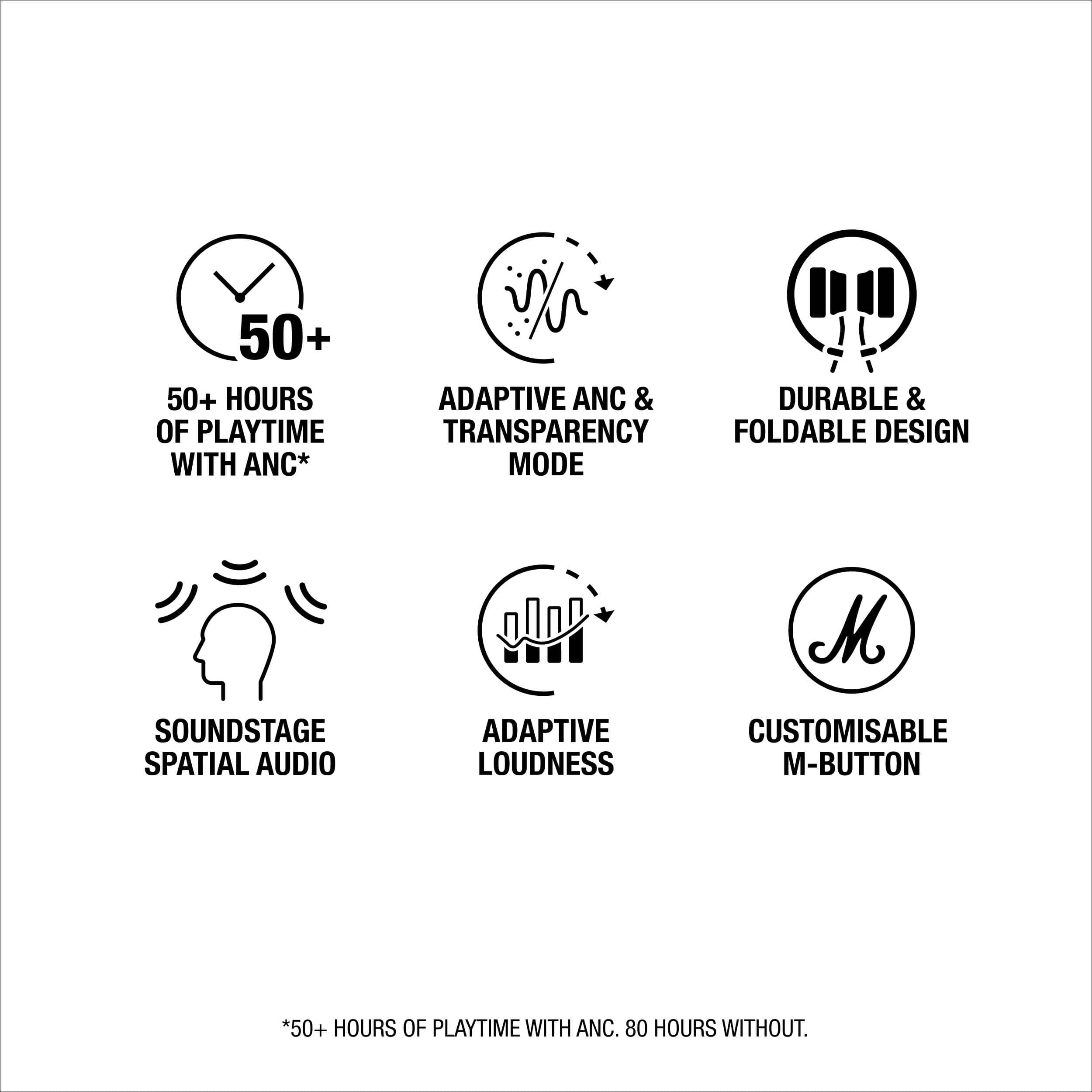
A:AnswerMilton has 50 hours of playtime with ANC or transparency mode activated. If you use your Milton ANC between 3-6h per day that means that it will be required with 1-2 weeks between charges. Without ANC on, the playtime will be 80 hours.
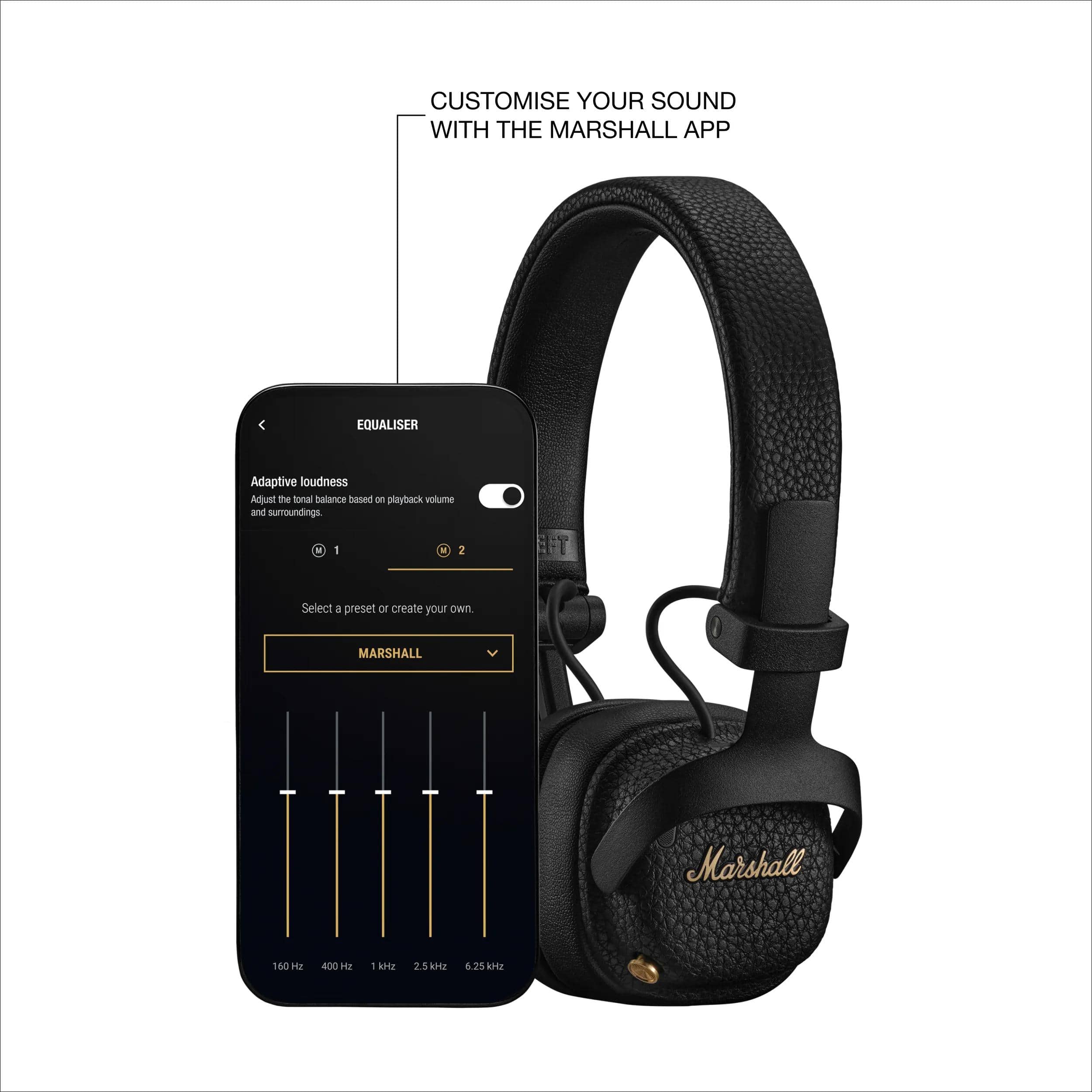
A:AnswerMiton has the Marshall signature sound, same as Major and Monitor. If you like the sound of those you will like Milton as well. If you prefer to be able to adjust the sounds settings to your preferred preference you have that option in the EQ settings in the app.
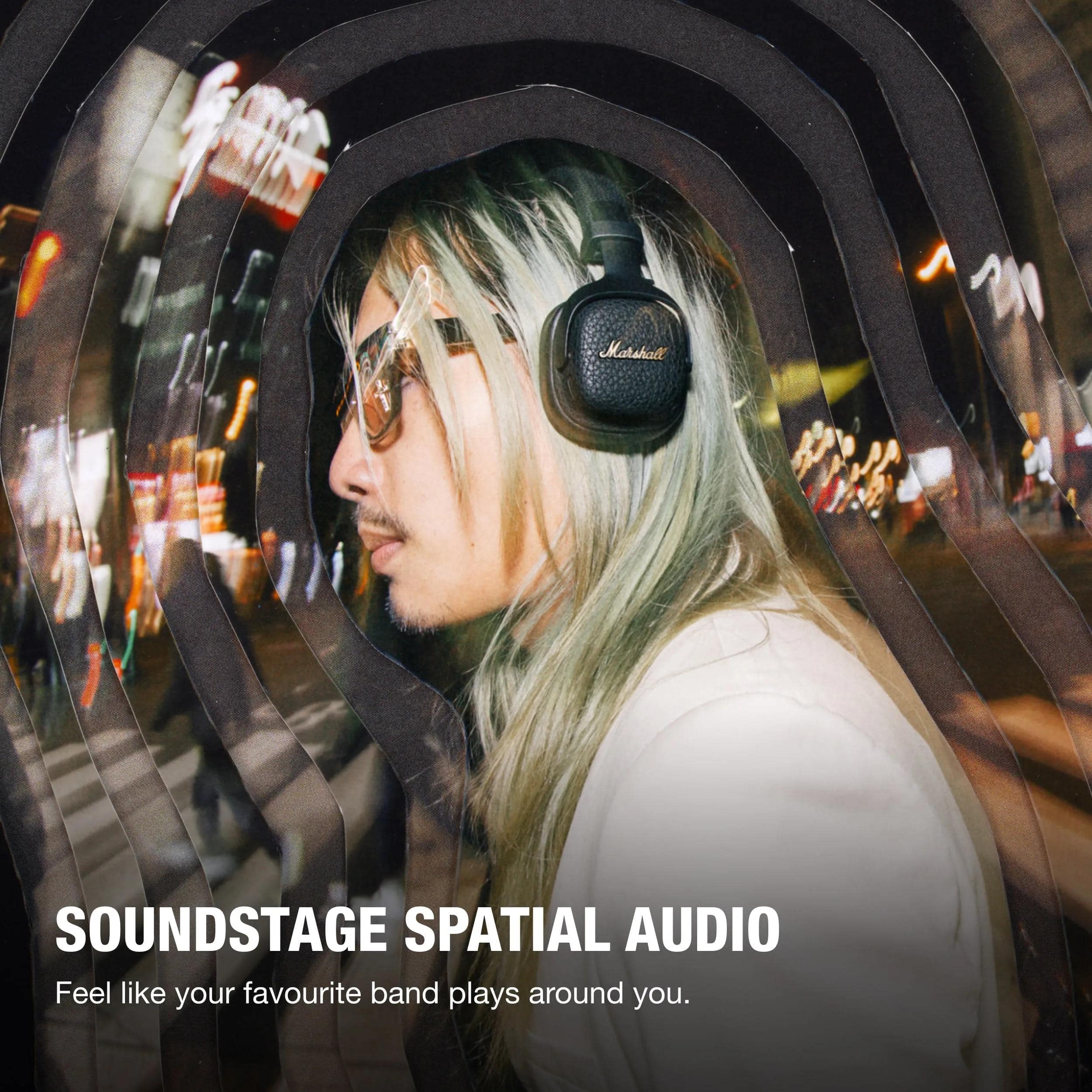
When it comes to Soundstage, it refers to a perceived three-dimensional space where sound seems to exist when you're listening to audio. It’s basically a feeling that instruments or voices are positioned at specific locations around you, not just inside your head or that it is coming from a single speaker.
Spatial audio is the technology behind Soundstage, enabling sound to feel like it’s coming from specific directions.
A:AnswerYes, you can toggle between ANC and Transparency mode by pressing the M-button once. You will hear an activation sound when the ANC is powered on as well as a sound when the mode is changed to transparency mode.
If you prefer to wear Milton without ANC or transparency mode. You can change and set ANC to off with the M-button toggle in the app.
A:AnswerThe adaptive active noise cancellation on Milton works well and you will immediately feel like you are in your own space as you turn it on. Milton works extra well in environments such as open offices and commuting where it is a lot of low frequency sounds. There Milton will cancel out the disturbing sounds which will enable you to focus while still being able to hear if someone is calling on you.
A:AnswerWith Milton A.N.C. you can create your own sphere with the adaptive ANC. You can still be reached by your environment as you will be able to hear when people in your proximity are calling on you. To get a better noise cancellation with the on-ear design we have increased the size of the ear cushions from Major V. This also gives you a higher sense of comfort which makes the headphones possible to wear for longer periods of time. Milton A.N.C. is perfect for working in the office or for commuting and short travels.
A:AnswerMilton A.N.C. is an on-ear headphone with adaptive active noise cancellation. Milton is more lightweight compared to Monitor III and since it is an on-ear headphone it’s better at ventilating your ears so it gets less closed in and warm compared to the over-ear Monitor III.
You get the same type of portability as you have on Major V but with the possibility to be able to get higher focus and create your own sphere with the adaptive ANC. You also have the possibility to further enhance your music experience with adaptive loudness and soundstage spatial audio on Milton A.N.C.