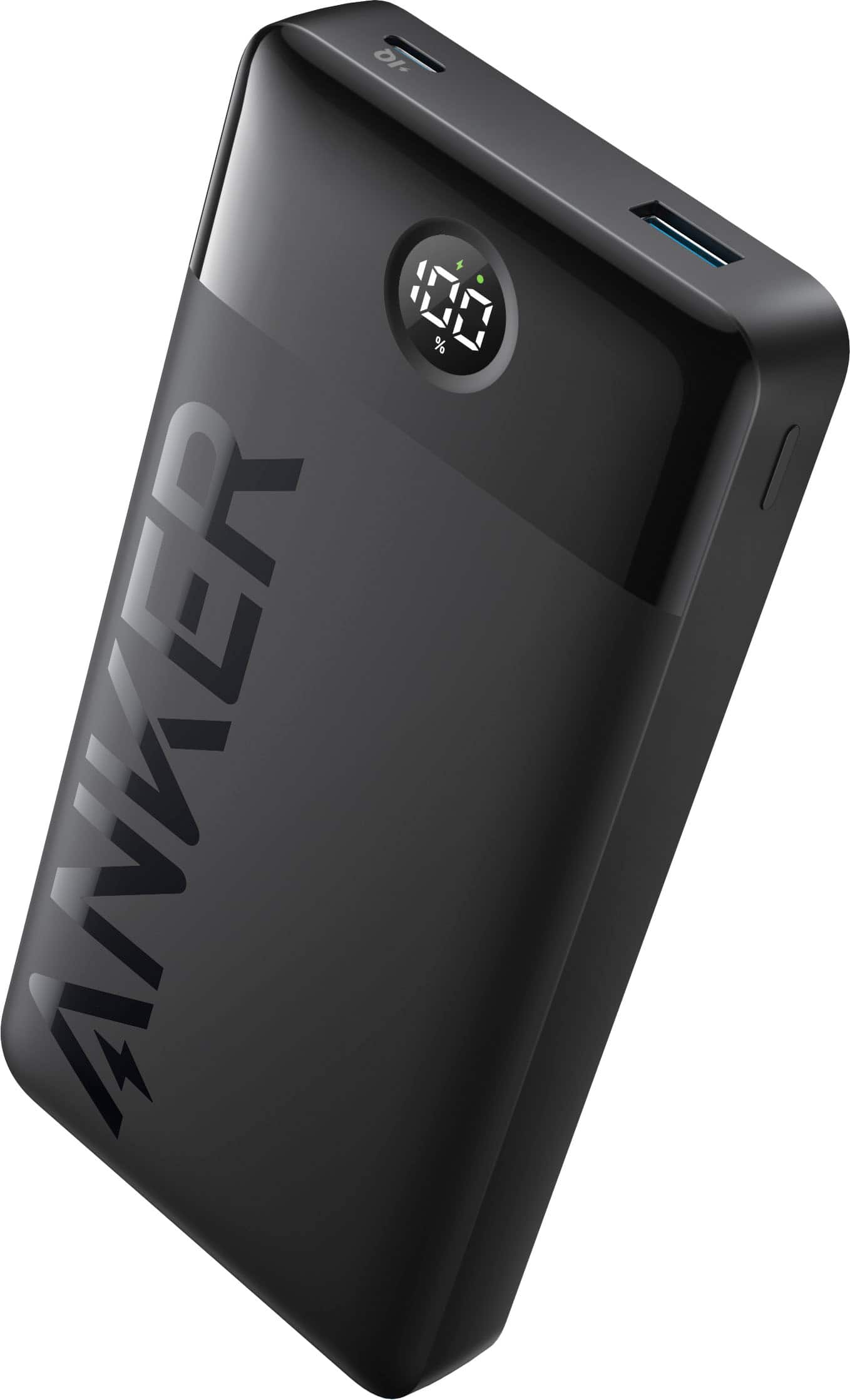
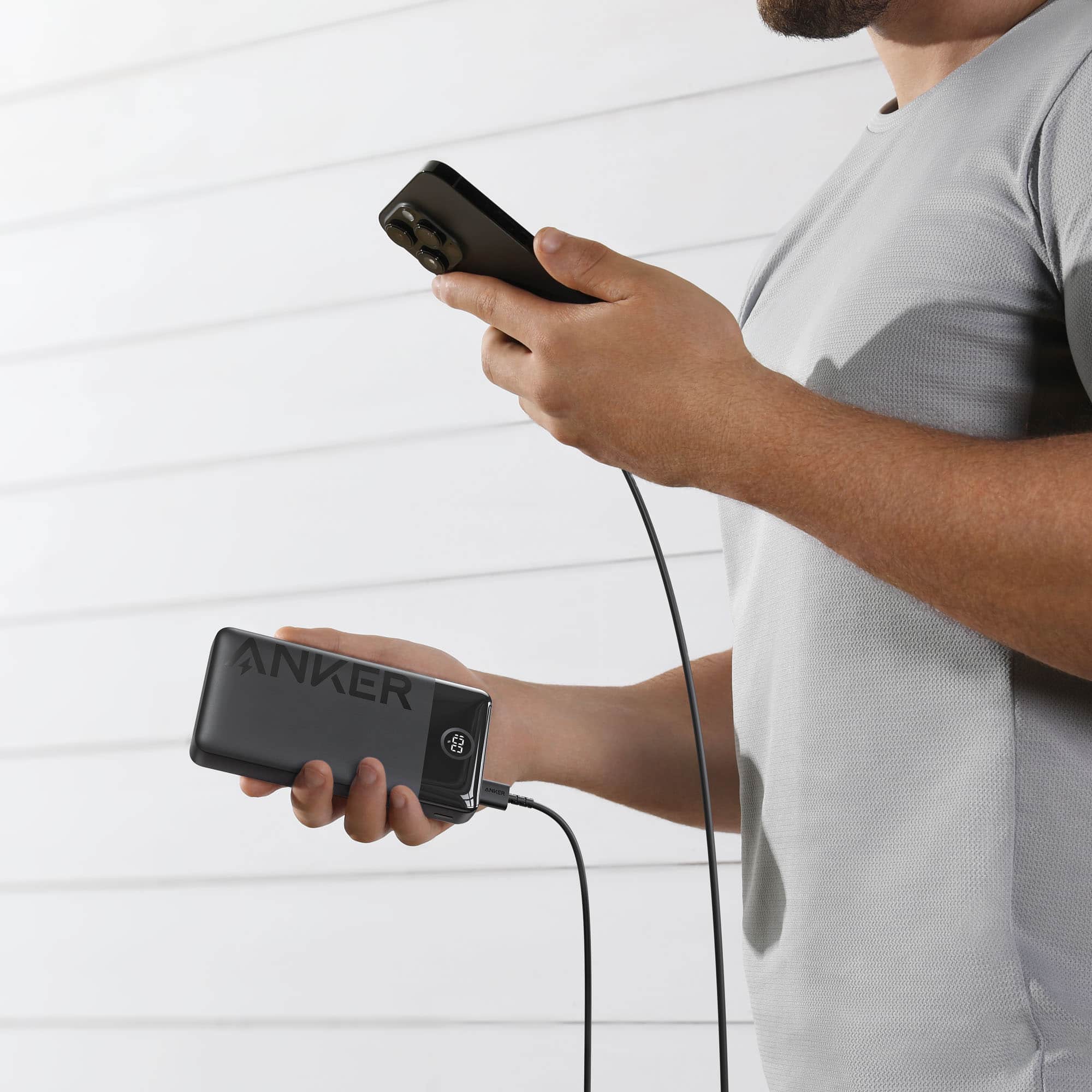
A:AnswerYes, you can charge an iPhone 11 Pro Max with the Anker Power Bank (20,000mAh, 15W, 2-Port). This power bank supports Anker's PIQ 3.0 technology (QC and PD), making it compatible with the iPhone 8/11/12/13/14 series and other devices. The USB-C port can provide up to 20W power, and the USB-A port up to 18W for charging. It can fast charge an iPhone 11 Pro Max effectively.
A:AnswerThe "Insignia™ - 25W Compact Wall Charging Kit" has a wattage of 25W, which may provide sufficient power for the Anker Power Bank (20,000mAh, 15W, 2-Port). However, it is essential to consider the input requirements of the power bank to ensure compatibility.
The Anker Power Bank with 20,000mAh capacity typically requires a PD 18W wall charger to fully recharge in 6.5 hours via its USB-C input (PD-compatible). If your Insignia charging kit supports Power Delivery (PD) and provides appropriate input specifications (USB-C Input: 5V⎓3A or 9V⎓2A), then it should work with this power bank.
You might want to verify whether the Insignia charger supports the required input specifications for optimal recharging.
A:AnswerThere are two ports. One is for charging the phone bank, but then you can use that to charge a phone. The other port is for charging a second phone.
A:AnswerYes, it is likely safe to use an Anker Power Bank to power a Zoom Multistomp MS-70CDR+ effects pedal that requires a DC5V input via USB-C.
Anker Power Banks such as the 537, 521, 737, and Prime models are equipped with advanced charging technologies like PIQ 3.0 (PD and QC), which include support for low-powered devices via their Trickle Charging Mode. They provide variable output specifications across USB-C and USB-A ports, including 5V ⎓ 3A, which aligns with the DC5V input requirement for your pedal.
However, ensure:
The power bank features USB-C output (e.g., USB-C1 or USB-C2 ports).
It provides the required 5V ⎓ 3A output compatible with your pedal.
You're using a compatible cable for connecting the pedal to the power bank.
For exact compatibility and peace of mind, verify that the power requirements (e.g., amperage and voltage stability) of your pedal are consistent with the specifications outlined in your selected Anker Power Bank model.
A:AnswerThe Anker Power Bank (20,000mAh, 15W, 2-Port) supports the following specifications for individual ports:
USB-C Output:
5V ⎓ 3A / 9V ⎓ 2.22A (15W and 20W PD)
USB-A Output:
5V ⎓ 3A / 9V ⎓ 2A / 12V=1.5A (15W, 18W)
Additionally:
Total Output via USB-C: 9V ⎓ 2.22A (20W)
Total Output via USB-A: 5V ⎓ 3.6A (18W)
This aligns with the requirement of powering devices like the GoPro 11 (5V ⎓ 2A minimum). Please ensure you use a compatible cable for optimal performance.
A:AnswerWithin seconds.
When it senses a dead phone battery it triangulates the location of who you’re trying to call and rapidly deploys a tin can and string that rocket towards your intended caller.
The sound quality is a little low but it works.
A:AnswerAnker's portable batteries work all over the world as long as you have the correct wall charger (not included). For example, it will work in the US if you have a US-version wall charger, and the same battery will also work in the UK if you have a UK wall charger.
What matters is not the output of the power in the building, but the output of the wall charger you use. If the wall charger has an output that coincides with the input needed for your powerbank, it will be fine.
A:AnswerBased on the information available, there is no mention of Anker power banks carrying CCC (China Compulsory Certification) or 3C certification specifically. The provided details focus on technical specifications, compatibility, and charging technologies like PD (Power Delivery), QC (Qualcomm Quick Charge), etc. Information regarding specific certifications such as CCC/3C was not included.
Let me know if you need more details about Anker power banks!