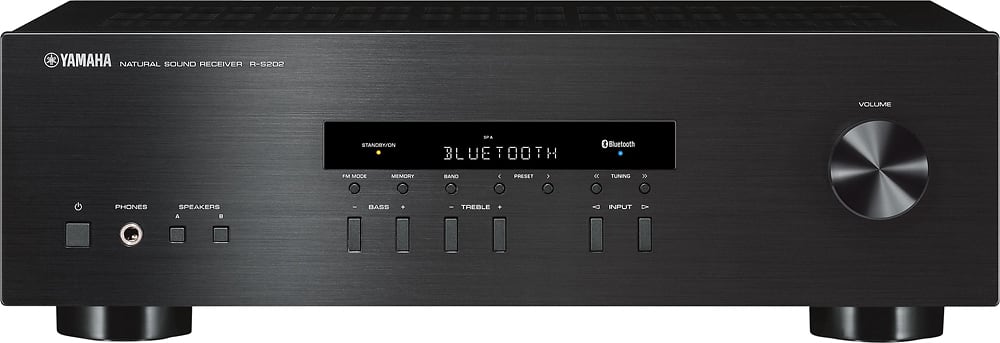
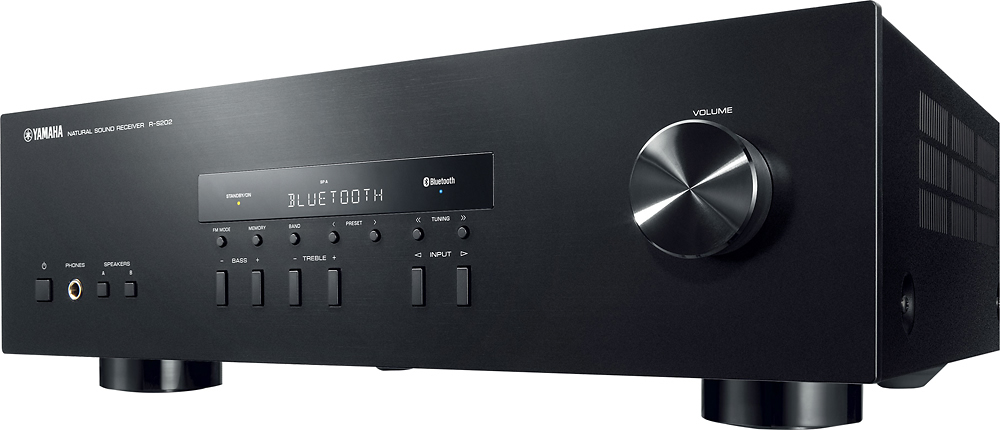
A:AnswerThere is not a "Tape 2" button on the unit nor the remote. There is an "Input" button(s) though with "<" indicating left and ">" indicating right, which will navigate you from Tuner, Cd, Line 1-3, and bluetooth.
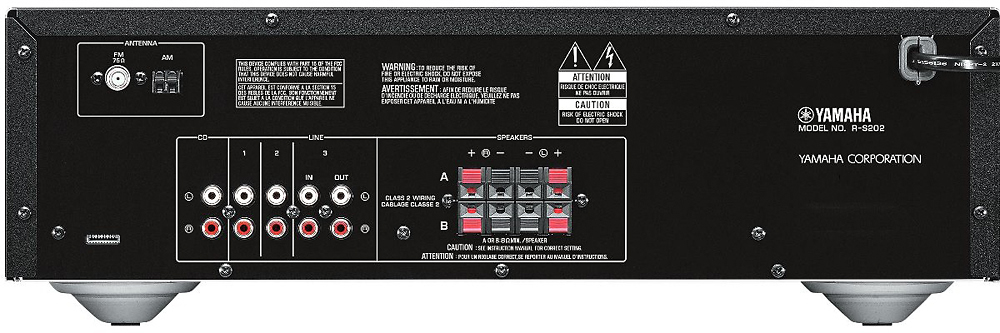
A:AnswerI use this amp for my office connected to my computer with corner mount book shelves and a non-powered (passive) sub. The answer is yes and no. There are no subwoofer connection on this amp. I connected a non-powered subwoofer to the B channel and it's not as good as a dedicated subwoffer out but it helped round out my base.
If you have a powered (active) subwoofer and it has line in connections (round red and white) you can connect to the line out on the amp on channel 3. If you have left and right speaker INPUT connections on your subwoofer you can use the B channel speaker output from the amp. An active subwoofer will sound better than a passive subwoofer because it has it's own amplification.
It's a nice basic amp that sounds good, hope this helps.
A:AnswerThere's a couple to ways possible. Depending on what type of output method your mixer has. Traditionally you would just link the two units with RCA's (usually red/ white or black) from the mixer output(s) to the receivers input(s) or CD. You can even pair it if the mixer has bluetooth. If your mixer doesn't have RCA output jacks but has an ear phone jack, then you would have to get a headphone to RCA adapter which has an earphone plug on one end and RCA's on the other.
A:AnswerThe fuse would be a great place to start your trouble shooting. However the fact that you're getting some sound is indicative that it is not the fuse. If you do not have an odometer, try another speaker, that should help rule out if the problem is the speaker or the receiver. Make sure set A or B is appropriately selected for hook up.
A:AnswerAny Receiver/Amp will run warn, however if it runs too hot to touch you turn it off, and send the unit for service. Make sure you are not blocking any of the receiver's ventilation, as this will prevent heat dissipation and cause over heating and eventual unit failure or worse fire.