A:AnswerI’m not sure if this will help you or not. I do not have Bose 5.1 speakers, but I am using two Bose 100 bookshelf speakers with this Yamaha receiver. My Bose speakers work great with this unit.
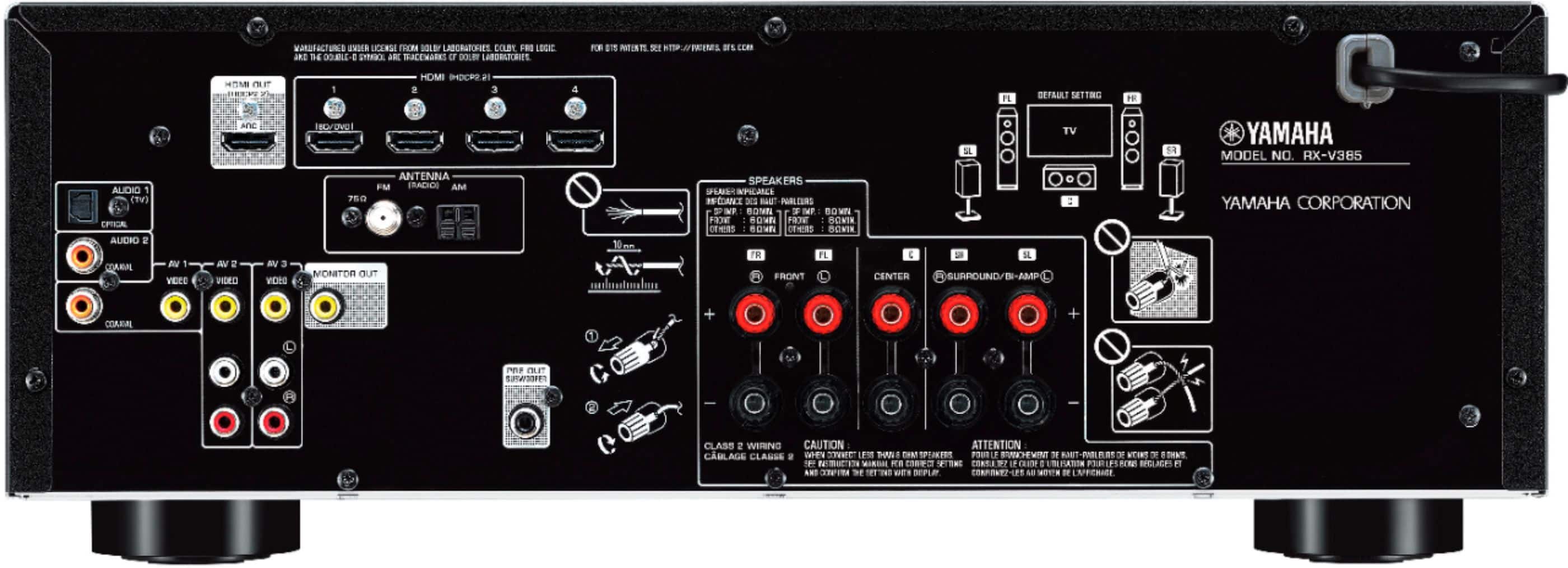
A:AnswerYou should be able to train the Comcast remote to support Yamaha codes. Regarding the original question The HDMI ports are per-designated at least 1 and 2
A:AnswerMust be a typo - It is real clean for me at all levels - not a technical response, don't have the equipment just good ears and an love for audio equipment
A:AnswerI’m not sure about the model that you have but from what I’ve seen on the connections on this, it’s just a very basic connection that I’ve seen on several receivers. I really doubt the speaker connections are different, but I’m sure the input and output will be different and upgraded including some of the older style connections.
A:AnswerYes it’s HDR10, the most current standard. I guess it really doesn’t matter. If what matters to you is getting the sharpest picture you can then I guess it does matter.
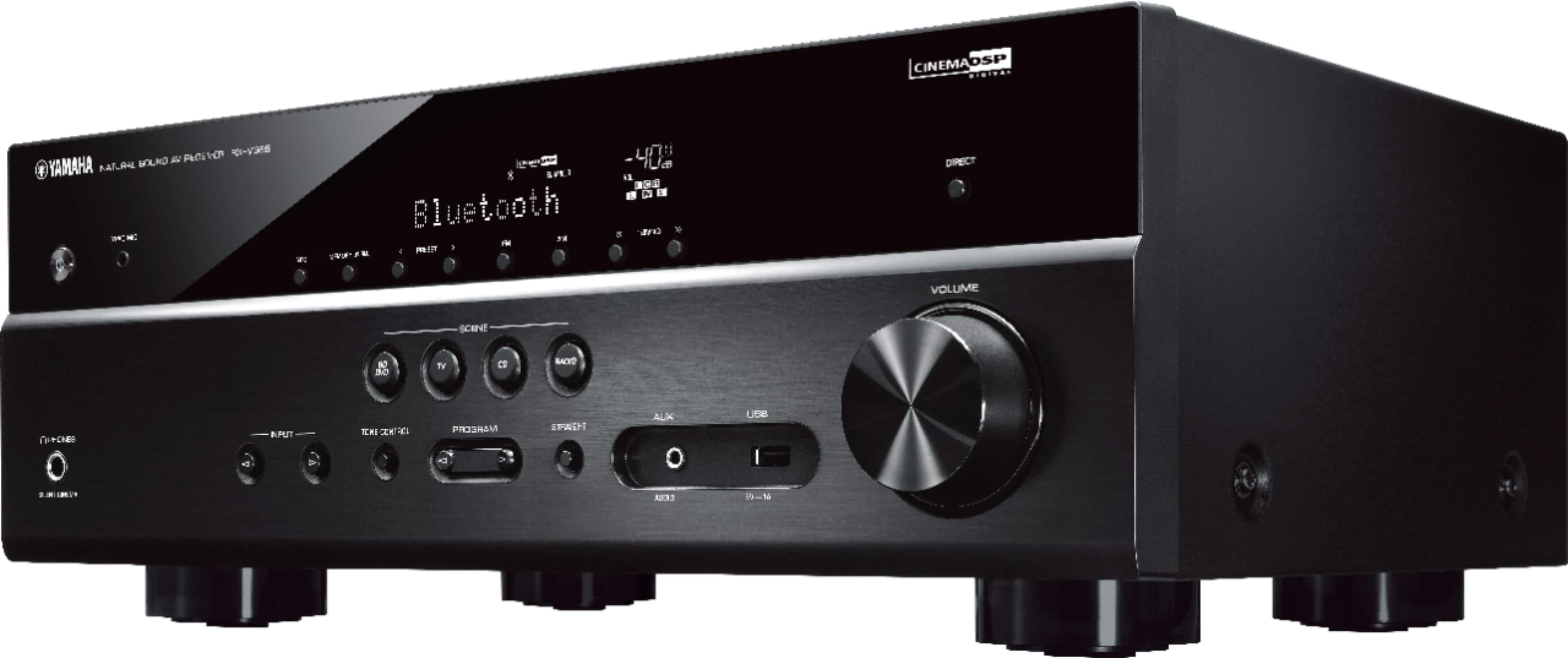
A:AnswerI feel that the Yamaha receiver is everything I needed to replace an old teac receiver I had for years. The true sound that is accompanied with my keenwood speakers has never been better. I high recommend this receiver.
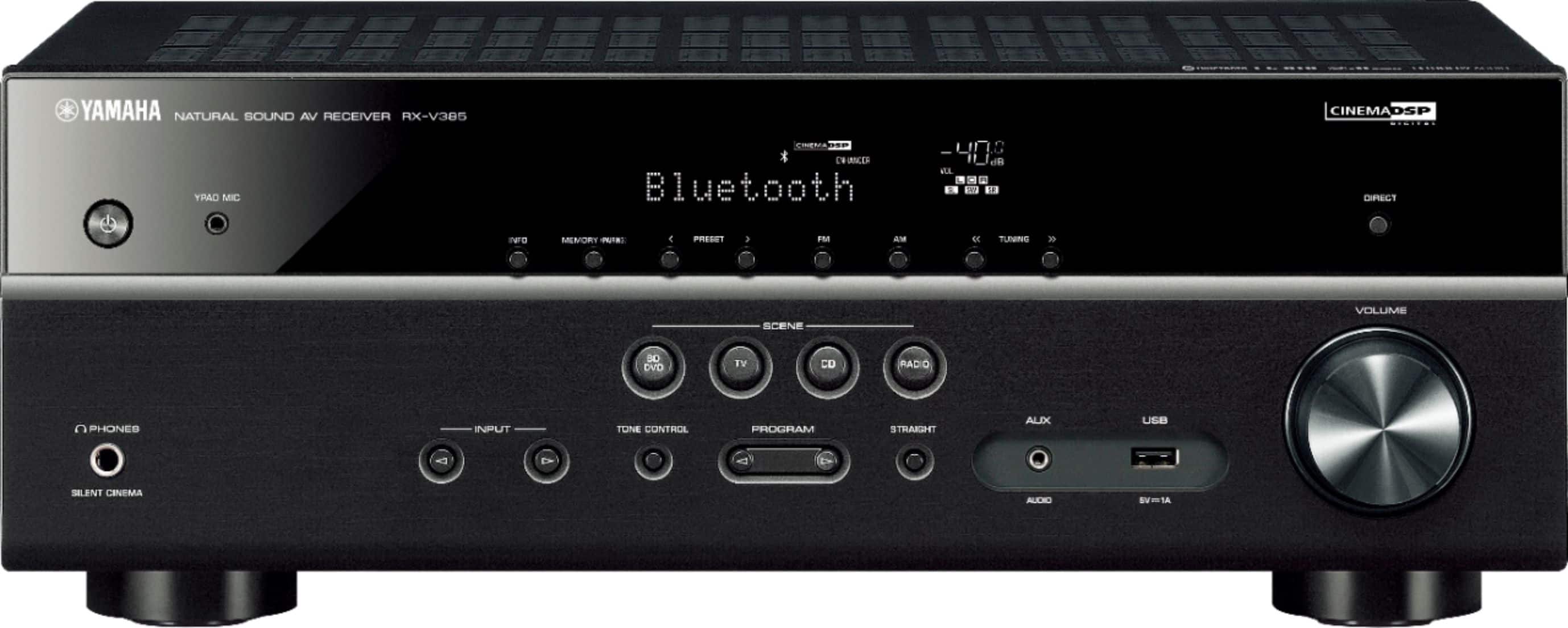
A:AnswerLooks like I answered my own question. The first reply said NO it cannot transmit, however I found a .PDF user manual from for this receiver, and it says in the official manual that it does in fact transmit via Bluetooth. You can use wireless headphones and wireless speakers with this receiver.
A:AnswerConnect the TV sound via the optical input (Audio !) for streaming services. Use HDMI for Set Top Box (Direct TV, Uverse, etc.) connection. Use Optical connection for streaming services audio only.
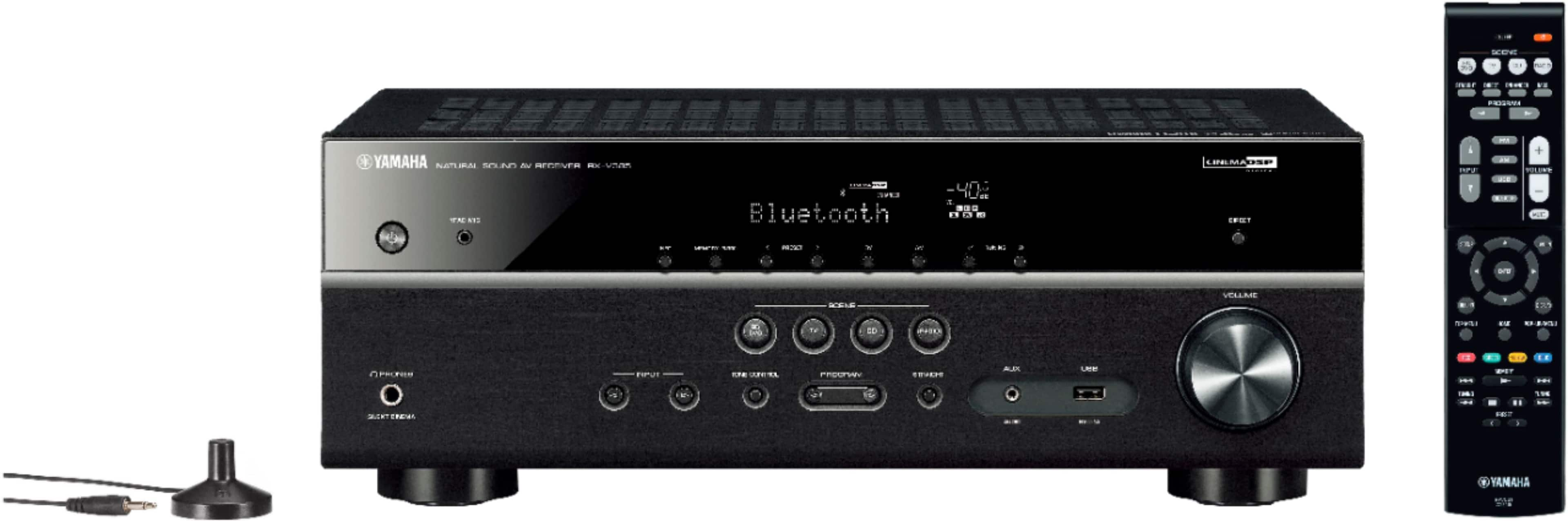
A:AnswerI am afraid that I do not understand the question correctly. I have the receiver Yamaha RX-V385. Its YPAO settings apply to automatic speaker setup to suit the current room conditions. I checked the manual carefully, but did not find any other context. If you choose to use automatic speaker-setup, then you connect the YPAO microphone (comes with the receiver) to the receiver and follow the ensuing simple procedure. During this time, the receiver sends tones to each speaker and measures the sound via the microphone located at the listening position. Then the receiver computers and stores all pertinent parameters. These parameter values are specific to the listening conditions in the current room. As far as I understand, these are the only YPAO settings pertinent to the receiver I have.
A:AnswerYou can do a search on the QUESTION section. I did find this;
Q: QuestionOk, 145 watts per channel. Is that all 5 channels? My existing speakers- main left, right, center are good to go. Rear speakers in ceiling are rated for 50 watts. If rear channels are 145 watts, is there a control to limit the power for the rear?
Asked 7 months ago by Bobaloo.
A:Answer The Yamaha V385 is rated 70W per front L/R channel at 20Hz-20KHz 0.09% THD into 8 ohms (US/Canada specs). It is also rated 85W per channel (each of all 5 channels) at 1KHz and 0.9% THD. There are some higher ratings at terrible distortion levels, such as 145W at 1KHz into 6 ohms at 10% THD. I would not plan to go over about 50W per channel to have decent sound and receiver longevity, but that should be plenty loud enough for a home theatre system with reasonably efficient speakers and a separate subwoofer or two. If you are having a large party and want club level volume you need a whole other level of equipment. The ratings of your speakers are the maximum they can handle. The power drawn depends on the volume level. Of course you can change the balance from front to rear and also the timing (perceived distance).
Answered 7 months ago by EB57Verified Purchase