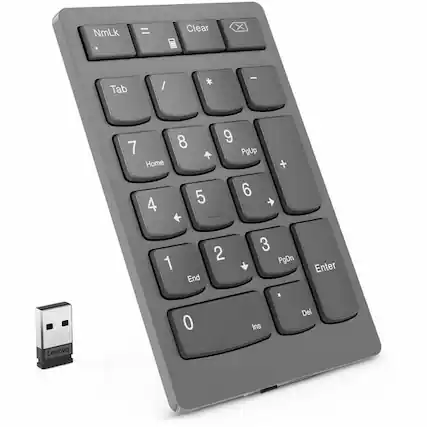
If you're thinking about upgrading your keyboard, it's worth considering how you use your computer day to day. While device compatibility plays a role in your keyboard choice, many keyboards are widely compatible, which makes finding the best wireless keyboard more about what kind of keyboard suits your needs and uses.
In terms of internal design, most keyboards fall into two main categories: the wireless mechanical keyboard and the membrane keyboard. Mechanical keyboards are generally more durable. The components are easier to replace, and these keyboards offer a choice of clicky, linear and tactile switch models. Meanwhile, membrane keyboards provide a softer keyboard feel. Other keyboard designs, including optical keyboards and scissor keyboards, also have specific pros and cons.
The size and layout of your keyboard will be important. Not only are there compact keyboards and full-sized keyboards, but there are also many sizes in between. If your hands or wrists get fatigued, consider choosing an ergonomic keyboard. A wireless ergonomic keyboard helps keep your wrists and hands aligned, making it easier to maintain a consistent typing rhythm throughout the day.