A:AnswerThis is not easy to answer.
Range is not a way to compare lenses as it is the field of view that gives the perception of magnification.
Any 800mm lens on a full frame camera has a field of view of about 2.58 x 1.72 degrees.
At 30 feet away, an area of 1 ft 4 in x 10 in will fill the frame, say a squirrel will fill the frame.
At 240,000 miles away, an area of about 10,000 x 7,000 miles will fill the frame, say the moon fills most of the frame.
Photographers will sometimes refer to the narrowing field of view as the reach of the lens, or how well it makes distant things look bigger.
The more expensive lens can provide a better image of a small part of the frame, but will not change what fills the frame.
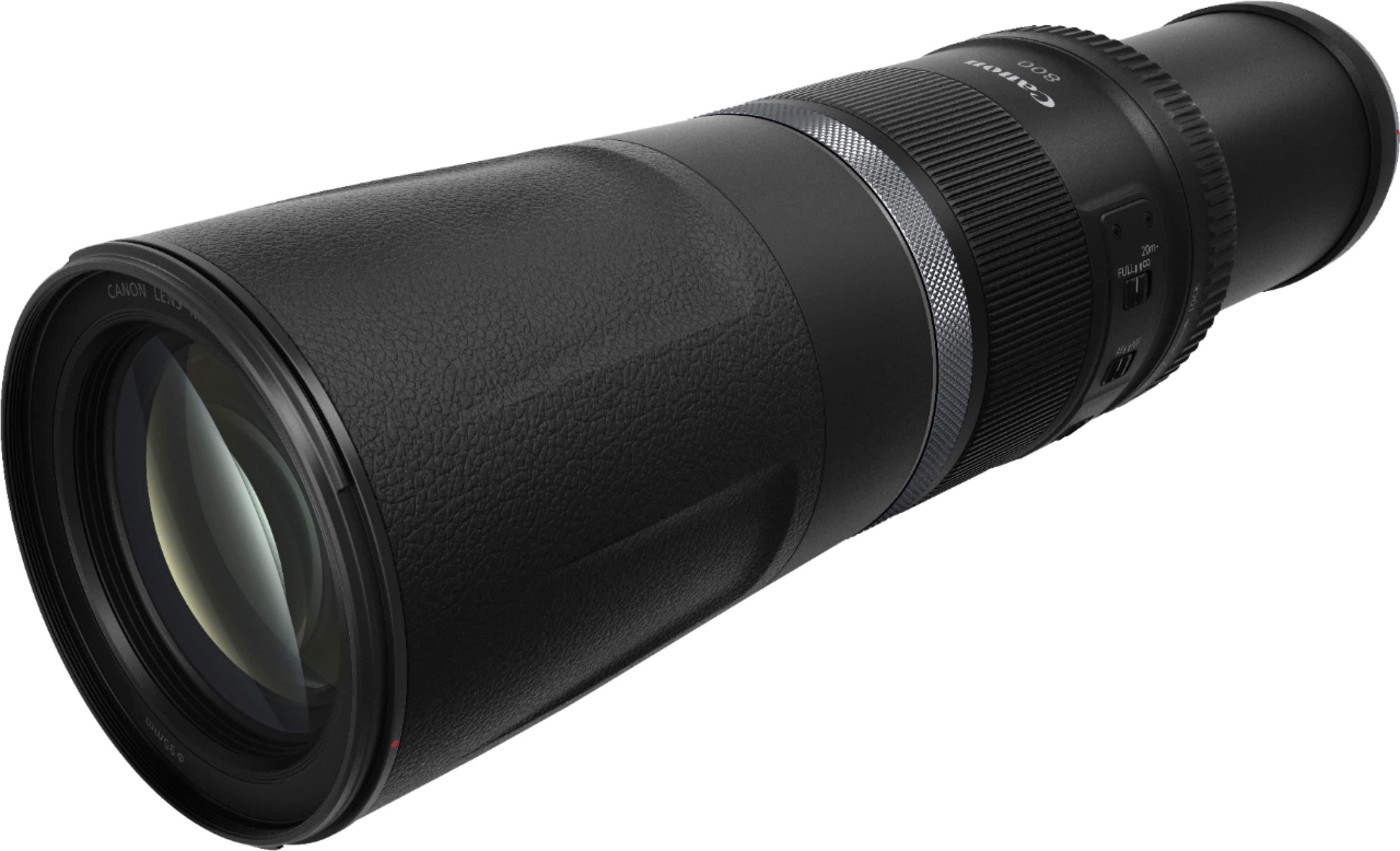
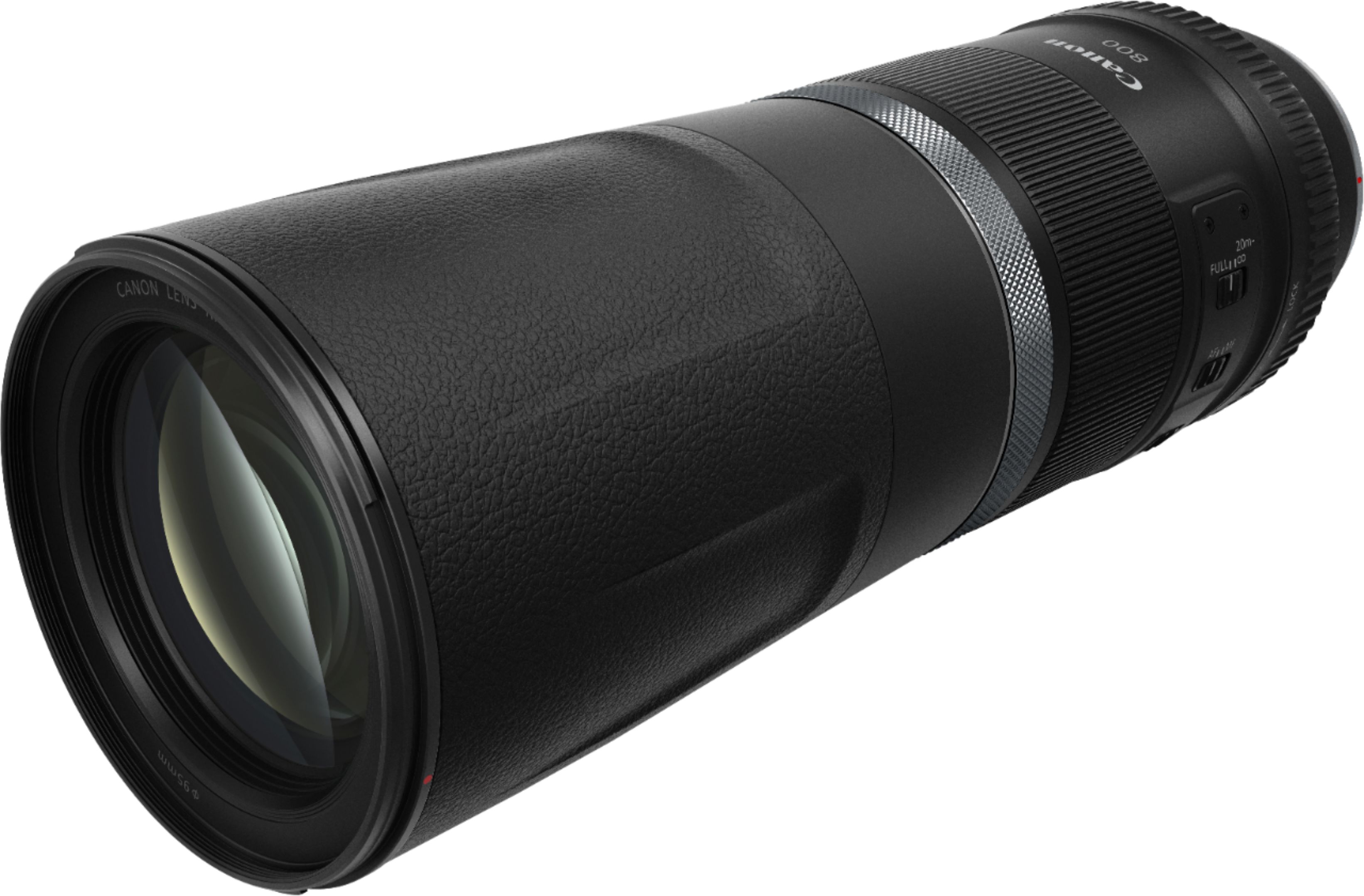
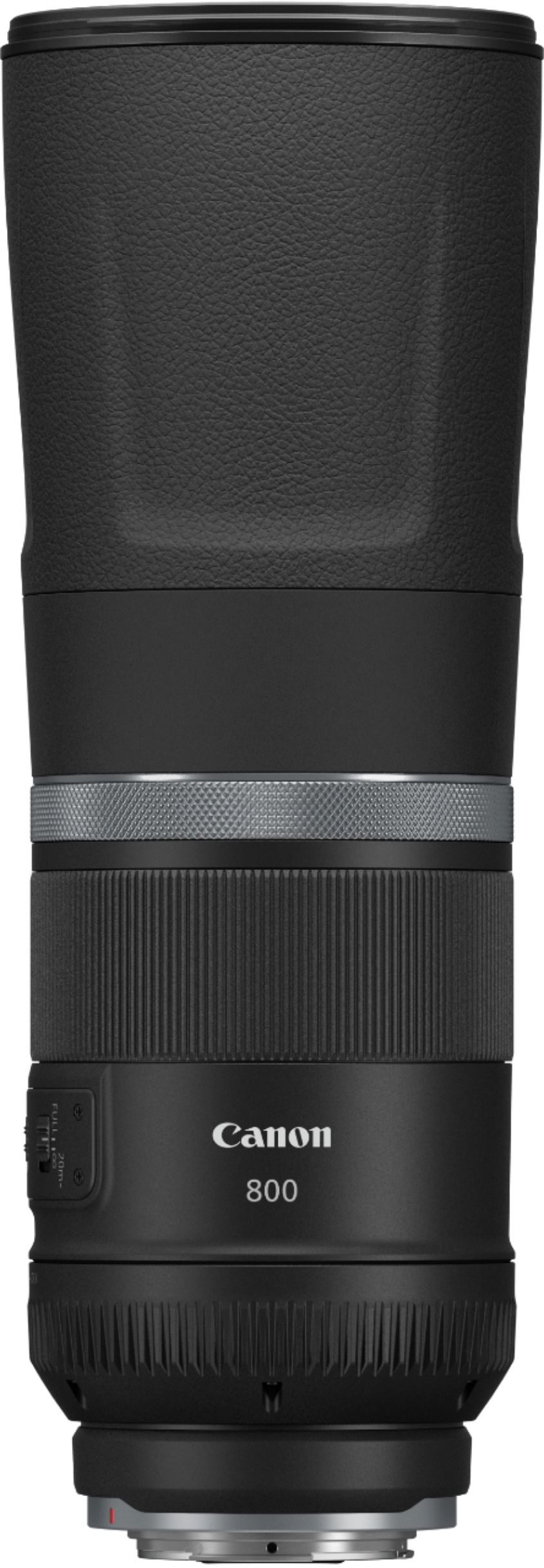
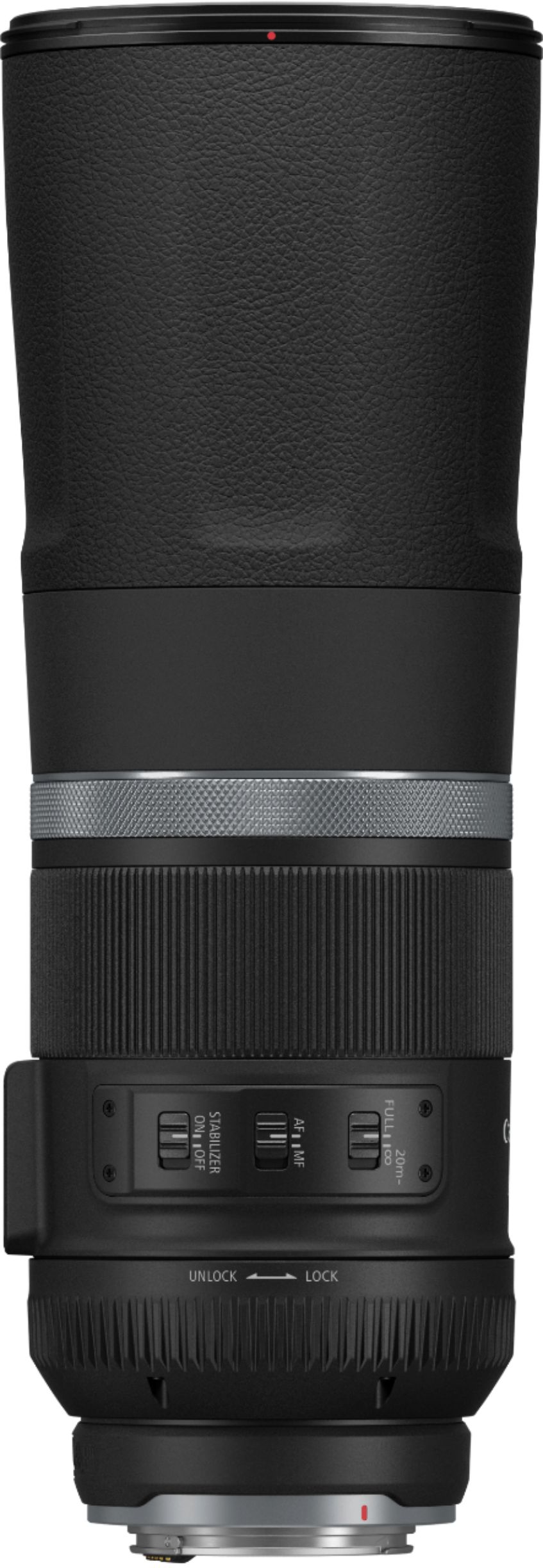
This 800mm has a great reach for the buck, but would be better for wildlife mostly at rest.
Birds in flight, with this narrow field of view, make it difficult to track and focus.
A:AnswerActually works quite well. I use it on my Canon EOS R, R6 and R5. I noticed the autofocus speed is faster on the R5/6 but for the R it is still fantastic. I would recommend this for the R3, R5, R6 and R. Definitely worth the purchase
A:AnswerYes. The EOS R6 uses the RF lens mount that this lens has.
I haven't done much in wildlife photography. I can use 1/200 to 1/300 shutter with 400-800 iso for the most part in daytime for what I shoot.
It is very good for reasonably still wildlife shots like deer, heron and perched birds. I'm not very skilled in tracking birds in flight, which I imagine a faster shutter would be desired.
Would it be good for your purpose?
The RF 600mm F/4L $12,999 or the RF 100-500mm f/4.5-7.1L $2,799 would be better pro level options. But, if willing to push iso levels, the extra reach and cost savings may be just the right balance to be good.
A:AnswerThe RF800mm F11 lens is NOT compatible with the 4000D. The EOS 4000D uses "EF" mount lenses. The Canon RF800mm F11 lens requires AN "RF" mount. There is no adapter available at this time.
A:AnswerIf you are going to put it on a tracking tripod and are looking to catch one of the easier nebulae it can work, but its not a very fast lens for night time.
Brighter celestial objects such as the Moon (always a favorite and easy to capture with this lens), Orion or Venus (when Close to earth) generally work pretty well with this lens.
I have tried capturing Saturn and Jupiter with this lens and YES you can see them, but they are not very clear but you can make out Saturn and see the ring and you can faintly see the weather lines on jupiter. However, you really want this on a Equatorial mount for these type of pictures or any long exposures. I personally use the RF 100-500mm F/4.5-7.1 lens for the astro stuff (closer items) or Hyper Star and an Edge HD telescope for the other deeper/farther stuff. I found personally the best use for this lens for Astrophotography is the Moon. If you are using it with a Extender such as the RF1.4x or RF2x the moon is bright enough and with an iso range bump it allows you to capture some gorgeous shots of the moon, Probably of Orion Nebulae as well. The moon photo attached was done using the RF800mm F/11 Lens with a RF2x Extender
If you run an extender on this and crank up the ISO you can get some pretty good long exposures (but at the cost of image noise) however, some (if not most) of that can be cleaned up in Post. Overall its a capable lens best used for Daytime use but it does have it's limited night time uses too. Hope this helps