The Complete Guide to Dehumidifiers
Best Selling Products carousel(6 Items)
Why dehumidifiers matter
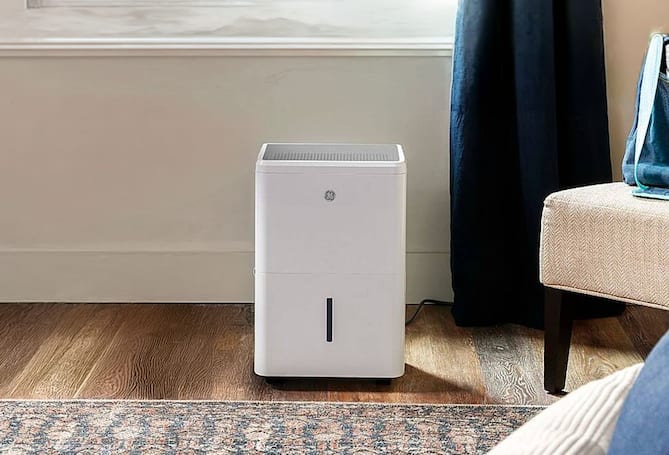
Walk into a room with high humidity and you can feel it immediately—the air is heavy, everything feels slightly damp and comfort disappears fast. But beyond that sticky feeling, excess moisture creates the perfect environment for mold and mildew, which can damage your home and may impact your health over timeSee Disclosure 1.
Dehumidifiers are an easy way to manage your home’s air quality. Whether you’re dealing with a damp basement, making your home more allergy-friendly or just trying to improve comfort in your living space by regulating humidity levels, the right unit can make a noticeable difference.
This dehumidifier buying guide will walk you through how they work, what features actually matter and how to choose the best dehumidifier for house-wide comfort—or for specific problem areas.
Types of dehumidifiers and how they work
Most indoor air quality appliances have specific uses for specific types of spaces. At a glance, many dehumidifiers look similar—but how they remove moisture can vary quite a bit. Understanding the difference helps you choose a unit that actually works for your environment.
The most common type is the refrigerant dehumidifier, which pulls in humid air, cools it and condenses moisture into a water tank. These are highly effective in warm conditions and are often the go-to choice in a humid climate or for general household use.
On the other hand, a desiccant dehumidifier uses moisture-absorbing materials instead of cooling coils. These units shine in cooler environments where refrigerant models may struggle—think basements, garages or crawlspace areas.
If your home deals with year-round high humidity, refrigerant models are typically the best dehumidifier for mold prevention. But for colder, less ventilated spaces, a desiccant dehumidifier can be surprisingly effective.
Choosing the best dehumidifier for your space
Dehumidifiers for bedrooms and bathrooms
Bedrooms and bathrooms tend to experience short bursts of high humidity—after showers, during sleep, or while doing laundry. In these spaces, comfort matters just as much as performance.
The best dehumidifier for bedroom use is typically quiet, compact and efficient. You don’t need an oversized unit—just something that can keep humidity levels stable without disrupting sleep.
Bathrooms, on the other hand, are consistent moisture hotspots. The best dehumidifier for bathrooms should be able to remove moisture from the air and help prevent mold and mildew from forming on surfaces.
For both spaces, look for:
- Moderate capacity (dehumidifiers around 20–35 pints)
- An adjustable humidistat to maintain healthy levels
- A manageable water tank with auto shut-off
- Portable dehumidifiers that are easy to move as needed
Small dehumidifiers are often more than enough here, especially if the space isn’t constantly damp.
Basement dehumidifiers
If there’s one place where a dehumidifier really earns its keep, it’s the basement. These areas tend to trap moisture, stay cool and lack airflow—all of which contribute to mold and mildew growth.
The best dehumidifier for mold in a basement needs to be powerful, reliable and capable of running for long periods. This isn’t a place to go small—aim for a unit with a capacity of at least 50 pints. And an app-compatible dehumidifier can help you keep tabs on performance without needing to go down in the basement to check on it.
Key features to prioritize include:
- Higher capacity (50–70+ pints) to handle larger square footage
- Continuous drainage using a drain hose or a built-in pump
- Low-temperature operation for cooler conditions
- Strong airflow to circulate dry air
If you’re dealing with persistent high humidity, it’s often better to slightly oversize your unit than risk it struggling to keep up. Adding a fan to the mix can also help keep the air flowing and reduce stress on your dehumidifier.
Best dehumidifiers for house-wide performance
For homes where humidity is a constant issue across multiple rooms, portable solutions might not be enough. That’s where whole-house systems come in.
These dehumidifiers integrate directly with your HVAC system, helping regulate humidity throughout your entire living space automatically.
Using a dehumidifier for mold prevention
If your primary goal is preventing mold and mildew, consistency matters more than anything else. Mold thrives when humidity climbs above 60%, so keeping levels between 40–50% is keySee Disclosure 2.
The best dehumidifier for mold will make that process automatic and reliable.
Here’s what to look for:
- Humidistat: Lets you set and maintain your ideal humidity level
- Proper capacity: Match the unit to your square footage
- Continuous drainage: Allows for uninterrupted operation
- Air filtration: Helps reduce airborne particles (though not a replacement for air purifiers)
- Low-temp functionality: Important for basements and crawlspace areas
A dehumidifier isn’t just about comfort—it’s a long-term strategy for protecting your home.
Quick reference for choosing the best dehumidifier for home use
With so many top-rated options available, it’s easy to get overwhelmed. But most decisions come down to a few core features:
- Water tank size: larger tanks mean less frequent emptying. A full tank indicator feature can help keep track of water levels
- Energy efficiency: important if the unit will run daily; look for ENERGY STAR certified dehumidifiers
- Square footage coverage: always match the unit to your room size
- Noise level: especially relevant for bedrooms and shared spaces
- Portability: helpful if you plan to move the unit around
- Drainage options: continuous draining can save time and effort
Focusing on these factors will help you find the best dehumidifier for household use without overcomplicating the process.
Pairing dehumidifiers with air purifiers
If you’re looking to improve overall air quality, pairing dehumidifiers with air purifiers can be a smart move. Choosing an air purifier carries many of the same considerations, particularly when it comes to room size.
Dehumidifiers reduce the moisture that allows mold and mildew to grow, while air purifiers help remove dust, allergens and airborne particles. Together, they create a cleaner, healthier indoor environment.
Using dehumidifiers can mean a healthier and more comfortable home
The right dehumidifier can completely change how your home feels—from eliminating that damp, heavy air to protecting against long-term damage caused by excess moisture.
Whether you’re searching for the best dehumidifier for bedroom comfort, the best dehumidifier for bathrooms or a heavy-duty solution for a basement or crawlspace, the key is choosing a unit that fits your space and your needs.
With the right balance of capacity, energy efficiency and smart features, a dehumidifier can keep high humidity under control—and make your home a more comfortable place to live.