What Is a Filament Dryer and Do I Need One?
Best Selling Products carousel(6 Items)
How to dry filament
You’ve made the leap into the world of 3D printing, and you’re dialing in settings, experimenting with materials and refining your results. Still, something doesn’t feel quite right. Even with the right 3D printer and filament, moisture can quietly affect print quality over time.
When moisture becomes part of the equation, solving print issues isn’t always as simple as changing temperatures or speeds. Keep reading as we explore how filament condition plays a role in print performance, how a 3D printer filament dryer works and whether or not you need one.
What is a filament dryer?
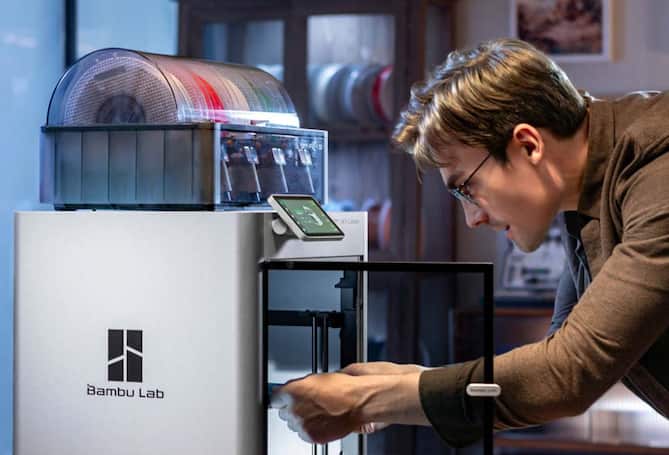
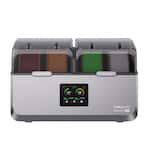
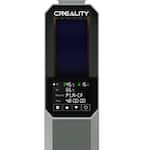
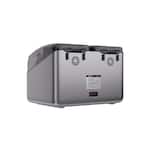
A filament dryer is a device designed to remove moisture from 3D printer filament before and during printing. Because many filament materials absorb moisture from the air and environmental factors over time, even filament that looks fine can negatively affect print quality.See Disclosure 1 A filament dryer helps maintain consistent filament condition by gently heating the spool and circulating air to reduce humidity.
Most filament dryers allow you to place a filament spool inside an enclosed chamber where temperature and drying time can be controlled. Some models are designed to dry filament before printing, while others allow the filament to feed directly into the 3D printer as it dries. By keeping filament dry in a filament dryer box, you can help reduce common printing issues such as stringing, poor layer adhesion, bubbling and rough surface finishes.
Are there different filament dryer types?
Without delving into every type of 3D printer filament, four of the most commonly used filaments are PLA, PETG, ASA and ABS. While there are different types of filament dryers, they are not specifically designed for each type of filament material. For example, there isn’t a specific filament dryer for PLA or a filament dryer for PETG.
Instead of seeking out a filament dryer for ASA or a filament dryer for ABS, different filament dryers are typically categorized by features and functionality, including:
- Temperature range. Some filaments require lower drying temperatures, while others need higher heat to remove moisture effectively.See Disclosure 2
- Drying method. Options may include heated chambers or active airflow systems.
- Adjustability. More advanced filament dryers allow you to customize temperature and drying time for different materials.
- Standalone vs. built-in options. Some dryers function as separate units, while others are integrated into printer enclosures.
Some advanced setups may also integrate tools like 3D scanners to digitize prototypes and ensure your prints match the intended design.
Is there a way I can set up a DIY filament dryer?
Though it requires extra care and attention, it is possible to create a 3D filament dryer using everyday household items. A DIY filament dryer generally offers less control and consistency than purpose-built filament dryers. Some common DIY filament drying methods include:
- Kitchen oven. Filament can be dried out at very low temperatures in your oven, but it must be closely monitored to avoid warping the spool or damaging the filament.
- Sealed containers. While this won’t actively dry filament, it can help reduce moisture exposure and maintain dryness.
- Food dehydrator. Food dehydrators provide gentle heat and airflow, which can be more consistent than an oven.
What is the best filament dryer?
Similar to discovering which 3D printer is the best, the best filament dryer for you depends on how often you print, what materials you typically use and how much control you want over temperature and drying time. At a basic level, the most effective filament dryers balance consistent heat, airflow and ease of use to help remove moisture from spools before or during printing.
For occasional printing with common materials like PLA or PETG, a simple 3D printer filament dryer box that provides gentle, controlled warmth may be all you need to maintain good filament condition.
For more advanced workflows or frequently used moisture-sensitive materials (such as nylon or specialty filaments), look for dryers with adjustable temperature settings and reliable circulation. Make sure to consider how your filament dryer fits into your overall setup alongside other 3D printer accessories, like nozzle assemblies and build plates.
Do I need a filament dryer?
If you mostly print with PLA or other beginner-friendly filaments in a relatively dry room, a filament dryer may not be completely necessary. Proper storage in sealed containers with desiccant packets can often keep your filament in good condition.
However, if you frequently use moisture-sensitive filaments such as nylon, PVA or TPU, or if your printing environment is humid, a filament dryer can make a noticeable difference. It helps prevent issues like bubbling, stringing, poor layer adhesion and inconsistent surface finishes, ultimately saving time and 3D printer filament that might otherwise be wasted.
In the end, the best filament dryer is one that fits your printing habits, supports the materials you use most often and consistently helps improve print quality without adding unnecessary complexity. By focusing on features like temperature control, capacity and reliability, you can find a solution that keeps your filament performing at its best.
References
1. Karwasz, Anna, Filip Osiński, Weronika Kaczmarek, Kacper Furmaniak and Izabela Rojek 2. “The Influence of Polylactic Acid Filament Moisture Content on Dust Emissions in 3D Printing Process.” Sensors, MDPI. December 10, 2024. https://www.mdpi.com/1424-8220/24/24/7890.
2. Quader, Raihan, Evan Dramko, David Grewell, Jed Randall and Lokesh Karthik Narayanan. “Characterizing the Effect of Filament Moisture on Tensile Properties and Morphology of Fused Deposition Modeled Polylactic Acid/Polybutylene Succinate Parts.” Mary Ann Liebert, Inc., Sage Publishing. June 18, 2024. https://journals.sagepub.com/doi/full/10.1089/3dp.2022.0222.