Bbc Philharmonic Orchestra / Leaper - Symphonies - COMPACT DISCS [CD]
Reviews coming soon
About this product
Malcolm Lipkin belongs to a generation of composers who came to prominence in Britain between the mid-1950s and the mid-1960s. Several of these figures began their careers as a Inchprogressive,Inch exploring the newlydiscovered range of technical and formal innovations before later forging their own relationship with tonality. In Lipkin's case, early influences such as Bartók and Stravinsky were gradually assimilated into an original voice as his scores moved from long, lyrical lines and motor-rhythms to tiny motifs and rhythmic cells in a more dissonant style. It is hoped this will generate interest in a composer who has steadily forged his own path regardless of passing trends, to create a body of work of impeccable integrity which still largely awaits rediscovery. Album Tracks 1. Malcolm Lipkin, Sinfonia Di Roma (Symphony No.1) - BBC Scottish Symphony Orchestra 2. Malcolm Lipkin, the Pursuit (Symphony No.2) - BBC Scottish Symphony Orchestra 3. Malcolm Lipkin, Sun (Symphony No.3) - BBC Scottish Symphony Orchestra
Specifications
- GenreClassicalDescriptionMalcolm Lipkin belongs to a generation of composers who came to prominence in Britain between the mid-1950s and the mid-1960s. Several of these figures began their careers as a Inchprogressive,Inch exploring the newlydiscovered range of technical and formal innovations before later forging their own relationship with tonality. In Lipkin's case, early influences such as Bartók and Stravinsky were gradually assimilated into an original voice as his scores moved from long, lyrical lines and motor-rhythms to tiny motifs and rhythmic cells in a more dissonant style. It is hoped this will generate interest in a composer who has steadily forged his own path regardless of passing trends, to create a body of work of impeccable integrity which still largely awaits rediscovery. Album Tracks 1. Malcolm Lipkin, Sinfonia Di Roma (Symphony No.1) - BBC Scottish Symphony Orchestra 2. Malcolm Lipkin, the Pursuit (Symphony No.2) - BBC Scottish Symphony Orchestra 3. Malcolm Lipkin, Sun (Symphony No.3) - BBC Scottish Symphony OrchestraArtistBBC PHILHARMONIC ORCHESTRA / LEAPERTitleSymphoniesFormatCDLabelLyrita
Reviews
This product doesn't have any reviews yet.
Compare similar products
![Bbc Philharmonic Orchestra / Leaper - Symphonies - COMPACT DISCS [CD]](https://pisces.bbystatic.com/image2/BestBuy_US/images/products/6e74fdcf-db03-4311-b6db-8061cb2cad4c.jpg;maxHeight=422;maxWidth=264?format=webp)
Malcolm Lipkin belongs to a generation of composers who came to prominence in Britain between the mid-1950s and the mid-1960s. Several of these figures began their careers as a Inchprogressive,Inch exploring the newlydiscovered range of technical and formal innovations before later forging their own relationship with tonality. In Lipkin's case, early influences such as Bartók and Stravinsky were gradually assimilated into an original voice as his scores moved from long, lyrical lines and motor-rhythms to tiny motifs and rhythmic cells in a more dissonant style. It is hoped this will generate interest in a composer who has steadily forged his own path regardless of passing trends, to create a body of work of impeccable integrity which still largely awaits rediscovery. Album Tracks 1. Malcolm Lipkin, Sinfonia Di Roma (Symphony No.1) - BBC Scottish Symphony Orchestra 2. Malcolm Lipkin, the Pursuit (Symphony No.2) - BBC Scottish Symphony Orchestra 3. Malcolm Lipkin, Sun (Symphony No.3) - BBC Scottish Symphony Orchestra
![Ensemble Giardino Di Delizie Augustynowicz - Complete Violin Sinfonias - COMPACT DISCS [CD]](https://pisces.bbystatic.com/image2/BestBuy_US/images/products/1631e940-d8d0-43ba-929c-93470224edee.jpg;maxHeight=422;maxWidth=264?format=webp)
Alessandro Stradella's (1639-1682) latterday fame has tended to focus on his sudden death in February 1782 at the age of 41 in mysterious circumstances - Flotow even wrote an opera on the subject - to the expense of his music, which would otherwise guarantee him a place in posterity's estimation among the most individual voices of the Italian Baroque. Stradella's operas and oratorios have attracted recordings and performances from early-music luminaries such as Alan Curtis and Fabio Biondi; his relatively slender surviving output of instrumental music remains comparatively little-known and under-recorded. The first mention of Stradella's instrumental music occurs in a letter from 1676, while the composer was working in the service of Pope Clement X. Shady dealings soon compelled Stradella to leave quickly for Venice where, having just married the mistress of a nobleman belonging to one of the city's wealthiest and most influential families, he suffered a near-fatal assault in October 1677. We still do not know precisely how and when these Sinfonias were composed, though Stradella occasionally mentions them in his correspondence and borrowed passages from them in his operas and oratorios. They are structured in several brief sections, several with a grave and stately introduction, a dashing contrapuntal movement, a brief aria-like section and a dazzling finale, like a sonata in microcosm, with the dialogue weaving in and out of the solo violin and it's accompaniment. However, Stradella probably did not write the Sinfonias as a discrete set, given their internal variety. The sixth and eleventh of the set are at least twice as long as many of the others, and Stradella uses this space to spin an expressive mood of great stillness in his arching introductions.
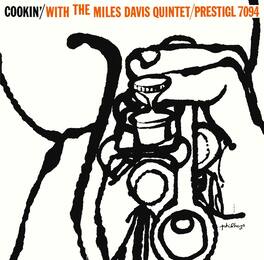
Part of Universal Japan's 'Everything Jazz - Vol. 3 Concord Edition' reissue campaign. Features the high-fidelity UHQCD . Green color tag coating. Universal. 2025.
![BBC Philharmonic - Symphonies Divertimento - SUPER-AUDIO CD [Super Audio CD (SACD)]](https://pisces.bbystatic.com/image2/BestBuy_US/images/products/0282f61c-5237-4278-935a-3fc616f31767.jpg;maxHeight=422;maxWidth=264?format=webp)
The Symphony in C was conceived in Paris in the late 1930s, but completed in America in 1940, and is dedicated to the Chicago Symphony Orchestra on the occasion of it's fiftieth anniversary. Commissioned by the New York Philharmonic and premièred in 1946, the Symphony in Three Movements presents us with movements that also manifest different ways of moving a march, a slow dance, and a march-jog-race. The Greeting Prelude was written as an eightieth birthday tribute to Pierre Monteux, conductor of the premières of Pétrouchka and The Rite of Spring, and was first performed by the Boston Symphony Orchestra on the very day 4 April 1955. The other two pieces on the album reflect Stravinsky's lifelong involvement with ballet. The Divertimento is an orchestral piece extracted by Stravinsky from his ballet The Fairy's Kiss. The ballet was a homage to Tchaikovsky, based on songs and piano pieces by him, stitched together and orchestrated with Stravinskian cool. The Circus Polka was a commission from Stravinsky's long-time collaborator George Balanchine, who had been asked by the Ringling Bros. And Barnum & Bailey Circus to create a dance for elephants. The version heard here is the composer's own orchestral version; the original was scored for circus band and organ by David Raksin, and performed by fifty elephants and fifty female dancers! Details 2. Symphony in C for Orchestra~Moderato alla breve - Tempo agitato senza troppo accelerare - Tempo I 3. Symphony in C for Orchestra~Larghetto concertante - Doppio movimento - Doppio valore - 11. Symphony in Three Movements for Orchestra~Quarter Note = 160
Specs
Be the first to ask a question.
We’ll try to get your question answered within 24 hours by a Best Buy customer or brand representative.