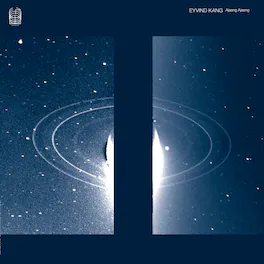
Eyvind Kang - Ajaeng Ajaeng - VINYL LP
Reviews coming soon
About this product
To be heard with ears half bent, or with one side facing what Maryanne Amacher calls 'the third ear'. The great reverence in which the Tanpura is held by Indian classical music, it's transcendental but occulted place in the tradition alongside it's normal function as a drone, made a strong impression on the composer such that it has taken decades to formulate even a simple Tanpura Study. The fundamentals, the Om, as well as the overtones, the music of the spheres - all these have their valid rights, but in Tanpura Study they are embedded in a series of gestures, what I call signatures, on the melodic level. In 'Tanpura & Harpsichord', there is an encounter of overtones with chords braided into pun-notes, what Gerard Grisey calls 'degrees of transposition'. Taken together, this amounts to a non-spectralism in which, contrary to first impressions, there are no fundamental frequencies, even in the bass. Ajaeng Ajaeng with respect to European string instruments, the technique col legno affords the direct encounter of wood and string, opening the way to a more tactile conception of the sustained sound, while bringing the materiality of the bow and it's practices into question. In violin, viola, cello bows, Pernambuco wood offers an ideal example of extraction, colonialism, deforestation. With the Ajaeng, a Korean musical instrument, the situation is more complex. The dialectic of court to folk music, always political, always incendiary, may be heard here in the encounter of forsythia and silk, of Dae Ajaeng to So Ajaeng, and on a broader level of Dang Ak (Tang Dynasty music) to Hyang Ak (native Korean music) and their representations. Alternating music and sound, overtone arrays mingled with noise, marked by the bow change, in flamelike patterns which flicker, emerge, and fade again. A slow-down structure, also formalized in Time Medicine, seems to produce a long decresce
Specifications
- GenreJazzDescriptionTo be heard with ears half bent, or with one side facing what Maryanne Amacher calls 'the third ear'. The great reverence in which the Tanpura is held by Indian classical music, it's transcendental but occulted place in the tradition alongside it's normal function as a drone, made a strong impression on the composer such that it has taken decades to formulate even a simple Tanpura Study. The fundamentals, the Om, as well as the overtones, the music of the spheres - all these have their valid rights, but in Tanpura Study they are embedded in a series of gestures, what I call signatures, on the melodic level. In 'Tanpura & Harpsichord', there is an encounter of overtones with chords braided into pun-notes, what Gerard Grisey calls 'degrees of transposition'. Taken together, this amounts to a non-spectralism in which, contrary to first impressions, there are no fundamental frequencies, even in the bass. Ajaeng Ajaeng with respect to European string instruments, the technique col legno affords the direct encounter of wood and string, opening the way to a more tactile conception of the sustained sound, while bringing the materiality of the bow and it's practices into question. In violin, viola, cello bows, Pernambuco wood offers an ideal example of extraction, colonialism, deforestation. With the Ajaeng, a Korean musical instrument, the situation is more complex. The dialectic of court to folk music, always political, always incendiary, may be heard here in the encounter of forsythia and silk, of Dae Ajaeng to So Ajaeng, and on a broader level of Dang Ak (Tang Dynasty music) to Hyang Ak (native Korean music) and their representations. Alternating music and sound, overtone arrays mingled with noise, marked by the bow change, in flamelike patterns which flicker, emerge, and fade again. A slow-down structure, also formalized in Time Medicine, seems to produce a long decresceArtistEyvind KangTitleAjaeng AjaengFormatVINYLLabelIdeologic Organ
Reviews
This product doesn't have any reviews yet.
Compare similar products
To be heard with ears half bent, or with one side facing what Maryanne Amacher calls 'the third ear'. The great reverence in which the Tanpura is held by Indian classical music, it's transcendental but occulted place in the tradition alongside it's normal function as a drone, made a strong impression on the composer such that it has taken decades to formulate even a simple Tanpura Study. The fundamentals, the Om, as well as the overtones, the music of the spheres - all these have their valid rights, but in Tanpura Study they are embedded in a series of gestures, what I call signatures, on the melodic level. In 'Tanpura & Harpsichord', there is an encounter of overtones with chords braided into pun-notes, what Gerard Grisey calls 'degrees of transposition'. Taken together, this amounts to a non-spectralism in which, contrary to first impressions, there are no fundamental frequencies, even in the bass. Ajaeng Ajaeng with respect to European string instruments, the technique col legno affords the direct encounter of wood and string, opening the way to a more tactile conception of the sustained sound, while bringing the materiality of the bow and it's practices into question. In violin, viola, cello bows, Pernambuco wood offers an ideal example of extraction, colonialism, deforestation. With the Ajaeng, a Korean musical instrument, the situation is more complex. The dialectic of court to folk music, always political, always incendiary, may be heard here in the encounter of forsythia and silk, of Dae Ajaeng to So Ajaeng, and on a broader level of Dang Ak (Tang Dynasty music) to Hyang Ak (native Korean music) and their representations. Alternating music and sound, overtone arrays mingled with noise, marked by the bow change, in flamelike patterns which flicker, emerge, and fade again. A slow-down structure, also formalized in Time Medicine, seems to produce a long decresce
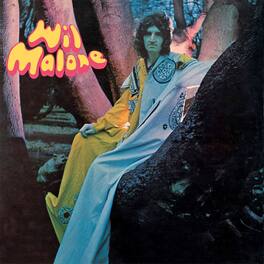
Originally released In July 1970 InchWil MaloneInch, a typically idiosyncratic supper-club/chamber pop take on the singer/songwriter genre that was so in vogue at the time. Featuring such earnest/facetious nuggets as 'I Could Write A Book' and 'At The Silver Slipper', the album has many admirers these days. The original is considered a rare collector's item, with some original copies fetching high prices. This reissue on Morgan Blue Town is available as a limited edition 180-gram yellow colored vinyl pressing. Album Tracks 1. Catherine Wheel 2. I Could Write a Book 3. February Face 4. Love in the Afternoon 5. Winter in Boston 6. Caravan 7. Down Maundies 8. Suzy 9. Tale to Tell 10. One More Flight to Parker 11. At the Silver Slipper 12. How About Then
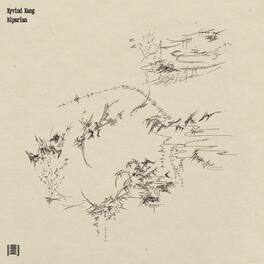
Riparian is the first solo instrumental album by composer and multi-instrumentalist Eyvind Kang. Centered on the viola d'amore, Riparian unfolds two longform improvisations rooted in his self-devised concept of ecomusicality. Produced by Randall Dunn, the record offers a meditative, textural sound world shaped by Kang's deep lineage in microtonality, raga, and spiritual jazz. Music video features a commissioned performance by NY Yang Sheng Tai Chi Qi Gong Association in Chinatown, NYC. Warm, resonant, and quietly intense, Riparian invites deep listening across time and form. Album Tracks 1. Riparian a 2. Riparian B
![Delta - Life & Times of Jim Vallie & Sweet Roslyn - COMPACT DISCS [CD]](https://pisces.bbystatic.com/image2/BestBuy_US/images/products/9392d3d8-630b-4dab-82ae-59e4876ced6b.jpg;maxHeight=422;maxWidth=264?format=webp)
Delta is the duo of Grainger and Naomi, who masquerade as the duo named in the album's title. Delta expand to a five piece (informally known as the Delta Band) for the majority of this record. They explore a sound which obviously draws a great deal of inspiration from country music, yet they give it what you might term the Belle And Sebastian treatment, resulting in a mature and rounded country pop album. The songs are varied, strong and memorable, highlighted by Naomi's sparkling lead vocals. Her rich yet subtle and detailed delivery (brilliantly showcased on InchThe WitchInch) shows her to be head and shoulders above the vast field of her contemporary peers. Album Tracks 1. Ten Years in Harlem 2. Silver & Gold 3. Boy from Nowhere 4. Witch 5. Four Letter Word 6. Sweet Rosalyn 7. Travelling Glass House Home 8. Material Man 9. Jim Vallie 10. Rachel 11. Nothing's As It Seems
Specs
Be the first to ask a question.
We’ll try to get your question answered within 24 hours by a Best Buy customer or brand representative.