Invocation - Symphonies 19 - COMPACT DISCS [CD]
Reviews coming soon
About this product
Whether Haydn was the father of the symphony is a question best left to musical genealogists. His career, however, spanned the period during which the classical symphony developed as the principal orchestral form. He himself certainly played a major part in this development, from his first symphony some time before 1759 to his final series of symphonies written for the greater resources of London in 1794 and 1795. The London symphonies were preceded by similar works for Paris and a much larger body of compositions of more modest scoring for the orchestra at Esterháza and at Eisenstadt, many of the last calling for a keyboard continuo, at least with the relatively smaller number of string players available.It seems that Symphony No. 32 and Symphony No. 33 may be dated to 1760, or thereabouts, to a period when Haydn was employed in Lukavec by Count von Morzin in a musical establishment that was soon to be disbanded. The first of these is a festive work, in the appropriate key of C major and using trumpets and drums. It is otherwise scored for the necessary strings, with pairs of oboes and horns, the latter presumably in C alto, and a bassoon doubling the cellos and double bass. The first movement opens in appropriate style, with a bright, celebratory first subject, leading to a second subject that is at first in G minor. There is a central development, exploring this material and leading to the inevitable recapitulation, the return of the original key and first subject, with the second subject, which has had it's turn already in the development, now omitted. The whole orchestra continues with the Minuet, with it's C minor Trio for strings alone. This is followed by the slow movement, marked Adagio ma non troppo, an F major movement scored only for strings. Wind instruments return for the final Presto, in a forceful and triumphant 3/8, a briefer version of the tripartite
Specifications
- GenreClassicalDescriptionWhether Haydn was the father of the symphony is a question best left to musical genealogists. His career, however, spanned the period during which the classical symphony developed as the principal orchestral form. He himself certainly played a major part in this development, from his first symphony some time before 1759 to his final series of symphonies written for the greater resources of London in 1794 and 1795. The London symphonies were preceded by similar works for Paris and a much larger body of compositions of more modest scoring for the orchestra at Esterháza and at Eisenstadt, many of the last calling for a keyboard continuo, at least with the relatively smaller number of string players available.It seems that Symphony No. 32 and Symphony No. 33 may be dated to 1760, or thereabouts, to a period when Haydn was employed in Lukavec by Count von Morzin in a musical establishment that was soon to be disbanded. The first of these is a festive work, in the appropriate key of C major and using trumpets and drums. It is otherwise scored for the necessary strings, with pairs of oboes and horns, the latter presumably in C alto, and a bassoon doubling the cellos and double bass. The first movement opens in appropriate style, with a bright, celebratory first subject, leading to a second subject that is at first in G minor. There is a central development, exploring this material and leading to the inevitable recapitulation, the return of the original key and first subject, with the second subject, which has had it's turn already in the development, now omitted. The whole orchestra continues with the Minuet, with it's C minor Trio for strings alone. This is followed by the slow movement, marked Adagio ma non troppo, an F major movement scored only for strings. Wind instruments return for the final Presto, in a forceful and triumphant 3/8, a briefer version of the tripartiteArtistInvocationTitleSymphonies 19FormatCDLabelNaxos
Reviews
This product doesn't have any reviews yet.
Compare similar products
![Invocation - Symphonies 19 - COMPACT DISCS [CD]](https://pisces.bbystatic.com/image2/BestBuy_US/images/products/e52afa01-513a-4e91-af0b-35529b539ced.jpg;maxHeight=422;maxWidth=264?format=webp)
Whether Haydn was the father of the symphony is a question best left to musical genealogists. His career, however, spanned the period during which the classical symphony developed as the principal orchestral form. He himself certainly played a major part in this development, from his first symphony some time before 1759 to his final series of symphonies written for the greater resources of London in 1794 and 1795. The London symphonies were preceded by similar works for Paris and a much larger body of compositions of more modest scoring for the orchestra at Esterháza and at Eisenstadt, many of the last calling for a keyboard continuo, at least with the relatively smaller number of string players available.It seems that Symphony No. 32 and Symphony No. 33 may be dated to 1760, or thereabouts, to a period when Haydn was employed in Lukavec by Count von Morzin in a musical establishment that was soon to be disbanded. The first of these is a festive work, in the appropriate key of C major and using trumpets and drums. It is otherwise scored for the necessary strings, with pairs of oboes and horns, the latter presumably in C alto, and a bassoon doubling the cellos and double bass. The first movement opens in appropriate style, with a bright, celebratory first subject, leading to a second subject that is at first in G minor. There is a central development, exploring this material and leading to the inevitable recapitulation, the return of the original key and first subject, with the second subject, which has had it's turn already in the development, now omitted. The whole orchestra continues with the Minuet, with it's C minor Trio for strings alone. This is followed by the slow movement, marked Adagio ma non troppo, an F major movement scored only for strings. Wind instruments return for the final Presto, in a forceful and triumphant 3/8, a briefer version of the tripartite
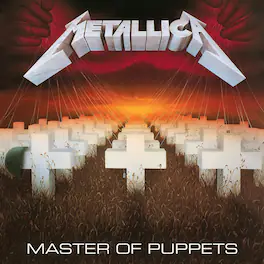
Vinyl LP pressing. Digitally remastered edition. Master of Puppets was originally released on March 3rd, 1986, on Elektra Records and went on to become the first Metallica album to be certified Platinum by the RIAA. The album has been certified six-times Platinum in the United States and has sold over 10 million copies worldwide. In 2016, the album became the first metal album to be added to the National Recording Registry of the Library of Congress, an honor granted to works deemed Inchculturally, historically, or aesthetically significantInch. Recorded at the Sweet Silence Studios with producer Flemming Rasmussen, it was their third album overall. Master of Puppets was the band's last album to feature bassist Cliff Burton, who died in a bus accident in Sweden during the album's promotional tour. Album Tracks 1. Battery 2. Master of Puppets 3. The Thing That Should Not Be 4. Welcome Home (Sanitarium) 1. Disposable Heroes 2. Leper Messiah 3. Orion 4. Damage, Inc

Grand Theft Auto VI: The Album on clear pink with purple splatter vinyl. The 2LP, gatefold jacket includes a Best Buy exclusive 12x24 poster. Atlantic Records and Rockstar Games announce Grand Theft Auto VI: The Album, the upcoming official soundtrack album from the biggest, most immersive evolution of the groundbreaking Grand Theft Auto series yet; Grand Theft Auto VI. Launching November 19 alongside the hotly anticipated game, Grand Theft Auto VI: The Album features 34 original tracks that capture the electric energy of Grand Theft Auto VI’s world of Vice City and Leonida, with a genre-defying roster of the most exciting and preeminent artists in the world.
![Gratest Hits [Custard Yellow Vinyl] [Only @ Best Buy] [LP]](https://pisces.bbystatic.com/image2/BestBuy_US/images/products/ca23a7d3-5801-4fe9-aed1-d8d22f5ca7ad.jpg;maxHeight=422;maxWidth=264?format=webp)
Specs
Be the first to ask a question.
We’ll try to get your question answered within 24 hours by a Best Buy customer or brand representative.