PopMarket - Lloyd: Eventide for Two Pianos - Multicolor
Reviews coming soon
About this product
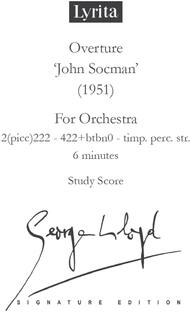
Eventide, for two pianos (1989) contains a tune that dates back to the composer's childhood. When Lloyd was writing the music for his opera John Socman (1951), his father William Lloyd, who was writing the libretto, produced a little carol which the ten-year-old George had penned and subsequently forgotten. William Lloyd had kept the manuscript and now presented it with the suggestion that it would be suitable for the opera at various junctures. Thus, the tune appears first as a carol sung by an old man and is later performed by a chorus of boys outside a window. Lloyd used the tune in this piece Eventide, for two pianos (1989) and finally arranged it for brass band as Evening Song in 1991. In it's two-piano incarnation recorded here, Lloyd exploits the extreme registers of the keyboards, the figurations in the upper reaches having the chiming brilliance of a carillon. The central climax is especially stark and ferocious, so that the return of the poignant simple tune, expertly deferred by the composer, has a genuinely cathartic effect.
Features
SPECIAL PRODUCTS
LLOYD,GEORGE Studio/Label/Brand: Lyrita
Classical Artists
Specifications
- BrandPopMarketModel Number9790708221050Product NameLloyd: Eventide for Two PianosColorMulticolorTitleLloyd: Eventide for Two PianosUPC9790708221050
Reviews
This product doesn't have any reviews yet.
Compare similar products
Eventide, for two pianos (1989) contains a tune that dates back to the composer's childhood. When Lloyd was writing the music for his opera John Socman (1951), his father William Lloyd, who was writing the libretto, produced a little carol which the ten-year-old George had penned and subsequently forgotten. William Lloyd had kept the manuscript and now presented it with the suggestion that it would be suitable for the opera at various junctures. Thus, the tune appears first as a carol sung by an old man and is later performed by a chorus of boys outside a window. Lloyd used the tune in this piece Eventide, for two pianos (1989) and finally arranged it for brass band as Evening Song in 1991. In it's two-piano incarnation recorded here, Lloyd exploits the extreme registers of the keyboards, the figurations in the upper reaches having the chiming brilliance of a carillon. The central climax is especially stark and ferocious, so that the return of the poignant simple tune, expertly deferred by the composer, has a genuinely cathartic effect.
Lloyd completed his Cello Concerto in July 1997, a year before his death of the age of 85 and in this autumnal piece can be discerned a wistful, valedictory quality, with feelings of sorrow and regret surfacing repeatedly. The solo instrument's inherently lyrical aspect is suited to the composer's expressive needs and the one-movement allows the musical narrative to ebb and flow naturally so that this work has a strong claim to be regarded as Lloyd's most formally successful concertante piece. A small orchestra is required, consisting of double woodwind, three horns, modest percussion (for one player) and strings. © Paul Conway
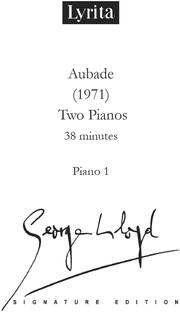
Aubade, a fantasy for two pianos, was written during the summer of 1971, for John Odgon and Brenda Lucas. It is in one continuous movement, divided into sections, linked by an introductory theme. The titles of the eight sections are Introduction; Dance of the Charcoal Burners; The March of the Tin Soldiers; Love Duet; Waltz; Bells, Monks and Lutherans; Moths; Finale. As Edward Seckerson observed of Aubade, 'It's a fun piece, easy on the listener, demanding for the soloists'
Lloyd completed his Cello Concerto in July 1997, a year before his death of the age of 85 and in this autumnal piece can be discerned a wistful, valedictory quality, with feelings of sorrow and regret surfacing repeatedly. The solo instrument's inherently lyrical aspect is suited to the composer's expressive needs and the one-movement allows the musical narrative to ebb and flow naturally so that this work has a strong claim to be regarded as Lloyd's most formally successful concertante piece. A small orchestra is required, consisting of double woodwind, three horns, modest percussion (for one player) and strings. © Paul Conway
Specs
Customers often buy these together
More to consider


Immerse yourself in sound Sponsored
Costway 88-Key Hammer Action Weighted Keyboard Electric Piano with Stand & Triple Pedals
Black Friday Deal$279.99The price was $539.98Costway 88-Key Keyboard Piano Set with Adjustable Stand & 2 Keyboard Mode 2 Speakers
Black Friday Deal$150.99The price was $289.98Costway 88-Key Electric Piano Keyboard with Adjustable Stand Stool, Light-up Keys & Buttons
$179.99The price was $289.98Best Choice Products 88-Key Weighted Full Size Digital Piano Set w/ U-Stand, 3 Sustain Pedal Unit, Stool, Cover
$349.99The price was $399.99Costway 88-Key Electric Piano Keyboard with Adjustable Stand Stool, Light-up Keys & Buttons
$144.99The price was $289.98