Various Artists - Music for Guitar & Choir - COMPACT DISCS [CD]
Reviews coming soon
About this product
The technical challenging of balancing a choir singing at full volume and a guitar, renowned for it's gentle sound, has tended to discourage composers from pairing these resources. Handled sensitively, however, the combination yields a seductive sound-world, full of mystery and imagination, tending in this trio of works to evoke a reassuring feeling of familiarity there is balance, a sense of form, awareness, and respect for a past that is renewed while it nourishes the present. At the peak of his maturity in 1959 and in a burst of creativity, Mario Castelnuovo-Tedesco set to music seven poems by Federico García Lorca as a cycle, Romancero Gitano Op.152. The vocal writing is limpid, capturing the colours and contrasts of Lorca's text, whether it is representing the placid flow of three rivers (Baladilla de los Tres Rios) with an incessant stream of semiquavers, or depicting Carmen's dance through the streets of Seville with an elegant and slightly grotesque InchTempo di SeguidillaInch (Baile). Everywhere, what shines through, to quote the composer, is a sense 'of the Spanish lands the parched Castile, the pale olive groves, the scent of the orange orchards in Andalusia and, along the coast, the sea which breaks at the shore with vibrations, almost, of a guitar.' Receiving their first recordings here are Nulla Sors Longa Est by Nicola Jappelli (b.1975) and Materna by Nicola Campogrande (b.1969). Jappelli's chosen text was written by the Roman philosopher Seneca, and addresses the concept of happiness, ending with a bitter reflection on human frailty. Campogrande's piece has a more positive outlook, celebrating motherhood in a commission from the guitarist on this recording, Nicolò Spera, to mark the birth of his daughter. Campogrande has set four texts - also in Latin - by the contemporary poet Marco Vacchetti, who was in turn inspired by Renaissance-era nativities p
Specifications
- GenreClassicalDescriptionThe technical challenging of balancing a choir singing at full volume and a guitar, renowned for it's gentle sound, has tended to discourage composers from pairing these resources. Handled sensitively, however, the combination yields a seductive sound-world, full of mystery and imagination, tending in this trio of works to evoke a reassuring feeling of familiarity there is balance, a sense of form, awareness, and respect for a past that is renewed while it nourishes the present. At the peak of his maturity in 1959 and in a burst of creativity, Mario Castelnuovo-Tedesco set to music seven poems by Federico García Lorca as a cycle, Romancero Gitano Op.152. The vocal writing is limpid, capturing the colours and contrasts of Lorca's text, whether it is representing the placid flow of three rivers (Baladilla de los Tres Rios) with an incessant stream of semiquavers, or depicting Carmen's dance through the streets of Seville with an elegant and slightly grotesque InchTempo di SeguidillaInch (Baile). Everywhere, what shines through, to quote the composer, is a sense 'of the Spanish lands the parched Castile, the pale olive groves, the scent of the orange orchards in Andalusia and, along the coast, the sea which breaks at the shore with vibrations, almost, of a guitar.' Receiving their first recordings here are Nulla Sors Longa Est by Nicola Jappelli (b.1975) and Materna by Nicola Campogrande (b.1969). Jappelli's chosen text was written by the Roman philosopher Seneca, and addresses the concept of happiness, ending with a bitter reflection on human frailty. Campogrande's piece has a more positive outlook, celebrating motherhood in a commission from the guitarist on this recording, Nicolò Spera, to mark the birth of his daughter. Campogrande has set four texts - also in Latin - by the contemporary poet Marco Vacchetti, who was in turn inspired by Renaissance-era nativities pArtistVarious ArtistsTitleMusic for Guitar & ChoirFormatCDLabelBrilliant Classics
Reviews
This product doesn't have any reviews yet.
Compare similar products
![Various Artists - Music for Guitar & Choir - COMPACT DISCS [CD]](https://pisces.bbystatic.com/image2/BestBuy_US/images/products/d1169786-2be5-4a4b-bd71-2d66b1bb3c87.jpg;maxHeight=422;maxWidth=264?format=webp)
The technical challenging of balancing a choir singing at full volume and a guitar, renowned for it's gentle sound, has tended to discourage composers from pairing these resources. Handled sensitively, however, the combination yields a seductive sound-world, full of mystery and imagination, tending in this trio of works to evoke a reassuring feeling of familiarity there is balance, a sense of form, awareness, and respect for a past that is renewed while it nourishes the present. At the peak of his maturity in 1959 and in a burst of creativity, Mario Castelnuovo-Tedesco set to music seven poems by Federico García Lorca as a cycle, Romancero Gitano Op.152. The vocal writing is limpid, capturing the colours and contrasts of Lorca's text, whether it is representing the placid flow of three rivers (Baladilla de los Tres Rios) with an incessant stream of semiquavers, or depicting Carmen's dance through the streets of Seville with an elegant and slightly grotesque InchTempo di SeguidillaInch (Baile). Everywhere, what shines through, to quote the composer, is a sense 'of the Spanish lands the parched Castile, the pale olive groves, the scent of the orange orchards in Andalusia and, along the coast, the sea which breaks at the shore with vibrations, almost, of a guitar.' Receiving their first recordings here are Nulla Sors Longa Est by Nicola Jappelli (b.1975) and Materna by Nicola Campogrande (b.1969). Jappelli's chosen text was written by the Roman philosopher Seneca, and addresses the concept of happiness, ending with a bitter reflection on human frailty. Campogrande's piece has a more positive outlook, celebrating motherhood in a commission from the guitarist on this recording, Nicolò Spera, to mark the birth of his daughter. Campogrande has set four texts - also in Latin - by the contemporary poet Marco Vacchetti, who was in turn inspired by Renaissance-era nativities p
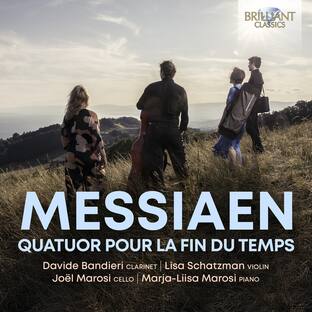
![Davide Bandieri - Messiaen: Quatour pour la fin du temps - COMPACT DISCS [CD]](https://pisces.bbystatic.com/image2/BestBuy_US/images/products/092e0408-ed70-4b1b-a720-edd661d38fc4.jpg;maxHeight=422;maxWidth=264?format=webp)
The masterpiece 'beyond Time' that is the Quatuor pour la fin du Temps first saw the light of day in Barrack 27 of the World War II prisoner-of-war camp Stalag VIII-A in Gorlitz, Silesia, performed by it's composer Olivier Messiaen on piano along with fellow prisoners Jean Le Boulaire on violin, Henri Akoka on clarinet and etienne Pasquier on cello. The unusual ensemble forces were dictated by what musicians were available in that environment of deprivation, and the prisoners' coping mechanisms in response to it played a part Akoka's clarinet and the singing of birds during dawn watches with Pasquier inspired the 3rd movement, Abîme des oiseaux for solo clarinet. As Messiaen himself explained before the concert, it is the first six verses of the Book of Revelation Chapter 10 that inform the piece as a whole. Starvation in the camp had provoked in him vivid, colourful dreams of the Angel's Rainbow, and the End of Time represented eternity in the face of the mortality confronting the internees. The sensory deprivation he experienced while imprisoned caused (or exacerbated) his synaesthesia, such that his hearing of harmonies and his vision of colours became blended in his mind. The work's difficulty is well known; in Gorlitz, from musicians already unbalanced by Messiaen's unconventional rhythms, the composer demanded extreme and unusual instrumental effects dynamic extremes, unheard-of force and maximum precision. Clarinettist Akoka complained about overly high notes and long phrases; violinist Le Boulaire about wide, inhumanly slow string melodies. But Messiaen's serenity at the piano instilled confidence, making the impossible possible and raising everything to a higher level. On a formal level, the eight movements of the Quatuor, linked by symbolic correspondences, reflect the biblical perfection of the number seven the six days of Creation followed by the day of
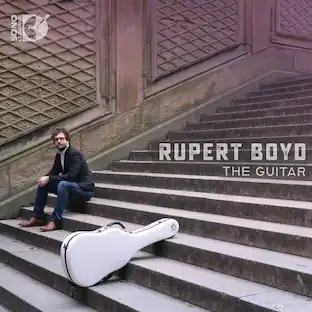
![Various Artists - Guitar - COMPACT DISCS [CD]](https://pisces.bbystatic.com/image2/BestBuy_US/images/products/a7b3cdc8-e8e1-465c-addd-4e1a1b60e714.jpg;maxHeight=422;maxWidth=264?format=webp)
This album pays homage to the guitar. While the casual listener may recognize many of these works as favorites from the guitar canon, the majority of the repertoire wasn't originally written for the instrument. Only the Sor and the Brouwer were originally guitar compositions. The other works started life in a different form, and stand testament to the strength and versatility of the guitar to not only play such a diverse range of repertoire, but to truly embrace it. With it's polyphonic capabilities and roots in popular music around the world, the guitar is singularly capable of such a traverse of styles. This album is not, as the title may imply, a collection of the most beloved or greatest hits from the classical guitar repertoire, but instead a demonstration of the power and ability of the guitar to perform and assume ownership of such beloved repertoire. New York-based Australian classical guitarist Rupert Boyd has been described by The Washington Post as Inchtruly evocativeInch, by Gramophone as a Inchfine guitaristInch, and by Classical Guitar Magazine as Incha player who deserves to be heardInch. He has performed across four continents, from New York's Carnegie Hall, to festivals in Europe, China, India, Nepal, the Philippines, New Zealand and Australia. Active as both a soloist and chamber musician, Rupert Boyd regularly performs throughout the world in Boyd Meets Girl, with cellist Laura Metcalf, and as part of the Australian Guitar Duo with guitarist Jacob Cordover. Album Tracks 1. 1. Miss Saigon Sun and Moon - Aladdin A Whole New - Les Miserables I Dreamed a Dream - on My Own - Mulan Reflection (Arr. G. Salonga) 2. 2. Company Another Hundred People (Arr. J. Villanueva) 3. 3. Introduction of Kory Katseanes and the Byu Chamber Orchestra 4. 5. Flower Drum Song I Enjoy Being a Girl (Arr. G. Salonga) 5. 6. Introduction to Reflection 6. 7. M
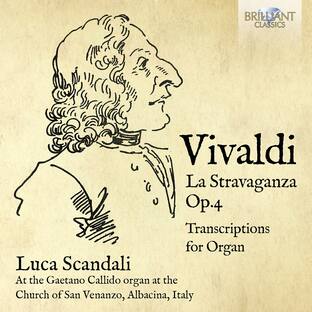
![Luca Scandali - La Stravaganza, Op. 4 - COMPACT DISCS [CD]](https://pisces.bbystatic.com/image2/BestBuy_US/images/products/16ea49a0-0916-4122-9c8e-793b08aa3bd7.jpg;maxHeight=422;maxWidth=264?format=webp)
The concerto played a leading role in the evolution of the language and style of instrumental music from the late 17th century onwards, with it's popularity and importance continuing to grow throughout the 18th century. Antonio Vivaldi (1678-1741) did not invent the concerto grosso or solo concerto, but he can, without a shadow of a doubt, be considered the composer who gave the greatest boost to the genre, turning it into the dominant form of instrumental music in the first half of the 18th century without Vivaldi and his concertos, the history of music would surely have followed a different trajectory. La Stravaganza Op.4 was published in approximately 1714, and it's 12 concerti are almost entirely written for solo violin, with the sole exception of Concerto No.7, which is scored for two violins and cello. The curious title (which literally means 'extravagance' or 'eccentricity') that Vivaldi gave to this collection seems to refer to the early Italian baroque style, which remained dominant throughout the 1600s through to the early 1700s. This particular style sought to move and cajole audiences in various ways, including expert use of eccentric features, trickery and virtuosity, and it's influence was felt in all the 17th century's instrumental and vocal writing. Vivaldi's musical language and style also contained certain 'extravagant' elements, albeit interpreted in his own personal way. Numerous examples of stylistic originality marked a genuine departure from Corelli, while attesting to the bold experimentation and acrobatic virtuosity for which Vivaldi is renowned asymmetry in form; extensive and inventive harmonic progressions; sudden, theatrical breaks; and prominent, fast and virtuosic solo parts. The concertos on this recording come from the Anne Dawson's Book collection, held in the Henry Watson Music Library in Manchester (UK). In addition to arias for v
Specs
Be the first to ask a question.
We’ll try to get your question answered within 24 hours by a Best Buy customer or brand representative.
More to consider
Elevate your entertainment Sponsored
 $2,419.95The price was $2,759.95
 $3,109.99The price was $5,599.99
 $529.99The price was $799.99



Keep exploring
 $51.39The price was $58.34