John McGuire - Vanishing Points / A Cappella - VINYL LP
Reviews coming soon
About this product
In his InchPulse MusicInch compositions of the mid-1970s, composer John McGuire forged a unique interpretation of European serialism. A student of Karlheinz Stockhausen, Krzysztof Penderecki and Gottfried Michael Koenig, McGuire moved to Cologne, Germany in 1970, where he become associated with the world-leading Studio for Electronic Music at Westdeutscher Rundfunk (WDR) in Cologne. Like Stockhausen, McGuire found his musical imagination both constrained and inspired by the technology that was available to him.A conversation with sculptor Hans Karl Burgeff led McGuire to think beyond the horizon and into limitless space. For InchVanishing PointsInch (1985-1988), McGuire used an entirely digital set-up for the first time a digital sequencer, eight Yamaha DX-7 synthesizers and a Studer 24-track digital tape recorder. The piece was conceived as a InchsequelInch to the Pulse Music series, but also a step forward from it. Whereas the Pulse Music pieces had employed steady streams of pulses, with Vanishing Points McGuire employed pulse layers that accelerate or decelerate against one another, vastly increasing the resulting rhythmic complexity.McGuire's exploration of music technology continued in InchA CappellaInch (1990-1997), written for his wife, the soprano Beth Griffith, known for her recording of Morton Feldman's InchThree VoicesInch made in 1983. Using samples, he created a four-voice choir of voice samples and arranged them into interacting parts. The composition faced challenges due to the organic nature of the human voice compared to the precision of synthesized sounds. This process involved extensive editing and a negotiation between the InchmaterialInch and the Inchoriginal conceptionInch. This sort of negotiation applies as much to the composition of a single piece as it does to the work of two decades. Album Tracks 1. Vanishing Points 2. A Cappella
Format
VINYLSpecifications
- GenreClassicalDescriptionIn his InchPulse MusicInch compositions of the mid-1970s, composer John McGuire forged a unique interpretation of European serialism. A student of Karlheinz Stockhausen, Krzysztof Penderecki and Gottfried Michael Koenig, McGuire moved to Cologne, Germany in 1970, where he become associated with the world-leading Studio for Electronic Music at Westdeutscher Rundfunk (WDR) in Cologne. Like Stockhausen, McGuire found his musical imagination both constrained and inspired by the technology that was available to him.A conversation with sculptor Hans Karl Burgeff led McGuire to think beyond the horizon and into limitless space. For InchVanishing PointsInch (1985-1988), McGuire used an entirely digital set-up for the first time a digital sequencer, eight Yamaha DX-7 synthesizers and a Studer 24-track digital tape recorder. The piece was conceived as a InchsequelInch to the Pulse Music series, but also a step forward from it. Whereas the Pulse Music pieces had employed steady streams of pulses, with Vanishing Points McGuire employed pulse layers that accelerate or decelerate against one another, vastly increasing the resulting rhythmic complexity.McGuire's exploration of music technology continued in InchA CappellaInch (1990-1997), written for his wife, the soprano Beth Griffith, known for her recording of Morton Feldman's InchThree VoicesInch made in 1983. Using samples, he created a four-voice choir of voice samples and arranged them into interacting parts. The composition faced challenges due to the organic nature of the human voice compared to the precision of synthesized sounds. This process involved extensive editing and a negotiation between the InchmaterialInch and the Inchoriginal conceptionInch. This sort of negotiation applies as much to the composition of a single piece as it does to the work of two decades. Album Tracks 1. Vanishing Points 2. A CappellaArtistJohn McGuireTitleVanishing Points / A CappellaFormatVINYLLabelUnseen Worlds
Reviews
This product doesn't have any reviews yet.
Compare similar products

In his InchPulse MusicInch compositions of the mid-1970s, composer John McGuire forged a unique interpretation of European serialism. A student of Karlheinz Stockhausen, Krzysztof Penderecki and Gottfried Michael Koenig, McGuire moved to Cologne, Germany in 1970, where he become associated with the world-leading Studio for Electronic Music at Westdeutscher Rundfunk (WDR) in Cologne. Like Stockhausen, McGuire found his musical imagination both constrained and inspired by the technology that was available to him.A conversation with sculptor Hans Karl Burgeff led McGuire to think beyond the horizon and into limitless space. For InchVanishing PointsInch (1985-1988), McGuire used an entirely digital set-up for the first time a digital sequencer, eight Yamaha DX-7 synthesizers and a Studer 24-track digital tape recorder. The piece was conceived as a InchsequelInch to the Pulse Music series, but also a step forward from it. Whereas the Pulse Music pieces had employed steady streams of pulses, with Vanishing Points McGuire employed pulse layers that accelerate or decelerate against one another, vastly increasing the resulting rhythmic complexity.McGuire's exploration of music technology continued in InchA CappellaInch (1990-1997), written for his wife, the soprano Beth Griffith, known for her recording of Morton Feldman's InchThree VoicesInch made in 1983. Using samples, he created a four-voice choir of voice samples and arranged them into interacting parts. The composition faced challenges due to the organic nature of the human voice compared to the precision of synthesized sounds. This process involved extensive editing and a negotiation between the InchmaterialInch and the Inchoriginal conceptionInch. This sort of negotiation applies as much to the composition of a single piece as it does to the work of two decades. Album Tracks 1. Vanishing Points 2. A Cappella

Limited 180 gram vinyl LP pressing including original artwork. Recorded live at The Lyceum Ballroom in London 1975, during the UK leg of the Natty Dread tour. Passionate and symbiotic energies constantly cycle between the band and audience, the net result of which is one of the most memorable concert recordings of the pop music era. The original artwork includes the fold out poster. Bob Marley was a Jamaican reggae singer, song writer, musician, and guitarist who achieved international fame and acclaim. His music in the 70s established his worldwide reputation and produced his status as one of the world's best-selling artists of all time, with sales of more than 75 million records. Album Tracks 1. Trenchtown Rock 4 00 2. Burnin' and Lootin' 4 55 3. Them Belly Full (But We Hungry) 4 24 4. Lively Up Yourself 4 24 5. No Woman, No Cry 6 55 6. I Shot the Sheriff 5 07 7. Get Up, Stand Up 6 19
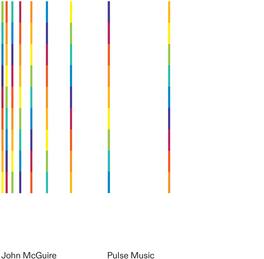
Presented together for the first time, American composer John McGuire's Pulse Music series (1975-1979) blurs the popular narrative that Minimalism was a reaction against Europe's angular, intellectual, inscrutable high-modernism. McGuire, born in California, studied at Occidental College in Los Angeles and UC Berkeley before going to Europe to study with Karlheinz Stockhausen, Krzysztof Penderecki, and Gottfried Michael Koenig. His compositions lock serialism's warped geometries onto an evenly spaced grid, perfectly preserving serial music's multi-dimensionality while smoothing it's wildest disjunctures and sharpest angles. If serialism is Montreal's Habitat 67 modular housing complex, McGuire's Pulse Music compositions are the primary-colored grids of Le Corbusier's L'Habitation apartment complex - an exuberant expression of the same materials and principles. Every layer of pulses is made distinct through it's timbre, register, and tempo. We hear them as a plurality, organized like stars in the sky. Every so often the sky rotates and the stars appear in a different arrangement. Our ear naturally starts to draw connections and, as it sweeps between one layer and another, what was discrete becomes continuous. Pulses become flows; quantitative reality becomes qualitative experience. McGuire's pulse pieces were realized electronically, in the newly built Studio for Electronic Music at the State University of Cologne and WDR, but Pulse Music II adapted his ideas to an orchestral canvas. Commissioned retrospectively by the composer and radio producer Hans Otte for his Pro Musica Nova festival at Radio Bremen. Alongside the Bremen orchestra, conducted by Klaus Bernbacher, were four pianists-Christoph Delz, Herbert Henck, Deborah Richards, Doris Thomsen-and McGuire himself playing a series of twelve drone-like chords on the organ. The techniques of the electronic Pulse Music

Album Tracks 1. Utah and the Sky Over Utah 2. Will Call 3. I'll Wait for You 4. 151 Rum 5. Spectral Dawn 6. Interlude 1 7. Oral History of Silk Road 1 8. Interlude 2 9. Henry Ford Gymnasium 10. I Got S**t to Lose 11. -Ext 12. Enter the Void
Specs
Be the first to ask a question.
We’ll try to get your question answered within 24 hours by a Best Buy customer or brand representative.