Trouvere - DVD
Reviews coming soon
About this product
After the great success that Il Trovatore received in Paris, Verdi was proposed to compose a French version of the opera to suit the tastes of the local public. The original work, based on the Spanish play El trovador by Antonio García Gutiérrez, had a libretto by Cammarano, which was translated into French by Émilien Pacini. Le Trouvère was first staged in Brussels in 1856 and premiered at the Paris Opera in 1857. In this new version the composer added some music in act 3 for the gypsie ballet scene, extended the finale of act 4 and made several other revisions. The plot is highly dramatic and captivating Verdi portrays strong characters who deal with war, obsession and revenge. To use director Robert Wilson's words Inchthis is a family tragedy, and in many ways, it is a very contemporary story.Inch Wilson's approach to the opera aims at preserving it's emotional strength by using a very essential décor, whose main element is light InchAs a director, when I design the stage and lighting, I think about if what I see can help me hear better. Le Trouvère requires a tremendous amount of concentration, so the set I designed is abstract in order to create a space for the music in the Farnese. I have designed an environment in concrete, creating a juxtaposition to the theatre's ornate interior. [...] Light in my work functions as part of the architectural whole. It is an element which helps us hear and see. Without light there is no space. To light a world that Verdi has described as so dark, one needs light to make the space darker.Inch In the set's background the director also uses some photos by American photographer Robert Rosenkranz. This production was staged in the splendid Teatro Farnese of Parma, which was built in 1628 and belongs to the Complesso Monumentale della Pilotta, one of the oldest museums in Italy. Extra content Interview with the curator of the Muse
Specifications
- GenreMusicDescriptionAfter the great success that Il Trovatore received in Paris, Verdi was proposed to compose a French version of the opera to suit the tastes of the local public. The original work, based on the Spanish play El trovador by Antonio García Gutiérrez, had a libretto by Cammarano, which was translated into French by Émilien Pacini. Le Trouvère was first staged in Brussels in 1856 and premiered at the Paris Opera in 1857. In this new version the composer added some music in act 3 for the gypsie ballet scene, extended the finale of act 4 and made several other revisions. The plot is highly dramatic and captivating Verdi portrays strong characters who deal with war, obsession and revenge. To use director Robert Wilson's words Inchthis is a family tragedy, and in many ways, it is a very contemporary story.Inch Wilson's approach to the opera aims at preserving it's emotional strength by using a very essential décor, whose main element is light InchAs a director, when I design the stage and lighting, I think about if what I see can help me hear better. Le Trouvère requires a tremendous amount of concentration, so the set I designed is abstract in order to create a space for the music in the Farnese. I have designed an environment in concrete, creating a juxtaposition to the theatre's ornate interior. [...] Light in my work functions as part of the architectural whole. It is an element which helps us hear and see. Without light there is no space. To light a world that Verdi has described as so dark, one needs light to make the space darker.Inch In the set's background the director also uses some photos by American photographer Robert Rosenkranz. This production was staged in the splendid Teatro Farnese of Parma, which was built in 1628 and belongs to the Complesso Monumentale della Pilotta, one of the oldest museums in Italy. Extra content Interview with the curator of the MuseTitleTrouvereFormatDVDMPAA RatingNRStudioDynamic
Reviews
This product doesn't have any reviews yet.
Compare similar products
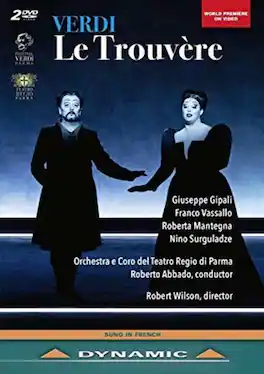
After the great success that Il Trovatore received in Paris, Verdi was proposed to compose a French version of the opera to suit the tastes of the local public. The original work, based on the Spanish play El trovador by Antonio García Gutiérrez, had a libretto by Cammarano, which was translated into French by Émilien Pacini. Le Trouvère was first staged in Brussels in 1856 and premiered at the Paris Opera in 1857. In this new version the composer added some music in act 3 for the gypsie ballet scene, extended the finale of act 4 and made several other revisions. The plot is highly dramatic and captivating Verdi portrays strong characters who deal with war, obsession and revenge. To use director Robert Wilson's words Inchthis is a family tragedy, and in many ways, it is a very contemporary story.Inch Wilson's approach to the opera aims at preserving it's emotional strength by using a very essential décor, whose main element is light InchAs a director, when I design the stage and lighting, I think about if what I see can help me hear better. Le Trouvère requires a tremendous amount of concentration, so the set I designed is abstract in order to create a space for the music in the Farnese. I have designed an environment in concrete, creating a juxtaposition to the theatre's ornate interior. [...] Light in my work functions as part of the architectural whole. It is an element which helps us hear and see. Without light there is no space. To light a world that Verdi has described as so dark, one needs light to make the space darker.Inch In the set's background the director also uses some photos by American photographer Robert Rosenkranz. This production was staged in the splendid Teatro Farnese of Parma, which was built in 1628 and belongs to the Complesso Monumentale della Pilotta, one of the oldest museums in Italy. Extra content Interview with the curator of the Muse
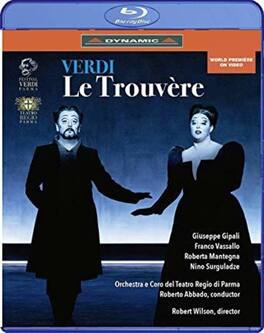
After the great success that Il Trovatore received in Paris, Verdi was proposed to compose a French version of the opera to suit the tastes of the local public. The original work, based on the Spanish play El trovador by Antonio García Gutiérrez, had a libretto by Cammarano, which was translated into French by Émilien Pacini. Le Trouvère was first staged in Brussels in 1856 and premiered at the Paris Opera in 1857. In this new version the composer added some music in act 3 for the gypsie ballet scene, extended the finale of act 4 and made several other revisions. The plot is highly dramatic and captivating Verdi portrays strong characters who deal with war, obsession and revenge. To use director Robert Wilson's words Inchthis is a family tragedy, and in many ways, it is a very contemporary story.Inch Wilson's approach to the opera aims at preserving it's emotional strength by using a very essential décor, whose main element is light InchAs a director, when I design the stage and lighting, I think about if what I see can help me hear better. Le Trouvère requires a tremendous amount of concentration, so the set I designed is abstract in order to create a space for the music in the Farnese. I have designed an environment in concrete, creating a juxtaposition to the theatre's ornate interior. [...] Light in my work functions as part of the architectural whole. It is an element which helps us hear and see. Without light there is no space. To light a world that Verdi has described as so dark, one needs light to make the space darker.Inch In the set's background the director also uses some photos by American photographer Robert Rosenkranz. This production was staged in the splendid Teatro Farnese of Parma, which was built in 1628 and belongs to the Complesso Monumentale della Pilotta, one of the oldest museums in Italy. Extra content Interview with the curator of the Muse
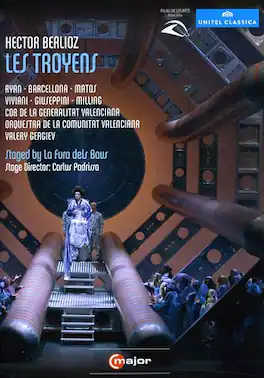
Daniela Barcelona, Lance Ryan, Elisabete Matos, Giorgio Giuseppini, Gabriele Viviani, and Stephen Milling star in this Valenciana Palau de les Arts production of the Berlioz opera conduced by Valery Gergiev and directed by Carlus Padrissa.
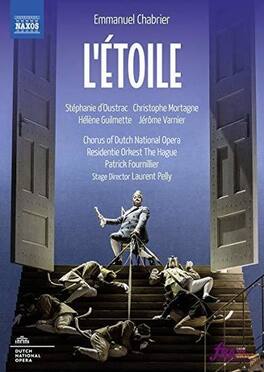
L'Étoile did much to establish Chabrier as a major force on the Parisian stage and his contemporary Henri Duparc praised him specifically for creating a French comic genre, both funny and musical - described as something of a French Die Meistersinger. The fanciful story is set in an imaginary kingdom and all, naturally, ends well. However, despite the slight plot line L'Étoile is something of a pivotal work, a unique example of French 19th-century light opera, orchestrated with great sophistication and flooded with gossamer wit. This production, featuring Stephane d'Oustrac, Christophe Mortagne, and Helene Guilmette, is a co-production of the Dutch National Opera, Amsterdam and Francois Roussillon et Associes.
Specs
Be the first to ask a question.
We’ll try to get your question answered within 24 hours by a Best Buy customer or brand representative.