Erik Bosgraaf - Folk Baroque (2 LP - colored vinyl) - VINYL LP
Reviews coming soon
About this product
The LP version When Baroque Meets Folk EnergyIn 'folk baroque', the music of Georg Philipp Telemann encounters the vibrant dance traditions of central Europe. The program grew out of a collaboration between recorder virtuoso Erik Bosgraaf and the Italian ensemble filoBarocco during the Gottingen International Handel Festival, initiated within the European support programme EEEMERGING+.At the heart of the project lies the fascinating Rostock Manuscript, a historical source long associated with Telemann's fascination with Central European folk traditions. For Bosgraaf and filoBarocco, the manuscript offers the perfect point of departure for exploring the meeting ground between Baroque repertoire and living folk music traditions. The ensemble shares a deep enthusiasm not only for historical performance practice but also for music that retains the energy, spontaneity, and expressive freedom of traditional dance music.Telemann himself was renowned for his openness to musical influences from across Europe. During his travels he encountered Polish and Hanna folk traditions that left a lasting impression on him. In his autobiographical writings, he vividly describes the impact of this music it's rhythmic vitality, it's improvisatory spirit, and it's powerful melodic expression. These qualities fascinated him and found their way, sometimes subtly, sometimes quite directly, into his own compositions.Yet reconstructing the sound world of the eighteenth century presents a unique challenge. Unlike music from the twentieth or twenty-first centuries, there are no recordings to tell us exactly how this repertoire once sounded. Historically informed performance with this repertoire therefore requires re-composition. Musicians must piece together clues from written scores, historical treatises, instrument research, and contemporary descriptions.On the recording 'folk baroque' the mus
- GenreClassicalDescriptionThe LP version When Baroque Meets Folk EnergyIn 'folk baroque', the music of Georg Philipp Telemann encounters the vibrant dance traditions of central Europe. The program grew out of a collaboration between recorder virtuoso Erik Bosgraaf and the Italian ensemble filoBarocco during the Gottingen International Handel Festival, initiated within the European support programme EEEMERGING+.At the heart of the project lies the fascinating Rostock Manuscript, a historical source long associated with Telemann's fascination with Central European folk traditions. For Bosgraaf and filoBarocco, the manuscript offers the perfect point of departure for exploring the meeting ground between Baroque repertoire and living folk music traditions. The ensemble shares a deep enthusiasm not only for historical performance practice but also for music that retains the energy, spontaneity, and expressive freedom of traditional dance music.Telemann himself was renowned for his openness to musical influences from across Europe. During his travels he encountered Polish and Hanna folk traditions that left a lasting impression on him. In his autobiographical writings, he vividly describes the impact of this music it's rhythmic vitality, it's improvisatory spirit, and it's powerful melodic expression. These qualities fascinated him and found their way, sometimes subtly, sometimes quite directly, into his own compositions.Yet reconstructing the sound world of the eighteenth century presents a unique challenge. Unlike music from the twentieth or twenty-first centuries, there are no recordings to tell us exactly how this repertoire once sounded. Historically informed performance with this repertoire therefore requires re-composition. Musicians must piece together clues from written scores, historical treatises, instrument research, and contemporary descriptions.On the recording 'folk baroque' the musArtistErik BosgraafTitleFolk Baroque (2 LP - colored vinyl)FormatVINYLLabelBrilliant Classics
Reviews
This product doesn't have any reviews yet.
Compare similar products
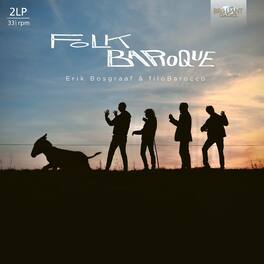
The LP version When Baroque Meets Folk EnergyIn 'folk baroque', the music of Georg Philipp Telemann encounters the vibrant dance traditions of central Europe. The program grew out of a collaboration between recorder virtuoso Erik Bosgraaf and the Italian ensemble filoBarocco during the Gottingen International Handel Festival, initiated within the European support programme EEEMERGING+.At the heart of the project lies the fascinating Rostock Manuscript, a historical source long associated with Telemann's fascination with Central European folk traditions. For Bosgraaf and filoBarocco, the manuscript offers the perfect point of departure for exploring the meeting ground between Baroque repertoire and living folk music traditions. The ensemble shares a deep enthusiasm not only for historical performance practice but also for music that retains the energy, spontaneity, and expressive freedom of traditional dance music.Telemann himself was renowned for his openness to musical influences from across Europe. During his travels he encountered Polish and Hanna folk traditions that left a lasting impression on him. In his autobiographical writings, he vividly describes the impact of this music it's rhythmic vitality, it's improvisatory spirit, and it's powerful melodic expression. These qualities fascinated him and found their way, sometimes subtly, sometimes quite directly, into his own compositions.Yet reconstructing the sound world of the eighteenth century presents a unique challenge. Unlike music from the twentieth or twenty-first centuries, there are no recordings to tell us exactly how this repertoire once sounded. Historically informed performance with this repertoire therefore requires re-composition. Musicians must piece together clues from written scores, historical treatises, instrument research, and contemporary descriptions.On the recording 'folk baroque' the mus
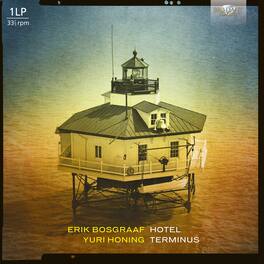
Seven pieces inspired by Bach's Brandenburg Concertos.A high-grade bio-vinyl LP transfer for a quirky album scored for a modern-jazz ensemble but crossing genre boundaries in a stylish fusion of Baroque, lounge, jazz and minimalism. Adler, Ibis, Western, Sheraton, Hyatt, Umai, Terminus. The titles of these instrumental songs evoke the restless nowhere space of the international hotel chain, where guests may feel at once at home, in a space of comforting familiarity, and yet curiously suspended from the world around and outside. Through the high-rise windows of a hotel, we see but are isolated from the surrounding cityscape, Tokyo or London or Los Angeles. The passage of time becomes redefined in these spaces, moving faster through the impermanence of one's stay and yet stretching out along their endless corridors, their smooth lifts and impersonal restaurants. All these sensations and impressions are evoked by Erik Bosgraaf and his colleagues. Passing impressions and sketches of particular places embed themselves within riffs and ostinatos. What is improvised, and what is composed? Such distinctions melt away. Meanwhile fragments of Baroque rhetoric - specifically, motifs and ideas drawn from the Brandenburg Concertos of Bach - surface from time to time, but on instruments and in contexts entirely foreign to Bach himself. In one sense, then, there is a kinship with the 'lift music' which accompanies listeners and guests on their frictionless passage to the 45th floor. In another, Bach is the grit in the oyster, reminding us that music is not another industrial process but the work of living genius. In Sheraton, the sublime melody from the slow movement of the First Brandenburg becomes stuck on a loop, while other instruments enter and leave. The album is a rich sonic metaphor for contemporary life but also a dream sequence as ideal in it's way for late-night consumpti
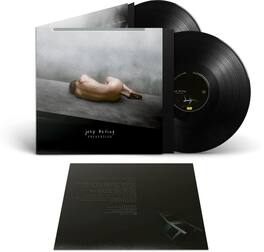
Dutch pianist and composer Joep Beving is a leading neo-classical artist, garnering fans worldwide with his warm, contemplative music, which is evident on his 2017 album, Prehension. Pressed on EcoRecord, a sustainable record made from PET instead of PVC and, thanks to an innovative production process, saves up to 85% energy compared to conventional vinyl production, without compromising on sound and product quality. 2-LP set. Album Tracks 1. Ab Ovo 2. Kawakaari 3. Gift 4. Impermanence 5. Heartfelt Silence 6. Sonderling 7. Souvenir Des Temps Gracieux 1. Pippa's Theme 2. Man Who Carried the Wind 3. Seelenkind 4. 432 5. Hanging D 6. Heartfelt Silence 2 7. Amalgamation Waltz 1839 8. Every Ending Is a New Beginning
![Erik Bosgraaf - Adriana - COMPACT DISCS [CD]](https://pisces.bbystatic.com/image2/BestBuy_US/images/products/2cb87d13-eaf8-4cfc-999a-ae8d778be8cd.jpg;maxHeight=422;maxWidth=264?format=webp)
The forgotten figure of a 17th-century Dutch recorder virtuoso, illuminated by a unique synthesis of art history, scholarship and modern musicianship. Der Fluyten Lust-hof (The Flute's Pleasure Garden, or Garden of Delights) is a collection of music for recorder compiled by Jacob van Eyck and published in Amsterdam by Paulus Matthijsz. It is the largest collection of music for a single wind instrument ever published by a single composer, and has supplied recorder players, amateurs and professionals, with music for reflection and entertainment ever since the publication of it's initial volume in 1644, as Der goden fluit-hemel (The Gods' Flute-Heaven). An overlooked detail is the dedication of the first volume, to Adriana vanden Bergh, who is extravagantly compared to the muse Euterpe in a four-line poem 'Euterpe's spirit was reborn, or so it did appear, / Whene'er the sound of ADRIANA's Fluyt I chanced to hear / A wonder of our century, that such a youthful lass / Wears in the name of all the maidens laurels on Parnas.' Who was Adriana vanden Bergh? This book and CD tells the full and fascinating story, shedding light along the way on many aspects of culture, religion and everyday life in Amsterdam during the 17th century. As both a musicologist and art historian, Thiemo Wind is uniquely placed to tell this story. He has identified Adriana as the subject of a famous painting by Jacob Adriaensz Backer (1608/09-1651), hitherto anonymous but considered one of the most beautiful portraits of the Dutch Golden Age. Through original research, Thiemo Wind has assembled an eventful biography, which moves in short and lively chapters, each of them illustrated with a telling image, from Adriana's family background to her birth in 1631, her complex religious inheritance of both Protestant and Catholic observance, her apparently rapid mastery of the recorder, her participation in
Specs
Be the first to ask a question.
We’ll try to get your question answered within 24 hours by a Best Buy customer or brand representative.