Franz Liszt Piano Duo - Piano Music 34 - COMPACT DISCS [CD]
Reviews coming soon
About this product
Liszt wrote his A Faust Symphony; Three Character Pictures, Faust, Gretchen and Mephistopheles, after Goethe, in 1854, adding a choral finale three years later, when it was first performed in Weimar. Further revisions took place, with changes introduced even as late as 1880. He transcribed the second Gretchen movement for solo piano, completing it eventually in 1874, and in 1862 published his version of the work for two pianos, revising it in 1870. The subject of Faust, the scholar who sold his soul to the Devil in return for youth and power, had a particular attraction to artists in the nineteenth century, when Faust might appear as a human hero, an opponent of ancient tyrannies, political and religious, and the Devil himself might seem to have similar attractions. Where the Elizabethan version of the story by Christopher Marlowe brought Faust to a medieval Hell, Goethe's monumental and influential poetic treatment of the subject ended in the final redemption of Faust through the power of love and of the woman he had wronged, Gretchen. Liszt based his symphony on the literary work of his great predecessor in Weimar, Goethe, and returned to the subject of Faust in later compositions based on Lenau's Faust, including the Mephisto Waltzes. The second movement, Gretchen, generally lightly scored, starts with a gentle passage, scored originally for flutes and clarinets, followed by the main theme, played by oboe accompanied by solo viola, the two piano version marked Innocente. There is a short passage that represents the scene in the garden when Gretchen plucks the petals of a flower, seeking to know whether Faust loves her or not. A second Gretchen theme is heard, and in the central section of the movement Faust's theme of love appears, and a descending melody associated with Faust's yearning. The agitated theme of Faust's struggle re-appears, now mollified in a gentler
- GenreClassicalDescriptionLiszt wrote his A Faust Symphony; Three Character Pictures, Faust, Gretchen and Mephistopheles, after Goethe, in 1854, adding a choral finale three years later, when it was first performed in Weimar. Further revisions took place, with changes introduced even as late as 1880. He transcribed the second Gretchen movement for solo piano, completing it eventually in 1874, and in 1862 published his version of the work for two pianos, revising it in 1870. The subject of Faust, the scholar who sold his soul to the Devil in return for youth and power, had a particular attraction to artists in the nineteenth century, when Faust might appear as a human hero, an opponent of ancient tyrannies, political and religious, and the Devil himself might seem to have similar attractions. Where the Elizabethan version of the story by Christopher Marlowe brought Faust to a medieval Hell, Goethe's monumental and influential poetic treatment of the subject ended in the final redemption of Faust through the power of love and of the woman he had wronged, Gretchen. Liszt based his symphony on the literary work of his great predecessor in Weimar, Goethe, and returned to the subject of Faust in later compositions based on Lenau's Faust, including the Mephisto Waltzes. The second movement, Gretchen, generally lightly scored, starts with a gentle passage, scored originally for flutes and clarinets, followed by the main theme, played by oboe accompanied by solo viola, the two piano version marked Innocente. There is a short passage that represents the scene in the garden when Gretchen plucks the petals of a flower, seeking to know whether Faust loves her or not. A second Gretchen theme is heard, and in the central section of the movement Faust's theme of love appears, and a descending melody associated with Faust's yearning. The agitated theme of Faust's struggle re-appears, now mollified in a gentlerArtistFranz Liszt Piano DuoTitlePiano Music 34FormatCDLabelNaxos
Reviews
This product doesn't have any reviews yet.
Compare similar products
![Franz Liszt Piano Duo - Piano Music 34 - COMPACT DISCS [CD]](https://pisces.bbystatic.com/image2/BestBuy_US/images/products/7dd2b680-0836-4d69-82e7-a7fa28871b6f.jpg;maxHeight=422;maxWidth=264?format=webp)
Liszt wrote his A Faust Symphony; Three Character Pictures, Faust, Gretchen and Mephistopheles, after Goethe, in 1854, adding a choral finale three years later, when it was first performed in Weimar. Further revisions took place, with changes introduced even as late as 1880. He transcribed the second Gretchen movement for solo piano, completing it eventually in 1874, and in 1862 published his version of the work for two pianos, revising it in 1870. The subject of Faust, the scholar who sold his soul to the Devil in return for youth and power, had a particular attraction to artists in the nineteenth century, when Faust might appear as a human hero, an opponent of ancient tyrannies, political and religious, and the Devil himself might seem to have similar attractions. Where the Elizabethan version of the story by Christopher Marlowe brought Faust to a medieval Hell, Goethe's monumental and influential poetic treatment of the subject ended in the final redemption of Faust through the power of love and of the woman he had wronged, Gretchen. Liszt based his symphony on the literary work of his great predecessor in Weimar, Goethe, and returned to the subject of Faust in later compositions based on Lenau's Faust, including the Mephisto Waltzes. The second movement, Gretchen, generally lightly scored, starts with a gentle passage, scored originally for flutes and clarinets, followed by the main theme, played by oboe accompanied by solo viola, the two piano version marked Innocente. There is a short passage that represents the scene in the garden when Gretchen plucks the petals of a flower, seeking to know whether Faust loves her or not. A second Gretchen theme is heard, and in the central section of the movement Faust's theme of love appears, and a descending melody associated with Faust's yearning. The agitated theme of Faust's struggle re-appears, now mollified in a gentler
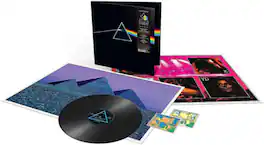
Limited 180gm vinyl LP pressing in gatefold jacket. The 50th anniversary edition of the original studio album remastered by James Guthrie comes in a gatefold jacket with posters and stickers. Album Tracks 1. Speak to Me 2. Breathe (In the Air) 3. On the Run 4. Time 5. The Great Gig in the Sky 1. Money 2. Us and Them 3. Any Colour You Like 4. Brain Damage 5. Eclipse
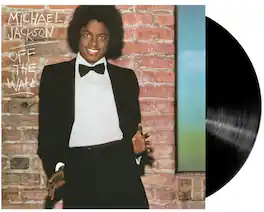
Limited vinyl LP repressing in gatefold jacket. Off the Wall is the fifth solo studio album by Michael Jackson. It was released on August 10, 1979, following Jackson's critically well-received film performance in The Wiz. While working on that project, Jackson and Quincy Jones had become friends, and Jones agreed to work with Jackson on his next studio album. Recording sessions took place between December 1978 and June 1979 at Allen Zentz Recording, Westlake Recording Studios, and Cherokee Studios in Los Angeles, California. Jackson collaborated with a number of other writers and performers such as Paul McCartney, Stevie Wonder and Rod Temperton. Five singles were released from the album. It was his first solo under Epic Records, the tag he would record on until his death roughly 30 years later. Album Tracks 1. Don't Stop 'Til You Get Enough 2. Rock with You 3. Workin' Day and Night 4. Get on the Floor 1. Off the Wall 2. Girlfriend 3. She's Out of My Life 4. I Can't Help It 5. It's the Falling in Love 6. Burn This Disco Out
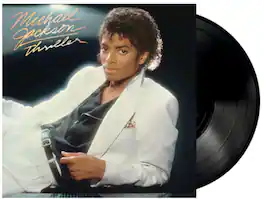
Limited vinyl LP repressing in gatefold jacket. Thriller is the sixth solo studio album by Michael Jackson. It was released by Epic Records on November 30, 1982, as the follow-up to Jackson's critically and commercially successful 1979 album Off The Wall. Thriller explores similar genres to those of Off The Wall, including pop, post-disco, rock and funk. Recording sessions took place on April to November 1982 at Westlake Recording Studios in Los Angeles with a production budget of $750, 000, assisted by producer Quincy Jones. Seven singles were released from the album, all of which reached the Top 10 on the Billboard Hot 100. In just over a year, Thriller became-and currently remains-the best-selling album of all time, with estimated sales of 65 million copies worldwide. It has become the first album ever to be certified 32 times multi-platinum for U.S. sales, marking more than 32 million sales shipped. The album won a record-breaking eight Grammy Awards in 1984, including for Album of the Year. Album Tracks 1. Wanna Be Startin' Somethin' Jackson, Michael 6 03 2. Baby Be Mine Jackson, Michael 4 20 3. The Girl Is Mine Jackson, Michael with Paul McCartney 3 42 4. Thriller Jackson, Michael 5 58 1. Beat It (Single Version) Jackson, Michael 4 18 2. Billie Jean (Single Version) Jackson, Michael 4 53 3. Human Nature Jackson, Michael 4 05 4. P.Y.T. (Pretty Young Thing) Jackson, Michael 3 59 5. The Lady in My Life Jackson, Michael 4 57
| Pros for Franz Liszt Piano Duo - Piano Music 34 - COMPACT DISCS [CD] | |||
|---|---|---|---|
| There were no pros for this product— | There were no pros for this product— | There were no pros for this product— | Sound Quality |
Specs
Be the first to ask a question.
We’ll try to get your question answered within 24 hours by a Best Buy customer or brand representative.