Nancy Ambrose King - Oboe Concertos - COMPACT DISCS [CD]
Reviews coming soon
About this product
Classical-era oboe concertos, full of flourish and elegantly turned melodies in polished and critically praised recordings from 2000-2. 'This repertoire certainly deserves your attention,' wrote the Fanfare reviewer when this album was first issued, 'for it is an excellent alternative - even a potent supplement - to the Mozart oboe concerto.' He went on to praise the 'fine tone' and 'impressive technique' of the soloist, American oboist Nancy Ambrose King. The Janácek Philharmonic play with 'verve, fine drama, and an excellent sense of unity from beginning to end,' conducted by Jeremy Swerling who 'keeps a nice grip on the proceedings, but also allows some flexibility in the way things are done.' As to the repertoire itself Ludwig August Lebrun (1752-1790) was an oboist by training, and the son of an oboist at the Mannheim court, Alexander Lebrun. Ludwig evidently wrote these concertos, and another 10 in the same vein, in order to showcase his own abilities on an instrument which was evolving rapidly in terms of technical innovation (projecting further, with more reliable tone) and thus allowing for greater virtuosity on behalf of both composers and performers. There are four concertos here, and they all adhere to the standard three-movement form and belong to the idiom of the Mannheim school exemplified by exemplified by the likes of Danzi (whose daughter Lebrun married) and Cannabich. There are delicate melodies as well as spectacular virtuosity in music filled with imagination, humour, and depth, not to mention the occasional unexpected turn of phrase. These are not miniature or insignificant pieces. The opening G minor piece is developed with the kind of pathos we associate with the key in the hands of Mozart, and after two F major concertos, the album concludes with a poignant and stern D minor concerto, punctuated by trumpet and drums, and enclosing a noble Gra
Specifications
- GenreClassicalDescriptionClassical-era oboe concertos, full of flourish and elegantly turned melodies in polished and critically praised recordings from 2000-2. 'This repertoire certainly deserves your attention,' wrote the Fanfare reviewer when this album was first issued, 'for it is an excellent alternative - even a potent supplement - to the Mozart oboe concerto.' He went on to praise the 'fine tone' and 'impressive technique' of the soloist, American oboist Nancy Ambrose King. The Janácek Philharmonic play with 'verve, fine drama, and an excellent sense of unity from beginning to end,' conducted by Jeremy Swerling who 'keeps a nice grip on the proceedings, but also allows some flexibility in the way things are done.' As to the repertoire itself Ludwig August Lebrun (1752-1790) was an oboist by training, and the son of an oboist at the Mannheim court, Alexander Lebrun. Ludwig evidently wrote these concertos, and another 10 in the same vein, in order to showcase his own abilities on an instrument which was evolving rapidly in terms of technical innovation (projecting further, with more reliable tone) and thus allowing for greater virtuosity on behalf of both composers and performers. There are four concertos here, and they all adhere to the standard three-movement form and belong to the idiom of the Mannheim school exemplified by exemplified by the likes of Danzi (whose daughter Lebrun married) and Cannabich. There are delicate melodies as well as spectacular virtuosity in music filled with imagination, humour, and depth, not to mention the occasional unexpected turn of phrase. These are not miniature or insignificant pieces. The opening G minor piece is developed with the kind of pathos we associate with the key in the hands of Mozart, and after two F major concertos, the album concludes with a poignant and stern D minor concerto, punctuated by trumpet and drums, and enclosing a noble GraArtistNancy Ambrose KingTitleOboe ConcertosFormatCDLabelBrilliant Classics
Reviews
This product doesn't have any reviews yet.
Compare similar products

Classical-era oboe concertos, full of flourish and elegantly turned melodies in polished and critically praised recordings from 2000-2. 'This repertoire certainly deserves your attention,' wrote the Fanfare reviewer when this album was first issued, 'for it is an excellent alternative - even a potent supplement - to the Mozart oboe concerto.' He went on to praise the 'fine tone' and 'impressive technique' of the soloist, American oboist Nancy Ambrose King. The Janácek Philharmonic play with 'verve, fine drama, and an excellent sense of unity from beginning to end,' conducted by Jeremy Swerling who 'keeps a nice grip on the proceedings, but also allows some flexibility in the way things are done.' As to the repertoire itself Ludwig August Lebrun (1752-1790) was an oboist by training, and the son of an oboist at the Mannheim court, Alexander Lebrun. Ludwig evidently wrote these concertos, and another 10 in the same vein, in order to showcase his own abilities on an instrument which was evolving rapidly in terms of technical innovation (projecting further, with more reliable tone) and thus allowing for greater virtuosity on behalf of both composers and performers. There are four concertos here, and they all adhere to the standard three-movement form and belong to the idiom of the Mannheim school exemplified by exemplified by the likes of Danzi (whose daughter Lebrun married) and Cannabich. There are delicate melodies as well as spectacular virtuosity in music filled with imagination, humour, and depth, not to mention the occasional unexpected turn of phrase. These are not miniature or insignificant pieces. The opening G minor piece is developed with the kind of pathos we associate with the key in the hands of Mozart, and after two F major concertos, the album concludes with a poignant and stern D minor concerto, punctuated by trumpet and drums, and enclosing a noble Gra

Hertel Oboe ConcertosThe lute master Nicolas Vallet (c.1583- c.1642) lived and worked in a borderland between musical categories. The first three decades of his life were spent in France, then his musical career and published compositions unfolded in Amsterdam. Widely acknowledged as a lute and dance teacher in the Netherlands, he also won fame as one of the most important and prolific authors of sacred music for his instrument. His lute collections include vast variety of dances, some of which were just entering the performance practice of the time, such as the Sarabande and Bourée. The volume Regia Pietas is entirely dedicated to Protestant (Calvinist) sacred music intabulated for lute solo. Vallet's main approaches to these chants is to either develop them as a set of variations or provide them a contrapuntal treatment. This shows that Vallet's output covers the three instrumental genres of the Renaissance free abstract pieces (preludes and fantasias), dances and settings of vocal pieces. For this recording a ten-course lute is used, strung in gut at 415 Hz. This type of gut stringing considerably affects the overall sound of the lute, it's resonance and sonority, hopefully bringing the lute a bit closer to what one might imagine as an 'original' sound of the time.
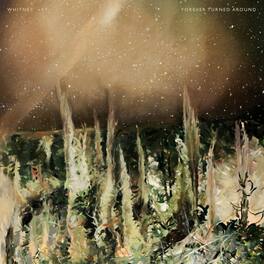
Forever Turned Around came together over several sessions across the country. Though Julien Ehrlich is Whitney's lead singing drummer while Max Kakacek is the lead guitarist, when writing, both transcend their roles to piece together each offering lyrically and compositionally. InchThe way it ends up working is one of us comes up with a basic idea for a song and the other person serves as the foil to complicate that idea. We ask, 'What can we change to make it more interesting?'Inch says Kakacek. Challenging each other is the core of their songwriting partnership. It's these risks and experiments that make Forever Turned Around a triumph. Take opener InchGiving Up,Inch which started from a stream-of-conscious revelation when Ehrlich improvised the chorus while Kakacek played Wurlitzer. What began as a nod to Neil Young's Live at Massey Hall 1971 in an afternoon turned into a heart-rending and relatable song about the ups and downs of long-term relationships. Over twinkling piano, Ehrlich sings, InchThough we started losing touch / I've been hanging on because / You're the only one I love.Inch He explains, InchIn a relationship, you don't stay at the same level at all times. You go through weeks where you're closed off.Inch After a session with producers Bradley Cook (Hand Habits, Hiss Golden Messenger) and Jonathan Rado (Weyes Blood, Father John Misty) helped color in the arrangements, the album truly revealed itself when they reunited with original rhythm guitarist Ziyad Asrar in his basement Chicago studio-the same place where they hashed out much of their critically acclaimed 2016 debut, Light Upon The Lake. InchGetting down there was so important because we've always used that basement for music. The comfort and familiarity mattered but having Ziyad be a buffer between us was so helpful,Inch says Ehrlich. With Asrar, songs like InchSong For TyInch and InchForever

Essentially self-taught, Schoenberg graduated from playing cello and piano as a teenager to writing his own music through the medium of song. The lyrical tendency in his music is under-appreciated because of the attention drawn to his harmonic innovations such as the twelve-tone system, but Schoenberg began composing, like so many of his predecessors, with the impulse to set poetry to melody and to capture transcendent states - love, longing and death - in music. Accordingly any recorded survey of Schoenberg's songs still has much to show us about his place at the culmination of a heritage stretching back to Beethoven and Schubert. The Hong Kong-based duo of Jasmine Law and Nancy Loo open this personal selection from his song output with the yearning impressionism of the Four Songs Op.2 (1899), setting poetry by Richard Dehmel whose 'Transfigured Night' was inspiring Schoenberg at the same time to compose an instrumental setting for string sextet, Verklärte Nacht. From the spring of 1907, the ballad of Lady Jane Grey, Op.12 No.1, inhabits the same mystical world as the Second String Quartet in which Schoenberg first composed with a tone row and also set the poetry of the German symbolist Stefan George. A more thoroughgoing engagement with George's work then inspired Schoenberg's most substantial contribution to the literature of art-song with his Op.15 collection, The Book of the Hanging Gardens. This collection, in the tradition of An die ferne Geliebte, sets a doomed love story in a sequence of 15 short songs. It shares an atonal language with Pierrot Lunaire and other, more superficially radical breaks with tradition, but The Book of the Hanging Gardens glistens and shimmers with a playful harmonic language which makes clear Schoenberg's roots in the Romanticism of Brahms and Zemlinsky.
Specs
Be the first to ask a question.
We’ll try to get your question answered within 24 hours by a Best Buy customer or brand representative.