PopMarket - Lloyd: A Miniature Triptych for Brass Quintet - Multicolor
Reviews coming soon
About this product
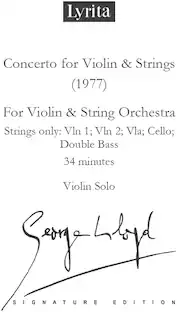
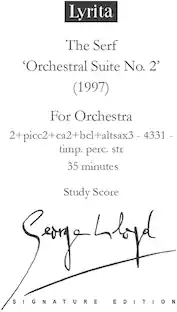
A Miniature Triptych is scored for brass quintet, consisting of two trumpets, horn, tenor trombone and tuba and is cast in three movements. The first, entitled 'Lost', is slow, ruminative and bathed in half-lights, with enigmatic melodic and harmonic shifts and dramatic use of muted trumpet and flutter-tongue effects. Appropriately, the movement ends on a question mark. It is followed by the tense and edgy 'Searching' central movement. The overall mood here is anxious and turbulent, with frequent shifts in tempo. A tender lyrical phrase tries to break through the relentless, repeated-note fanfares. Eventually, the songlike phrase triumphs and the movement ends quietly in a spirit of cautious optimism. 'Found' begins with a sombre, recitative-like trombone soliloquy, but the movement's main section is buoyant and ultimately affirmative. When Lloyd was asked about the intriguing titles for each of the three movements, his characteristically whimsical, throwaway response was, 'Well, it's a general sort of human situation isn't it? We're always being lost and, hopefully, we're being found'. Yet, the scope and seriousness of the music suggests something more resonant and the listener might agree with Donald Johns in his review of the score, when he remarked that the piece, 'features good, solid craftsmanship, and plenty of display opportunities for each instrument in the ensemble', going on to observe that a 'successful performance would require a mature group of experienced players'.
SPECIAL PRODUCTS
LLOYD,GEORGE Studio/Label/Brand: Lyrita
Classical Artists
- BrandPopMarketModel Number9790708221005Product NameLloyd: A Miniature Triptych for Brass QuintetColorMulticolorTitleLloyd: A Miniature Triptych for Brass QuintetUPC9790708221005
Reviews
This product doesn't have any reviews yet.
Compare similar products
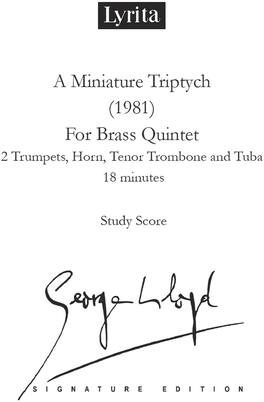
A Miniature Triptych is scored for brass quintet, consisting of two trumpets, horn, tenor trombone and tuba and is cast in three movements. The first, entitled 'Lost', is slow, ruminative and bathed in half-lights, with enigmatic melodic and harmonic shifts and dramatic use of muted trumpet and flutter-tongue effects. Appropriately, the movement ends on a question mark. It is followed by the tense and edgy 'Searching' central movement. The overall mood here is anxious and turbulent, with frequent shifts in tempo. A tender lyrical phrase tries to break through the relentless, repeated-note fanfares. Eventually, the songlike phrase triumphs and the movement ends quietly in a spirit of cautious optimism. 'Found' begins with a sombre, recitative-like trombone soliloquy, but the movement's main section is buoyant and ultimately affirmative. When Lloyd was asked about the intriguing titles for each of the three movements, his characteristically whimsical, throwaway response was, 'Well, it's a general sort of human situation isn't it? We're always being lost and, hopefully, we're being found'. Yet, the scope and seriousness of the music suggests something more resonant and the listener might agree with Donald Johns in his review of the score, when he remarked that the piece, 'features good, solid craftsmanship, and plenty of display opportunities for each instrument in the ensemble', going on to observe that a 'successful performance would require a mature group of experienced players'.
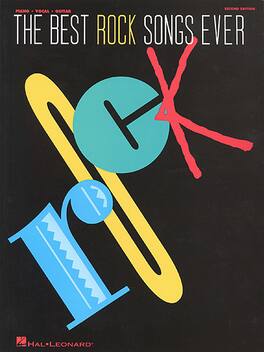
Jam to your favorite rock tunes with this sheet music compilation that features more than 60 rock favorites with instrumentation for piano, vocal and guitar. Tracks Included 1. Blueberry Hill 2. Every Breath You Take 3. Faith 4. Get a Job 5. Heartbreak Hotel 6. I Still Haven't Found What I'm Looking For 7. Imagine 8. Let It Be 9. Lola 10. Money 11. Pride (In the Name of Love) 12. Rikki Don't Lose That Number 13. The Twist 14. We Got the Beat And more.
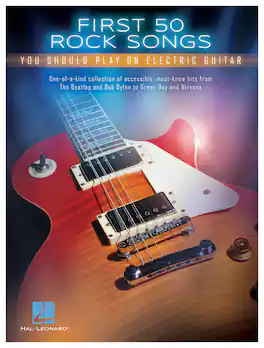
Play along to classic rock hits with this Hal Leonard 131159 songbook, which features guitar sheet music from bands including AC/DC and Red Hot Chili Peppers. Tracks Included 1. All Along The Watchtower 2. All The Small Things 3. Basket Case 4. Beat It 5. Boom Boom 6. Born To Be Wild 7. Breaking The Law 8. Brown Eyed Girl 9. Californication 10. Cocaine 11. Come As You Are 12. Communication Breakdown 13. Creep 14. Day Tripper 15. Detroit Rock City 16. Dirty Deeds Done Dirt Cheap 17. Everybody Hurts 18. Hallelujah 19. Here Without You 20. Hey Joe 21. Hide Away 22. The House Of The Rising Sun 23. (I Can't Get No) Satisfaction 24. I Wanna Be Sedated 25. Iron Man 26. Island In The Sun 27. Jailbreak 28. Knockin' On Heaven's Door 29. Mr. Jones 30. My Hero 31. No Rain 32. Oh, Pretty Woman 33. Otherside 34. Peter Gunn 35. Plush 36. Pride And Joy 37. Runnin' Down A Dream 38. Santeria 39. Seven Nation Army 40. Should I Stay Or Should I Go 41. Simple Man 42. Smells Like Teen Spirit 43. Smoke On The Water 44. Sunshine Of Your Love 45. Ticket To Ride 46. Tube Snake Boogie 47. Walk Don't Run 48. When I Come Around 49. Wild Thing 50. You Really Got Me

This is the ultimate book for learning and mastering all nine Western scales and modes, whether you read music or not. This book brings together the music fundamentals of scales, modes, and all 30 major and minor keys presented in easy to follow visual graphics, music notation with solfege (moveable do), and bonus theory lessons. It is the perfect supplement for music lessons (all instruments and voice), music theory classes, group piano, musicianship-aural skills, and piano proficiency classes. All ages, all levels. Includes several motivational elements to ensure student success: (1) straightforward, step by step presentation in order to gain complete musical fluency; (2) two practice charts to keep track of progress; (3) suggested approach, lesson plans, and inspirational message for students; (4) theory lessons for a deeper dive into music fundamentals and to build foundational music vocabulary; (5) fun favorite scales and modes notepad pages; (6) tips on how to practice, study, memorize, with an emphasis on improvisation and performing; (7) vibrant and engaging color graphics to enhance the learning experience. Organized by tonic - 9 Western scales and modes presented from the same starting point (18 tonics). Organized by 15 major keys (modes presented in the context of each key). Major, natural minor, harmonic minor, and melodic minor scales. Dorian, phrygian, lydian, mixolydian, and locrian modes. Relative and parallel key relationships, master the Circle of 5ths and all 30 major and minor key signatures. Scale degrees, solfege (moveable do), letter names, piano-keyboard graphics, music notation on the grand staff (bass and treble clefs).
Specs
Be the first to ask a question.
We’ll try to get your question answered within 24 hours by a Best Buy customer or brand representative.
More to consider
Immerse yourself in sound Sponsored
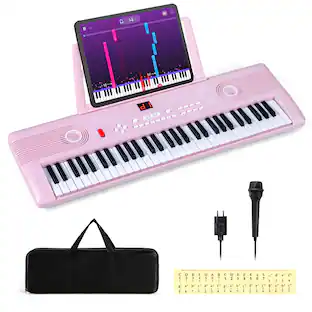 $44.99The price was $49.99
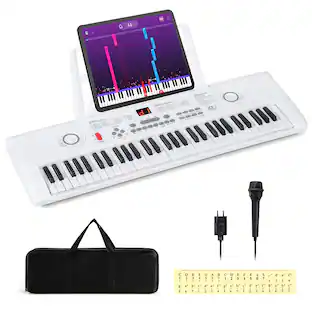 $44.99The price was $89.99