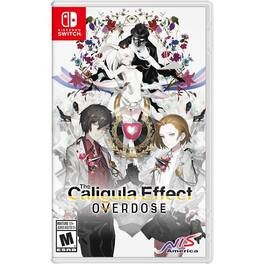
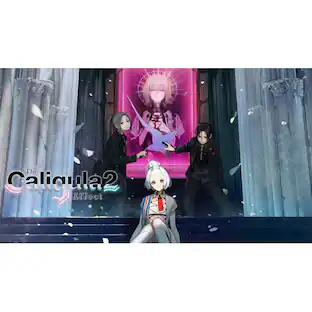
Escape from false reality in The Caligula Effect: Overdose for Nintendo Switch. Choose from two protagonists and discover the ugly secrets of a digital world as you fight your way through the deep and emotionally complex story. The Caligula Effect: Overdose features a unique combat system that mixes turn-based RPG elements with third-person action for a truly compelling experience.
Features
The Caligula Effect: Overdose boasts enhanced visuals and gameplay. Explore new scenarios, endings, and the forbidden musician route while escaping the virtual world of Mobius
Play as the newly added female protagonist. Plus, meet two new members of the Go-Home Club, who each have their own new Ostinato musician to face
Turn-based battle meets exhilarating action in this refined JRPG battle system. Develop a flawless strategy after using the imaginary chain to predict what your enemies will do next
Sometimes, it's hard to go alone. Befriend over 500 other students in this imaginary paradise to improve your skills in battle and ultimately return to reality
Enjoy original in-game Japanese voices and English text
The vast majority of our reviews come from verified purchases. Reviews from customers may include My Best Buy members, employees, and Tech Insider Network members (as tagged). Select reviewers may receive discounted products, promotional considerations or entries into drawings for honest, helpful reviews.
Rated 5 out of 5 stars
Reminds me of Persona
So far it's great, it's story heavy with a ton of dialogue but the combat is pretty good, takes a second to get used too but enjoyable once you do.
The Caligula Effect surprised me. When the game started asking me at the very beginning what my personal real life shortcomings are, I knew immediately that this game was going to be something special. It’s a game that goes into the mind of us as people and what drives us to run away from our problems and escape to a fantasy world. For some it's video games, movies, anime, television shows, books or in this case music. The story takes place in a world called Mobius created by a Japanese POP idol named U. Through hearing U’s many songs people start being sucked into this world that they never want to leave and can’t. Think of it as escapism that you can’t escape from.
You start the game in a cutscene where everything looks normal and it looks like just a regular high school ceremony. Things aren’t like they seem though as a sort of glitch in the matrix starts happening, weird digitized images start showing up on people’s faces and you realize something isn’t right. You escape and meet up with this fairy looking girl named Aria and someone who also is aware of Mobius named Shogo. You get acquainted and this is where you meet up with the Go-Home Club, a group of people who also see through this fake world and start to devise a plan to escape. Turns out a group of villains called the Ostinato Musicians hold control over different parts of the city and the main goal is to end the different musicians reign, take them down, and get closer to confronting U about returning home.
What I love about this game is the main theme of escapism. Every character, having been pulled into this world has their own reasons for being in Mobius in the first place. Solitude, not wanting to grow into an adult, getting away from responsibilities, taking revenge on a rival, changing your looks in radical ways, or wanting the world to stay the same forever. You get to see why they escaped and there are times when they get challenged on whether or not its better to just stay. Musicians themselves control each area through their song’s, using them to brainwash people to stay in Mobius.
Throughout the game you’ll come across many of these people. A percentage count will be next to them and once this gets to a certain point they’ll be corrupted and turn into what is called a digihead. Then you’ll have to fight them to return them to normal. These people you can then interact with and start what is called a trauma quest. Talking with them and becoming their friend will open them up to their trauma and you’ll have the ability to cure them. This can be done through including them in the party and equipping them with a certain piece of equipment, bringing them to a specific person, letting them level up while in the party, or clearing another person’s problem that is directly related to them through the causality link. This causality link is a huge network of people connected to each other. You can use this to keep track of quests and where to find certain people. Through completing quests and curing them of their trauma, you get equipment and minimal stat upgrades. Once you cure someone they will no longer be able to turn into a digihead enemy. It makes the world feel alive because you could see some character NPC’s that you’ve seen hours ago in completely different locations.
Gameplay is a dungeon crawler with many floors, rooms and encounters through the many environments that you’ll traverse. Encounters happen when you are caught in the vision of an enemy and you’ll activate a transformation called the catharsis effect. This is used to fight off digiheads who are lost souls that have been consumed by the world. Other characters will soon also get this ability after certain events take place where their determination breaks out and they awaken.
The battle system has each character using moves depending on the situation. You can buff, debuff, break a shield, dash across the battle area and launch enemies as well to perform combos. The way this is accomplished is through a timeline system where you can adjust at what time each character does their move in what order. Each character has up to 3 moves they can make and It’s important to note that once you confirm a characters orders you can’t go back and change them, so it's really important to set up your team properly in the right order and watch for the percentage chance at the top left. Each time you put in a battle command you get to see what the outcome will be if all hits are successful, this is crucial to determine what the enemy will do as well because some attacks only do best or activate against certain moves. It also gives you time to dash away or block future attacks. Blocking in particular can stun the enemy and timing is everything where the smallest difference in timing a block can mean taking a lot of damage or sustaining next to none. There is also a bar that fills up called the Risk meter that builds up through stacking attacks. It goes up from 1 to 6 and once it reaches 6 a risk break will start and the enemy will be susceptible to nothing but critical hits for a while. Some enemies in a dungeon, upon defeat will open up a soul remnant which are random pieces of equipment. It incentivises exploration through this as well with the mysteries of the world, these are random messages that give you skill points scattered in each dungeon. These skill points can be used to strengthen and get new attacks and support skills. Most areas will have hallways making moving around feel somewhat clunky at times, normally this would make battles very enclosed but the game does this clever thing of expanding the dungeon area by cutting out all of the walls around you when you enter a battle. It can get pretty nuts when you have 3 or 4 different battles between enemies going on in the same room.
Each character has their own specific weapon they use and different styles. Certain characters like Ayane focus on stunning an enemy, Kotaro is all about quick powerful damage, and Mifue builds up Risk quickly. You can have one character break a shield and then proceed to air juggle them and hit them when their down. You could build up risk and cause a risk break and proceed to launch them and build damage with long range attacks. There are even counter moves as well as special moves you can do when a character’s yellow colored stress meter is filled that all look very flashy, cool and well animated. It all flows as this makes for a pretty addictive and dynamic combat system where experimentation of the characters different weapons and abilities is really fun and keeps the game fresh.
The game took me 36 hours to beat and I played the game on normal up until the 8 to 9 hour mark. I bumped it up to hard and I thought it gave a better overall challenge. I’d recommend starting the game on hard and then seeing whether or not it's still too easy or hard depending on your skill level. One of the absolute best parts about this game however is the music. Each dungeon has their own instrumental theme and the moment you enter battle the song actually transitions to the vocal version seamlessly. Bosses even have a remixed version of the vocal theme that really just brings it all together. You can tell that they really cared about the soundtrack as this ranks up with some of my favorites in recent memory. Dungeons are fun to explore listening to these tunes and are a clever way of invoking the music that the people in the locations are being brainwashed by. At the end of each dungeon you have a confrontation with the musician, each boss is very different from each other making these situations interesting. There’s even times one of your party members will have something to relate to them to make learning and to make more understanding of where they’re coming from. They’re all pretty entertaining villain’s and their designs further accentuates their insanity.
In between dungeons, you can head to your base and when you see green symbols above a character that means you can hang out and learn more about them. All of these storylines have some great moments like Shogo’s attempts to go on dates,Trying to get Ayane to overcome her hatred for men, and Izuru experiencing the domestic life. These eventually lead to you gaining the ability to dive deeper. Which allows you to help your friends overcome their trauma that relates to why they escaped to Mobius in the first place. Be wary though as saying or doing the wrong thing can lead to you locking out that person’s character quest forever unless you go back. In this new Overdose version of the game there is a optional second story where you can experience being a musician and you even get your own theme, It has a different ending and looks to be worth the second playthrough having not done it yet myself. Voices are all in japanese and from what performances are given from the sounds of it most all of the voice actors gave it their all in giving these characters life.
Concerning environments, they aren’t the best looking, considering that these are all just real world locations being a little warped. There are some great looking locals such as the spa hotel and aquarium among many others. They’re all very different from one another so there are bound to be some favorites. Graphically as you can tell is not good, the game has some very flat character faces and the whole game itself looks muddy and unpolished. It is no surprise though after hearing about Furyu, the developers of the game’s philosophy on making the best possible quality games on limited budgets. There were two times when the game crashed on me, both times happening in docked mode and fairly early on in the game. There were also some weird glitches that happened that weren’t game breaking but just strange and kind of funny. The Caligula Effect: Overdose has several rough edges, but a lot of heart. - Slentay
I loved everything about this game. The mechanics were awesome for the fighting, the art is beautiful, as is the game interface, and the music is to die for. The story is interesting, even if the character development might be a bit simpler than one would expect. I highly recommend this game for those who love JRPGs.
I love this game. I love the fact that you can preview the moves your character and the A.I. will make. Even though this is a turn-based strategy RPG the combat system is very fast and fluid.
Escape from false reality in The Caligula Effect: Overdose for Nintendo Switch. Choose from two protagonists and discover the ugly secrets of a digital world as you fight your way through the deep and emotionally complex story. The Caligula Effect: Overdose features a unique combat system that mixes turn-based RPG elements with third-person action for a truly compelling experience.
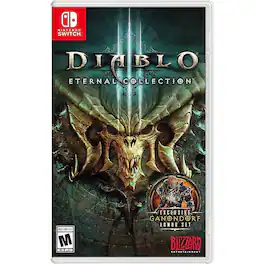
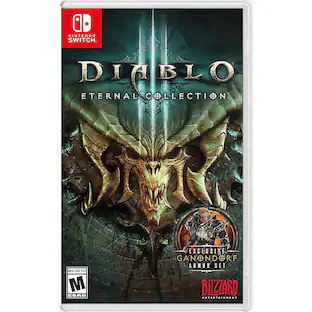
Prepare for the apocalypse in Diablo III: Eternal Collection for Nintendo Switch. This action-adventure RPG comes with previously released DLC packs, throwing you into the middle of the epic battle between the forces of Heaven and Hell. Diablo III: Eternal Collection has exclusive Easter eggs for fans of other Nintendo games.
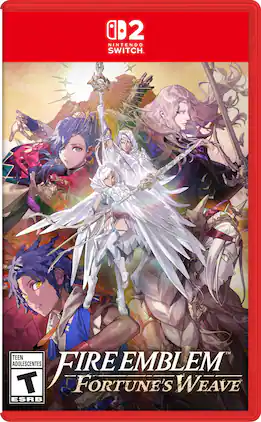
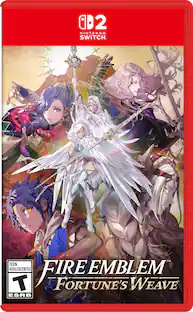
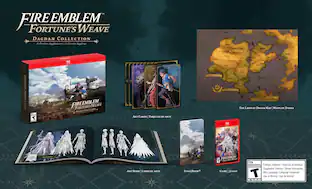
The Heroic Games are about to begin! Enter the Dagdan Empire—a prosperous land ruled by the gods—and compete in the Heroic Games for the chance to be granted one wish. Powerful fighters from across the land have gathered to participate, including four heroes whose fortunes are tied to the fate of the world. Play as Cai, a young boy determined to win the games to save his imprisoned father; Dietrich, a swordsman ever on the hunt for a stronger foe; Theodora, a queen seeking to fulfill the long-held dream of her homeland; and Leda, a musician with her sights set on revenge. The stories of these four heroes are key to this time-traveling saga of strength and steel. Guide your heroes to victory as each weaves their own tale. Prepare for each match of the Heroic Games by exploring Dagda and its capital city of Dagsion. Learn techniques and hone skills at the training grounds, recruit allies and build bonds of friendship, and explore beyond Dagsion’s walls to gain experience and strengthen your forces in a variety of ways. How you spend your free time is up to you, but the tactical matches of the Games themselves will put your preparations to the test. Use everything you have at your disposal, including your heroes’ special abilities, to turn the tide of battle!
When you inherit a truck from your father, you take a chance and move to a new city. Here, it's up to you to make a name for yourself and earn the respect of the local community. Drive through a seamless open world, work with all kinds of people, ranging from a constructor to a lumberjack, and honor your father by making it as a truck driver!
Specs
Be the first to ask a question.
We’ll try to get your question answered within 24 hours by a Best Buy customer or brand representative.













 $35.99The price was $36.99
 $35.99The price was $36.99
 $35.99The price was $36.99
 $187.99The price was $190.99