A:AnswerWhen it comes to something of high value, I would never skimp on quality. The way I use this cable is in low traffic area's and not high traffic one's. I would never use this cable outdoor's in the humidity, heat or cold because it's primary use is indoor's and not out. The cable has a low density covering that does not have the durability needed for extraordinary use. Being cheap means you get to do the job twice!
A:AnswerThe open box normally indicates either it returned (due to not being the right product the customer needed) or it could mean that the box arrived in store slightly damaged (not the product, just the box was damaged).
A:AnswerI would not recommend leaving an Ethernet cable buried or exposed to the elements for long periods of time. You should run it through a small PVC pipe to protect it?
A:AnswerNo Grey is the standard for communication/data transfer. Just like your phone line. But I have seen blue and yellow Ethernet cables. IT techs need to be able to identify an Ethernet cable from a USB at a glance.
A:AnswerUnless I'm misunderstanding, you would indeed want a male/male cable. That indicates that both ends of the cable are male. Male cables go into female sockets. It's uh... named after mating. Male goes into female. ^^;; So if the computer has a female socket, it accepts males. And as far as I know, traditional LAN-to-modem is a female socket too. Hope that helps. :D
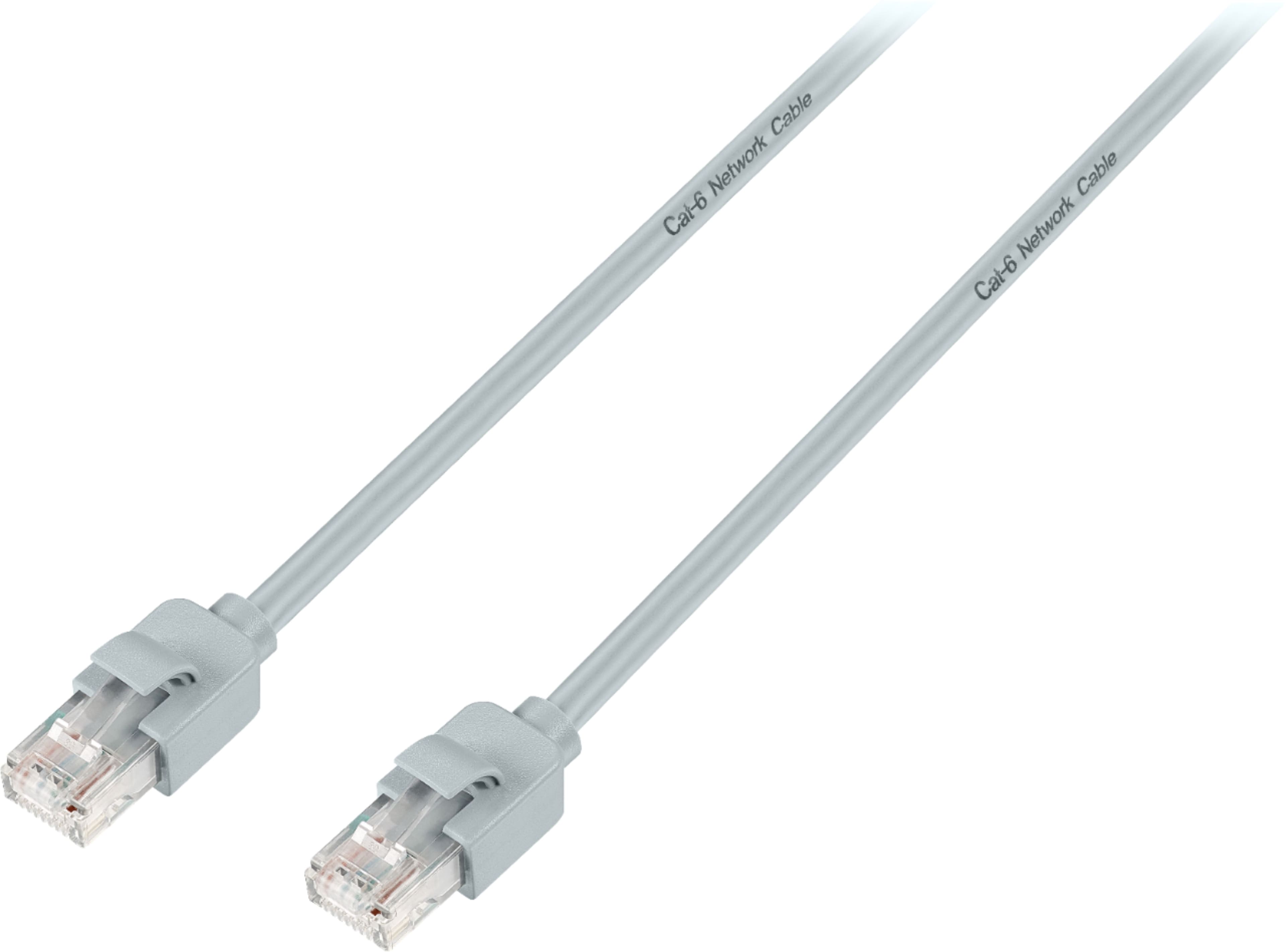
A:AnswerAn Ethernet cable is too big to fit in your wall telephone jack. Wouldn't work if it did. Your incoming telephone line needs to go to a modem then to the router. Your Modem transfers the signal to one that the computer and other devises will understand. Sorry--No short cuts.