Customer Ratings & Reviews
Customer reviews
Rating 4 out of 5 stars with 1 review
(1 customer review)to a friend
Rated 4 out of 5 stars
French New Wave feminist auteur receives her due
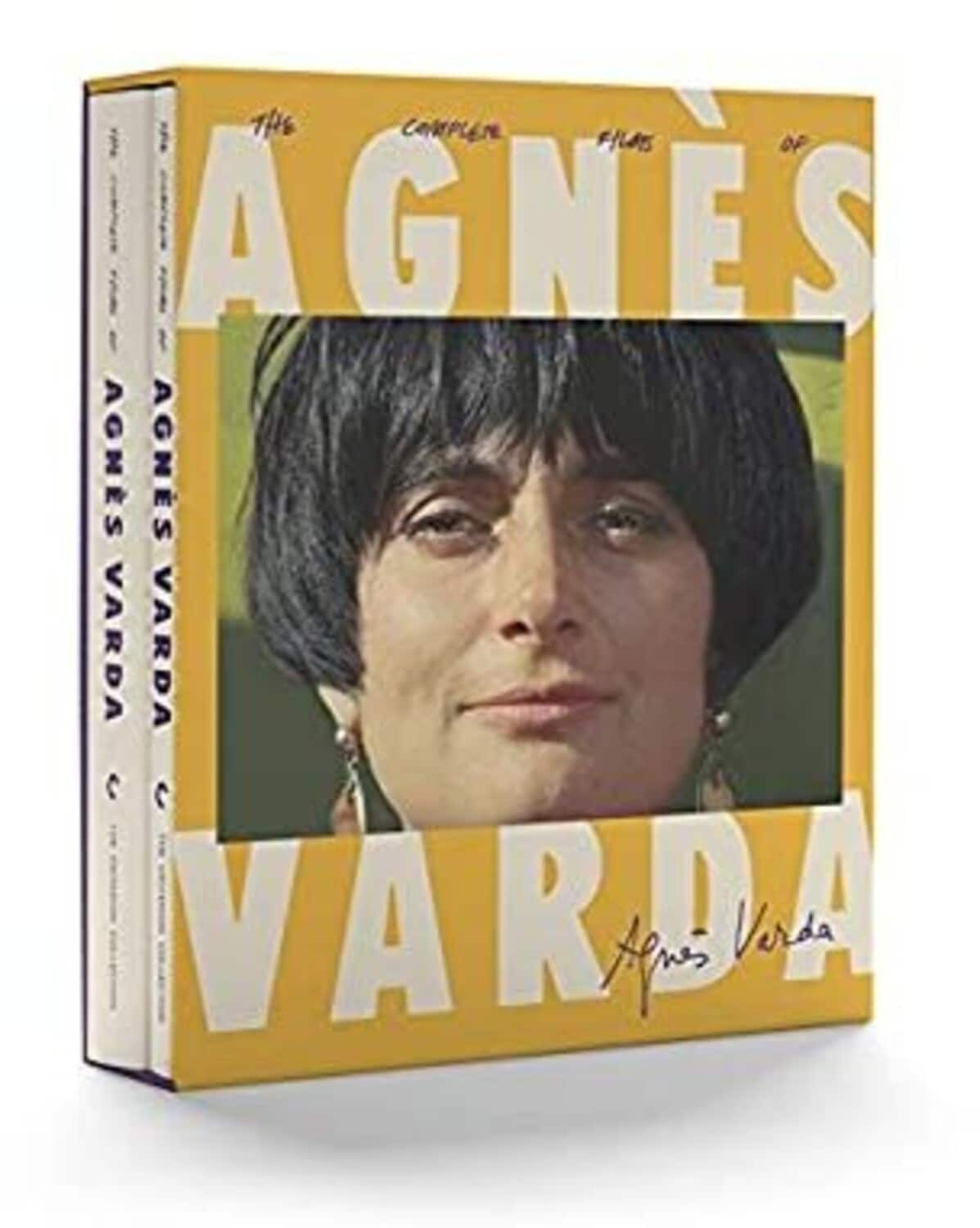
||Posted . Owned for 1 month when reviewed.This reviewer received promo considerations or sweepstakes entry for writing a review.Agnès Varda made films from 1955 through 2019, covering the span of most of her life, and in that time she made films that were uniquely her own. She emerged from the French New Wave as an innovative filmmaker with the real-time Cléo from 5 to 7, a film with a woman’s perspective missing from the work of contemporaries like Godard and Truffaut. Ironically, the greater success of her husband Jacques Demy’s ‘60s musicals sometimes left Varda in his shadow, but that success took Varda to more daring places and contributed to her ability to make films on her own terms. Martin Scorsese declared her a genuine independent, and most of her later films were made with her own production company. Most of her films can be divided into either fiction or documentary, with a much greater number of documentaries in the latter half of her film catalogue, after the disappointing box office of her tribute to the history of cinema, One Hundred and One Nights. I prefer Varda’s fiction, such as the brilliant Vagabond or the deceptively colorful Le Bonheur, and even the more challenging pro-choice study One Sings, the Other Doesn’t and the controversial student-teacher affair story made with Jane Birkin and her son Mathieu, Kung-Fu Master! Varda always seems to find something greater to say in her fiction, like with her black-and-white biopic of her husband’s life Jacquot de Nantes, where she recreated moments from his life as Demy was losing his battle with AIDS during the making. Only Lions Love seemed less worthy of watching again, an improvised experiment that tried to capture something about the ‘60s and, in my opinion, fell pretty short. The documentaries were also worth watching, though the philosophies within were more on-the-nose and not always as interesting to me. Varda’s exposé on the Black Panthers in 1970 was cutting edge at the time, and seems as relevant as ever with modern arguments about police brutality. The two films on the environmental and economic value of “gleaning” were quite compelling and informative, Faces Places (co-directed with artist J.R.) is a visually pleasing travelogue through a series of art exhibits, well worth watching at least once, and a fine companion to Varda’s slightly less-focused From Here to There mini-series, where Varda again explores her 21st century interests in art. Still, Varda’s independence sometimes left her chasing whims of ideas that viewers may find less fulfilling, as I did, such as Daguérreotypes, which is like a professional cinematographer’s film of her own neighborhood, or some of the short films that seem less defined in their purpose. The box set, living up to the “complete” moniker, also contains movies like The Young Girls Turn 25, which seemed a better fit as a special feature on the Jacques Demy box set. But my biggest criticism of this impressive collection, besides Criterion’s stubborn insistence on making “artistic” housing which scratch the Blu-rays and make a terrible fit on a shelf, is the fact that there are two retrospectives on Varda’s career done by herself, and one essentially cancels the need for the other; worse than the duplication, Criterion has misfired by making Varda’s 2019 documentary, Varda by Agnès, the introductory film on this set. It’s a really bad move. Why spend two hours watching what amounts to a trailer or a special feature that gives away philosophies, themes, and even plot twists about movies you now own? I’m mystified why Criterion found this an acceptable choice. In nearly every other regard, they’ve done Varda’s filmography a great service. True, eventually Criterion may release Varda’s classics like Vagabond and Cléo From 5 to 7 on Blu-ray (One Sings, the Other Doesn’t is already available) and the need for a full box set may be more debatable for some viewers. I own the beautiful Bergman box set and the impressive Fellini set that’s similar to this, and having watched all the Varda films at least once already, I can see returning to many of these again enthusiastically, and perhaps even enjoying them more. No regrets, and if it’s price-matched to the occasional 50%-off sales at Barnes & Noble or Amazon, it really becomes worth the price to own.
I would recommend this to a friend