Exploring the Benefits of Curved Monitors
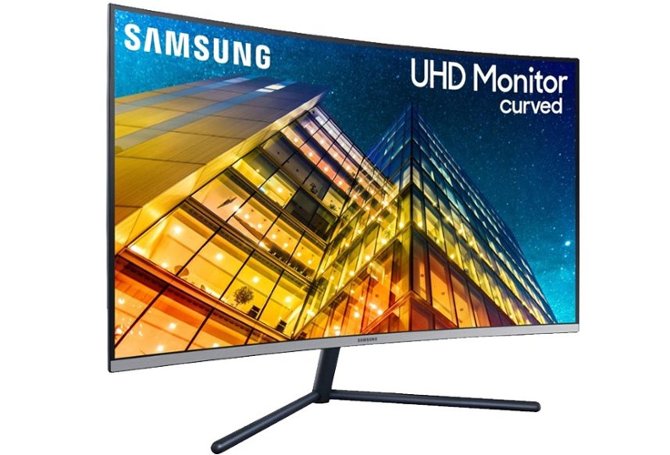
Best Selling Products carousel(6 Items)
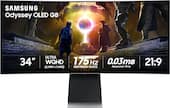
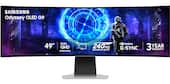
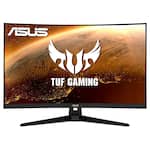
A guide to immersive screens
What exactly is a curved monitor?
What is the point of a curved monitor?
A curved monitor is designed to make your screen feel more natural to look at and easier to use, especially on larger displays. The advantages of a curved monitor include:
- Immersive experience
- Expanded field of view
- Crisper images
- Striking configuration
The visuals of a curved monitor provide depth and breadth simultaneously. The curvature creates increased contrast (the visual differentiation between black and white) and sharpness at the edges of the screen. This leads to improved images from every angle. The sleek design also makes a bold statement for your decor.
What are the benefits of a curved monitor?
A necessity for most jobs, a computer screen occupies the focal point of a modern workspace, at home or in the office. A curved screen provides more than an exciting visual experience. The benefits of a curved monitor include:
- Reduced eye strain
- More desk space
- Increased efficiency
- Greater immersion
Studies have documented that the design of curved monitors may actually reduce strain on your eyes.See Disclosure 1 The crispness of the image at the edges allows for a wider monitor and thus an expanded workspace, which is especially important for graphic design projects or tasks with lots of visual data. Additionally, people can read text on a curved desktop monitor more quickly than on a flat one. The fully absorbing environment also helps you focus on important tasks.
Does your work require several windows to be opened at once? The best curved monitor for work makes multitasking easier by keeping multiple apps visible at the same time, reducing the need to constantly switch screens or resize windows.
Are curved monitors good for gaming?
Curved gaming monitors produce depth, immersion and contrast. That aspect is extremely beneficial when playing video games depicting intense action, detailed simulation and everything in between. Most curved monitors feature a refresh rate of more than 144Hz, which translates to seamless visuals and rapid action. Combined with the right gaming accessories, a curved screen can deliver the ultimate all-encompassing setup.
The best curved gaming monitor brings all these strengths together with even more advanced features, such as higher curvature ratings for tighter focus, HDR support for richer color and ultrawide aspect ratios that expand your field of view. Whether you're navigating sprawling open worlds or competing in fast‑paced races, a well‑designed curved display helps you stay locked in and aware of every detail.
What happened to curved TVs?
Curved TVs enjoyed a brief moment in the spotlight, but manufacturers ultimately phased them out due to a combination of practical issues, consumer preferences and technological limitations. Several core factors contributed to their decline, including:
- Poor viewing angles for groups
- The immersion effect only works at specific distances
- Awkward and difficult wall mounting
- Higher production costs
As display technologies improved, flat-screen TVs delivered wide viewing angles, great brightness and better consistency. With no clear advantage left, curved TVs naturally disappeared from product lineups. Curved computer monitors, however, remain popular for work and gaming, where their design can make large screens feel easier to view and more comfortable to use.
Are curved monitors better than flat monitors?
When it comes to curved monitors vs. flat monitors, curved screens aren’t universally better than flat monitors, but they can be the better choice depending on how you use your computer. On large curved monitors and ultrawide curved monitors, the curve helps keep more of the display within your natural field of vision, which can make multitasking, gaming and long work sessions feel easier on your eyes.
Ultimately, the best curved monitor for you comes down to your priorities, whether that’s immersion, comfort or screen real estate. Gamers often gravitate toward curved screens because they provide a more enveloping view that enhances peripheral awareness, pulls you deeper into the action and helps create an optimized gaming setup.
Professionals who juggle multiple windows or wide timelines may also appreciate how a curved monitor keeps content visually consistent from edge to edge. The expanded visual landscape contributes to improved performance that improves your workday. Greater efficiency helps you complete your projects faster, leaving more time to enjoy with family and friends.
References
Luo, Gang, Ying Chen, Amy Doherty, Rui Liu, Cong Shi, Shuhang Wang, Hoai Le and Eli Peli. “Comparison of Flat and Curved Monitors: Eyestrain Caused by Intensive Visual Search Task.” SID Symposium Digest of Technical Papers, SID. May 2016. https://www.researchgate.net/publication/303535201_66-2_Comparison_of_Flat_and_Curved_Monitors_Eyestrain_Caused_by_Intensive_Visual_Search_Task