What Is an RGB LED TV? A Guide to the Latest TV Tech
Best Selling Products carousel(6 Items)


Exploring the latest in TV technology
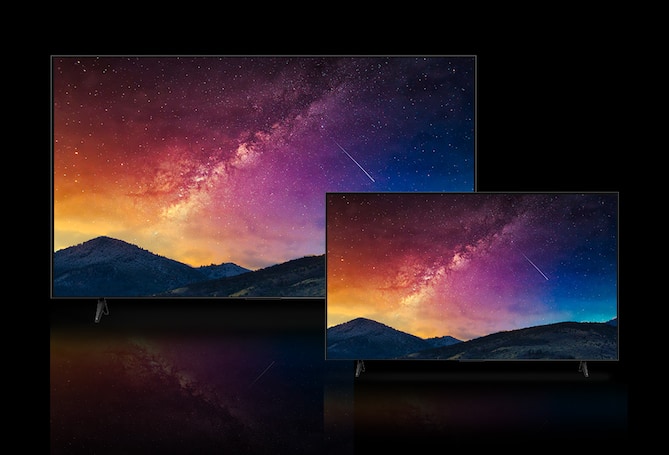
Picture quality starts with the display, making it the most critical part of any television. RGB LED TVs take this a step further by creating more precise, vibrant colors and sharper images. Whether you’re watching movies, sports or playing games, understanding how RGB LED works can help you choose the best TV for your needs.
Keep reading as we delve into all things RGB LED and break down how this technology compares to other TV displays.
What is RGB LED?
In RGB LED TVs, red, green and blue colors are produced by individual light sources rather than white LEDs filtered through color layers.See Disclosure 1 This allows the display to control color and brightness more precisely, which can result in improved color accuracy, better contrast and a wider range of visible tones on the screen.
By generating color at the source, RGB LED technology can also reduce the need for additional filtering, helping preserve brightness and improve overall image efficiency.
How do RGB LED TVs work?
In a traditional LED TV, white light shines through a color filter to create different hues. An RGB LED TV uses individual light sources that combine to produce colors more precisely at the pixel level. These colored LEDs are typically utilized as the display’s backlight (often referred to as RGB backlighting). By independently controlling the intensity of red, green and blue light, the TV can create a wider range of colors and finer gradations between shades.
Advanced processing plays a key role as well. The TV’s processor analyzes incoming video and adjusts light output in real time to match the content. This coordination between RGB lighting and image processing helps maintain consistent brightness and sharpness.
The benefits of RGB LED TVs
Understanding how RGB LED display technology works is important, but looking at the practical advantages can help clarify why RGB LED TVs typically stand out among newer digital displays. RGB LED pros include:
- Improved color accuracy. Direct control over red, green and blue light output helps deliver more precise, true-to-life colors.
- Wider color range. More colors allow more natural-looking tones in bright and dark scenes.
- Better contrast control. Details remain visible in shadows and highlights, helping create a more balanced and realistic picture.
- More consistent brightness. Even light distribution across the screen helps maintain uniform clarity and visibility in different viewing conditions.
By offering more precise control over color and light, RGB LED TVs are built to produce a sharp, immersive picture across a wide range of content.
RGB LED vs. other TV technologies
There are a lot of different types of displays out there, so it is a good idea to see where RGB LED technology fits in.
RGB LED vs. LED (standard LED/LCD)
RGB LED TVs use dedicated red, green and blue light sources, while standard LED TVs rely on white LEDs with color filters. This allows RGB LED models to deliver more precise color accuracy and improved contrast.
RGB LED vs. OLED
RGB LED TVs use a backlight system, whereas OLED displays use self-lit pixels that can turn off completely for perfect blacks. While RGB LED offers strong brightness and color control, OLED typically excels in contrast and viewing angles.2 However, unlike OLED TVs, an RGB television does not carry any risk of image burn-in.
RGB LED vs. QLED
QLED TV technology uses a quantum dot layer to enhance color from a white LED TV backlight. Both TVs offer vibrant color, but RGB LED allows for more direct control over color output at the source.
As newer TVs continue to evolve, you may also see terms like RGB micro-LED, RGB mini-LED or even “true RGB” used alongside RGB LED. While the naming can vary, these labels generally refer to how the TV produces and controls light.
Micro-LED uses tiny, self-emitting LEDs that act as individual pixels, while mini-LED and standard LED technologies rely on a backlight with varying levels of precision and control. RGB in these cases typically refers to how red, green and blue light are generated at the source rather than filtered from white light.
Because there are different names for similar underlying approaches, it’s helpful to focus on what the technology is doing. Factors like whether the display uses self-lit pixels, the level of backlight control and overall brightness capability will have a bigger impact on picture quality than the label alone.
What to look for in an RGB LED TV
Beyond the core technology of RGB LED TVs, a few key features can make a noticeable difference in overall performance and practicality.
- Screen size and viewing distance. A TV size that matches your room can help you see the added detail and color without overwhelming your space.
- Resolution. 4K resolution or higher can really showcase the improved color precision and clarity.
- Brightness levels. Higher brightness can improve visibility in well-lit rooms and make highlights stand out more.
- Viewing angles. RGB LED TVs can be viewed at more extreme angles without sacrificing sharpness.
- Connectivity options. Multiple HDMI ports and support for newer standards can help future-proof setups for gaming consoles and other devices.
Taking these factors into account can help you find an RGB LED TV that not only looks great on paper but also performs well in your day-to-day viewing.
Are RGB LED TVs worth it?
If you want cutting-edge picture performance and plan to invest in a premium home entertainment experience, RGB LED TVs can be a strong choice. However, if you’re already satisfied with modern LED, QLED or OLED TVs, you may find that those technologies also deliver excellent results without needing to upgrade right away.
With that being said, RGB LED TVs do represent an exciting step forward in display technology, especially if you prioritize color accuracy, brightness and overall picture refinement. By using separate light sources, they can deliver a more controlled and detailed image compared to traditional LED TVs, making movies, sports and games feel more captivating and dynamic.
References
1. Kim, Tae Soo, Jung-El Ryu, Jinhong Park, Rih-Jia Liu, Joonghoon Choi, Jeehwan Kim, Young Joon Hong, Dong-Hwan Kim and Jiho Shin. “Future trends of display technology: micro-LEDs toward transparent, free-form, and near-eye displays.” Light: Science and Applications, Springer Nature Limited. September 22, 2025. https://www.nature.com/articles/s41377-025-02027-1.
2. Singh, Ranbir, K.N. Narayanan Unni and Ankur Solanki. “Improving the contrast ratio of OLED displays: An analysis of various techniquesx.” Optical Materials, Elsevier. February 2012. https://www.sciencedirect.com/science/article/abs/pii/S0925346711004903.