Bill Fay - Who Is the Sender - VINYL LP
Reviews coming soon
About this product
Ask Bill Fay about his relationship with his instrument and he says something revealing, not InchEver since I learnt to play the piano,Inch but InchEver since the piano taught me...Inch What the piano taught him was how to connect to one of the great joys of his life. InchMusic gives,Inch he says. And he is a grateful receiver. But, it makes him wonder, InchWho is the sender?Inch Fay - who after more than five decades writing songs is finally being appreciated as one of our finest living practitioners of the art - asserts that songs aren't actually written but found. He recorded two phenomenal but largely overlooked albums for Decca offshoot Nova in 1970 and 1971. After 27 years of neglect, people like Nick Cave, Jim O' Rourke, and Jeff Tweedy were praising those records in glowing terms. Recorded in Ray Davies' Konk Studios, North London, Who Is The Sender? sees Bill expanding upon themes he has touched on from the beginning, spiritual and philosophical questions, observations about the natural world and the people in the city he has lived in all his life.
Specifications
- GenreRockDescriptionAsk Bill Fay about his relationship with his instrument and he says something revealing, not InchEver since I learnt to play the piano,Inch but InchEver since the piano taught me...Inch What the piano taught him was how to connect to one of the great joys of his life. InchMusic gives,Inch he says. And he is a grateful receiver. But, it makes him wonder, InchWho is the sender?Inch Fay - who after more than five decades writing songs is finally being appreciated as one of our finest living practitioners of the art - asserts that songs aren't actually written but found. He recorded two phenomenal but largely overlooked albums for Decca offshoot Nova in 1970 and 1971. After 27 years of neglect, people like Nick Cave, Jim O' Rourke, and Jeff Tweedy were praising those records in glowing terms. Recorded in Ray Davies' Konk Studios, North London, Who Is The Sender? sees Bill expanding upon themes he has touched on from the beginning, spiritual and philosophical questions, observations about the natural world and the people in the city he has lived in all his life.ArtistBill FayTitleWho Is the SenderFormatVINYLLabelDead Oceans
Reviews
This product doesn't have any reviews yet.
Compare similar products
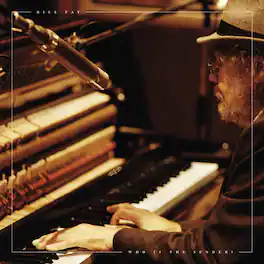
Ask Bill Fay about his relationship with his instrument and he says something revealing, not InchEver since I learnt to play the piano,Inch but InchEver since the piano taught me...Inch What the piano taught him was how to connect to one of the great joys of his life. InchMusic gives,Inch he says. And he is a grateful receiver. But, it makes him wonder, InchWho is the sender?Inch Fay - who after more than five decades writing songs is finally being appreciated as one of our finest living practitioners of the art - asserts that songs aren't actually written but found. He recorded two phenomenal but largely overlooked albums for Decca offshoot Nova in 1970 and 1971. After 27 years of neglect, people like Nick Cave, Jim O' Rourke, and Jeff Tweedy were praising those records in glowing terms. Recorded in Ray Davies' Konk Studios, North London, Who Is The Sender? sees Bill expanding upon themes he has touched on from the beginning, spiritual and philosophical questions, observations about the natural world and the people in the city he has lived in all his life.
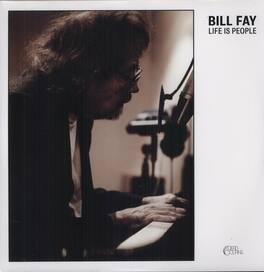
Vinyl LP pressing. Bill Fay is one of English music's best kept secrets. At the dawn of the 1970s, he was a one-man song factory, with a piano that spilled liquid gold and a voice every bit the equal of Ray Davies, John Lennon, early Bowie, or Procol Harum's Gary Brooker. He made two solo albums but his contract wasn't renewed, which left his LPs and his reputation to become cult items. But he never stopped writing, the music kept on coming. In his late sixties, he produced Life Is People, a studio album that shows his profoundly humanist vision is as strong as it ever was.
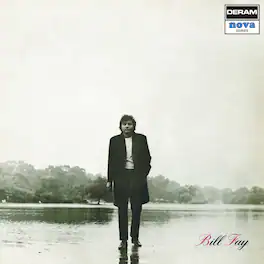
Originally issued on Decca's Deram imprint in 1970, Bill Fay's debut album is a soulful and introspective folk-rock masterpiece - With it's warm, rich arrangements and heartfelt lyrics, it showcases Fay's poetic storytelling and enduring from-the-heart emotion. This 180gm vinyl re-issue replicates the original UK stereo pressing. Produced by Peter Eden and orchestrated by Michael Gibbs, Bill Fay's debut album is often stately, frequently poignant, and unfalteringly catchy. Fay's voice, a tentative mix of purity and knowhow is framed by high-period Decca arrangements, full of celestial strings and flourishing horns. The dressing does not take away from the immediacy of the material; a wistful eye cast across post-war Britain, removed from the cliches of the swinging sixties. Here as a hymnal full of kinship, family, encouragement and strangeness. For example, The Sun Is Bored the sun is bored, and the moon wants to get away to another place. Sing Us One Of Your Songs May while inventing The Streets 30 years before Mike Skinner appeared is a sweetly powerful rumination on grief. Methane River conflates pollution of water with a closed mind. Gentle Willie explores the complexities of pacifism; Be Not So Fearful championed by Jeff Tweedy is an aural equivalent of an arm around the shoulder. These are NOT moon-June-love ditties. Comparisons have been made to Nick Drake, but there is also Peter Sarstedt, Gilbert O'Sullivan and Brian Protheroe at play here. Original copies of Bill Fay change hands for three figure sums. For once, you can understand the price tag this a remarkably accomplished debut.
There are poets like the great Mary Oliver, who mightsuggest that one's primary function when moving through theworld, for as long as they have life and the ability to move throughthe world, is to play close attention to that which others may foolishlycall small, or quotidian. The brain and heart are both containers, withas much space as you wish for them to have, and to live is to createcollections of found affections. Sounds from your beloved andfamiliar blocks, movements of the trees and the people beneaththem, the way someone you adore may hold you for a few lingeringseconds before releasing from a hug and vanishing into a crowdedcrosswalk. To think of our living, our making, and our loving in thisway means that, at least for some of us, we may be propelled forwardby the prospect of what's next. What moment we can hold and placein our overflowing pockets.The work of Lonnie Holley is, for me, a work of this kind ofaccumulation and close attention. The delight of finding a soundand pressing it up against another found sound and another until,before a listener knows it, they are awash in a symphony of soundthat feels like it stitches together as it is washing over you. Tonky isan album that takes it's name from a childhood nickname that wasaffixed to Holley when he lived a portion of his childhood life in ahonky tonk. Lonnie Holley's life of survival and endurance is one thatrequired - and no doubt still requires - a kind of invention. Aninvention that is also rich and present in Holley's songs, which are fulland immersive on Tonky, an album that begins with it's longest song,a nine minute, exhaustive marathon of a tune called InchSeeds,Inch whichbegins with a single sparse sound and then expands. Chants, faintkeys, strings, and atop it all, Holley's voice, not singing, but speakingplainly about working the earth when he was young, the violence heendured in the proce