Bill Orcutt - The Four Louies - VINYL LP
Reviews coming soon
About this product
2025 repress. In 1957, R&B singer Richard Berry scrawled a few crude stanzas on a strip of toilet paper, and chant-sung them in fake patois over a shuffling rhythm to capitalize on the Latin craze tearing up the charts. InchLouie LouieInch didn't make much of a dent in the national consciousness in it's first iteration, but when Berry and the Pharaohs took the song on the road up and down the West Coast, it became something of a regional sensation. In 1962, the Kingsmen carved their mush-mouthed, barely-pubescent first take of the nascent standard into acetate. The resulting 45 was a mega-hit (although Berry remained a pauper until legal wrangling finally made him rich shortly before his death in 1997). No one could quite decipher the words, so grown-ups assumed the worst, and the resulting hysteria culminated in an FBI obscenity investigation and trial (InchUnintelligible at any speed,Inch concluded the judge). The countless cover versions that followed the original hit mangled the song's blurry text into guesstimated verse with varying shades of angst and filthiness.Less than a decade later, Steve Reich's Four Organs (built from a stacked dominant-11th chord with wayward pitches gradually trickling out either side like pancake syrup) made it's concert debut. It's introductory staccato fanfare poleaxed unsuspecting uptown highbrows in an almost rockist fashion, and while the piece was tolerated by the art mob, Reich's work didn't fare so well in uptown concert halls. At a Carnegie Hall performance in 1971, one listener repeatedly slammed her head into the stage, shouting InchStop, stop, I confess!Inch Nonetheless, the work's relentless progression, melting into Farfisa dreamscapes, would eventually inspire some of the most palatable manifestations of American minimalism.Bill Orcutt's latest for Fake Estates, his ongoing opus of obsessive rearrangement, seamlessly m
Specifications
- GenreRockDescription2025 repress. In 1957, R&B singer Richard Berry scrawled a few crude stanzas on a strip of toilet paper, and chant-sung them in fake patois over a shuffling rhythm to capitalize on the Latin craze tearing up the charts. InchLouie LouieInch didn't make much of a dent in the national consciousness in it's first iteration, but when Berry and the Pharaohs took the song on the road up and down the West Coast, it became something of a regional sensation. In 1962, the Kingsmen carved their mush-mouthed, barely-pubescent first take of the nascent standard into acetate. The resulting 45 was a mega-hit (although Berry remained a pauper until legal wrangling finally made him rich shortly before his death in 1997). No one could quite decipher the words, so grown-ups assumed the worst, and the resulting hysteria culminated in an FBI obscenity investigation and trial (InchUnintelligible at any speed,Inch concluded the judge). The countless cover versions that followed the original hit mangled the song's blurry text into guesstimated verse with varying shades of angst and filthiness.Less than a decade later, Steve Reich's Four Organs (built from a stacked dominant-11th chord with wayward pitches gradually trickling out either side like pancake syrup) made it's concert debut. It's introductory staccato fanfare poleaxed unsuspecting uptown highbrows in an almost rockist fashion, and while the piece was tolerated by the art mob, Reich's work didn't fare so well in uptown concert halls. At a Carnegie Hall performance in 1971, one listener repeatedly slammed her head into the stage, shouting InchStop, stop, I confess!Inch Nonetheless, the work's relentless progression, melting into Farfisa dreamscapes, would eventually inspire some of the most palatable manifestations of American minimalism.Bill Orcutt's latest for Fake Estates, his ongoing opus of obsessive rearrangement, seamlessly mArtistBill OrcuttTitleThe Four LouiesFormatVINYLLabelFake Estates
Reviews
This product doesn't have any reviews yet.
Compare similar products
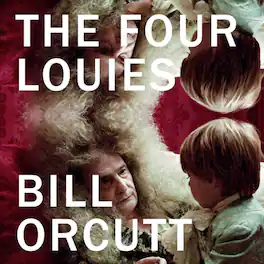
2025 repress. In 1957, R&B singer Richard Berry scrawled a few crude stanzas on a strip of toilet paper, and chant-sung them in fake patois over a shuffling rhythm to capitalize on the Latin craze tearing up the charts. InchLouie LouieInch didn't make much of a dent in the national consciousness in it's first iteration, but when Berry and the Pharaohs took the song on the road up and down the West Coast, it became something of a regional sensation. In 1962, the Kingsmen carved their mush-mouthed, barely-pubescent first take of the nascent standard into acetate. The resulting 45 was a mega-hit (although Berry remained a pauper until legal wrangling finally made him rich shortly before his death in 1997). No one could quite decipher the words, so grown-ups assumed the worst, and the resulting hysteria culminated in an FBI obscenity investigation and trial (InchUnintelligible at any speed,Inch concluded the judge). The countless cover versions that followed the original hit mangled the song's blurry text into guesstimated verse with varying shades of angst and filthiness.Less than a decade later, Steve Reich's Four Organs (built from a stacked dominant-11th chord with wayward pitches gradually trickling out either side like pancake syrup) made it's concert debut. It's introductory staccato fanfare poleaxed unsuspecting uptown highbrows in an almost rockist fashion, and while the piece was tolerated by the art mob, Reich's work didn't fare so well in uptown concert halls. At a Carnegie Hall performance in 1971, one listener repeatedly slammed her head into the stage, shouting InchStop, stop, I confess!Inch Nonetheless, the work's relentless progression, melting into Farfisa dreamscapes, would eventually inspire some of the most palatable manifestations of American minimalism.Bill Orcutt's latest for Fake Estates, his ongoing opus of obsessive rearrangement, seamlessly m
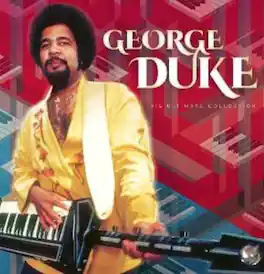
George Duke is one of the greatest musicians, songwriters and producers of all time. Since the 70s George Duke has taken an important place in the Soulshow with his own music and numerous and timeless productions. Over the years a close friendship has developed between George, Ferry and Guyon. Guyon represented George's BPM tag in Europe and organised concerts of which the Paradiso concert in 2004 was a highlight and Ferry did the announcements for the sold-out hall. When George was in the Netherlands he always did the Soulshow and sang beautiful new jingles. This special friendship has always remained and it is an honour to let his legacy live on through this unique Ultimate Collection on vinyl. A unique album by a legendary musician and special man; George Duke forever!

Music in Continuous Motion, Bill Orcutt's latest entry into his 21st-century repertoire of quartet guitar music, pointedly steps away from the cut-and-paste constructivism of Music for Four Guitars into a sonic stratum that's yearningly melodic, resolutely human, and built for performance. Conceived for a 2026 NYC concert, Music in Continuous Motion shares the concision of it's predecessor-but rather than the discrete, mechanistic precision of Music for Four Guitars, the tracks on Music in Continuous Motion unify-each song weaving four gleaming threads into the warp and weft of an evolving, complex texture that employs simple, repeating motifs to build new melodies from counterpoint itself. It accomplishes this in the most efficient manner possible most of these 12 tracks hover around two-and-a- half minutes, each iterating first the substrate, then the melody and it's variations, then slamming shut like a clockwork music box.Based on previous recorded evidence, Orcutt is fond of boundary conditions for his studio guitar records. Much of the time, his launchpad is obvious (The Four Louies, How to Rescue Things); with others, it's intentionally obscured. When recruiting me to write about each , he might send me a clue (InchThis is a bridge pickup record more than a neck pickup record,Inch Orcutt helpfully offered for Music for Four Guitars). Although any given dispatch is a potential red herring, up until now, each has implied an Oulipian conceit (however obtuse) that at least somewhat determines the outcome. Thus, I was a bit surprised by his statement on Music in Continuous Motion-InchThe mystery of how [the] same person, same process, same gear produces different results.Inch When pressed, he elaborated that the record features Inchno triplets,Inch something I've yet to count out to determine for myself.Whatever overarching form the recording process may have mapp
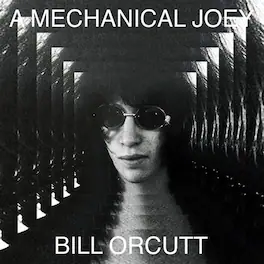
2025 repress. InchBill Orcutt is of course famous for his bluesy free improv acoustic guitar playing, which he has been performing since he re-emerged with the 2009 solo album A New Way To Pay Old Debts, 12 years after the dissolution of his seminal noise rock band Harry Pussy. He has also held down day jobs as a software engineer at various Silicon Valley companies for the last two decades.Apart from certain errant excursions such as Harry Pussy's final album Let's Build A Pussy, which consists of Orcutt timestretching a second of the voice of Harry Pussy drummer Adris Hoyos into an hour, and notwithstanding the fact that since 2011 his albums have been released by electronic music tag Editions Mego, there was previously a marked divergence between the computers of Orcutt's career and the eschewal of digital manipulation in the uncompromisingly visceral playing of his vocation, in which the pluck of every string is palpable. This changed in 2016, when he released the avowedly primitive open source live coding audio program Cracked, which consists only of a window in which commands are typed.Since then, Orcutt has been intermittently releasing music made with the app on his DIY tag Fake Estates, A Mechanical Joey being the latest. It's two sides comprise one continuous track, lasting 35 minutes in total, during which Orcutt creates the illusion that a sample of Joey Ramone counting in a song accompanied by drumbeats is moving forwards and backwards in space. It is a sequel of sorts to last year's Pure Genius, another by Orcutt made on Cracked, which consists of various computer generated voices counting, accompanied by bleeps ascending the chromatic scale. The blurb for that record claims that it was borne of the fact that 'while stuck out on the left coast surrounded by braying tech bros,' Orcutt 'realized that we, the plebs, will eventually be here only to serve t
Specs
Be the first to ask a question.
We’ll try to get your question answered within 24 hours by a Best Buy customer or brand representative.