Carlos Dafe - Carlos Dafe Jid025 - Blue - VINYL LP
Reviews coming soon
About this product
Carlos Dafé, born in Vila Isabel, Rio de Janeiro, grew up surrounded by music and poetry. His father, a chorinho player, and his mother, a poet, nurtured his talent from a young age. By four, he was correcting notes in his father's rehearsals; by eleven, he was studying at the Conservatory of Music, and by fourteen, he was performing with ensembles and orchestras. In the 1970s, Dafé became a pillar of Brazil's Black music movement, alongside Tim Maia, Cassiano, Wilson Simonal, and Banda Black Rio. Known as InchThe Prince of Soul,Inch a title bestowed by Nelson Motta, Dafé brought samba, soul, and funk into harmony, creating enduring hits like A Beleza É Você Menina.Dafé's career spans decades of collaborations, accolades, and cultural influence. From touring internationally with the Marine Corps band to composing film soundtracks, his contributions have shaped Brazil's artistic identity. In Trem do Soul, a 2021 documentary about Rio's Black cultural scene, Dafé's work is celebrated as a cornerstone of the movement. His deep voice, poignant lyrics, and innovative sound have made him a mentor and a cultural icon for generations.Adrian Younge first discovered Dafé's work through the song InchPelas SombrasInch from Arthur Verocai's groundbreaking 1972 album, a work sampled by artists such as Dr. Who Dat? and Michael Da Vinci. They were introduced by Verocai himself, which led to their collaboration on Jazz Is Dead 025, which marks a bold new chapter in Dafé's career. In Los Angeles, Dafé was captivated by Younge's creative process. InchI was in awe of the stupendous arrangements Adrian had created, so I made sure to leave plenty of space for the instrumentals to shine,Inch Dafé said. Alongside collaborators BID, Gabriel Moura, his wife Marilda, and son Jorge Mário Dafé, he wrote melodies, lyrics, and spoken-word passages inspired by stories he once told his children.Dafé
Specifications
- GenreJazzDescriptionCarlos Dafé, born in Vila Isabel, Rio de Janeiro, grew up surrounded by music and poetry. His father, a chorinho player, and his mother, a poet, nurtured his talent from a young age. By four, he was correcting notes in his father's rehearsals; by eleven, he was studying at the Conservatory of Music, and by fourteen, he was performing with ensembles and orchestras. In the 1970s, Dafé became a pillar of Brazil's Black music movement, alongside Tim Maia, Cassiano, Wilson Simonal, and Banda Black Rio. Known as InchThe Prince of Soul,Inch a title bestowed by Nelson Motta, Dafé brought samba, soul, and funk into harmony, creating enduring hits like A Beleza É Você Menina.Dafé's career spans decades of collaborations, accolades, and cultural influence. From touring internationally with the Marine Corps band to composing film soundtracks, his contributions have shaped Brazil's artistic identity. In Trem do Soul, a 2021 documentary about Rio's Black cultural scene, Dafé's work is celebrated as a cornerstone of the movement. His deep voice, poignant lyrics, and innovative sound have made him a mentor and a cultural icon for generations.Adrian Younge first discovered Dafé's work through the song InchPelas SombrasInch from Arthur Verocai's groundbreaking 1972 album, a work sampled by artists such as Dr. Who Dat? and Michael Da Vinci. They were introduced by Verocai himself, which led to their collaboration on Jazz Is Dead 025, which marks a bold new chapter in Dafé's career. In Los Angeles, Dafé was captivated by Younge's creative process. InchI was in awe of the stupendous arrangements Adrian had created, so I made sure to leave plenty of space for the instrumentals to shine,Inch Dafé said. Alongside collaborators BID, Gabriel Moura, his wife Marilda, and son Jorge Mário Dafé, he wrote melodies, lyrics, and spoken-word passages inspired by stories he once told his children.DaféArtistCarlos DafeTitleCarlos Dafe Jid025 - BlueFormatVINYLLabelJazz Is Dead
Reviews
This product doesn't have any reviews yet.
Compare similar products
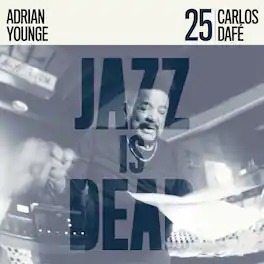
Carlos Dafé, born in Vila Isabel, Rio de Janeiro, grew up surrounded by music and poetry. His father, a chorinho player, and his mother, a poet, nurtured his talent from a young age. By four, he was correcting notes in his father's rehearsals; by eleven, he was studying at the Conservatory of Music, and by fourteen, he was performing with ensembles and orchestras. In the 1970s, Dafé became a pillar of Brazil's Black music movement, alongside Tim Maia, Cassiano, Wilson Simonal, and Banda Black Rio. Known as InchThe Prince of Soul,Inch a title bestowed by Nelson Motta, Dafé brought samba, soul, and funk into harmony, creating enduring hits like A Beleza É Você Menina.Dafé's career spans decades of collaborations, accolades, and cultural influence. From touring internationally with the Marine Corps band to composing film soundtracks, his contributions have shaped Brazil's artistic identity. In Trem do Soul, a 2021 documentary about Rio's Black cultural scene, Dafé's work is celebrated as a cornerstone of the movement. His deep voice, poignant lyrics, and innovative sound have made him a mentor and a cultural icon for generations.Adrian Younge first discovered Dafé's work through the song InchPelas SombrasInch from Arthur Verocai's groundbreaking 1972 album, a work sampled by artists such as Dr. Who Dat? and Michael Da Vinci. They were introduced by Verocai himself, which led to their collaboration on Jazz Is Dead 025, which marks a bold new chapter in Dafé's career. In Los Angeles, Dafé was captivated by Younge's creative process. InchI was in awe of the stupendous arrangements Adrian had created, so I made sure to leave plenty of space for the instrumentals to shine,Inch Dafé said. Alongside collaborators BID, Gabriel Moura, his wife Marilda, and son Jorge Mário Dafé, he wrote melodies, lyrics, and spoken-word passages inspired by stories he once told his children.Dafé
Carlos Dafé, born in Vila Isabel, Rio de Janeiro, grew up surrounded by music and poetry. His father, a chorinho player, and his mother, a poet, nurtured his talent from a young age. By four, he was correcting notes in his father's rehearsals; by eleven, he was studying at the Conservatory of Music, and by fourteen, he was performing with ensembles and orchestras. In the 1970s, Dafé became a pillar of Brazil's Black music movement, alongside Tim Maia, Cassiano, Wilson Simonal, and Banda Black Rio. Known as InchThe Prince of Soul,Inch a title bestowed by Nelson Motta, Dafé brought samba, soul, and funk into harmony, creating enduring hits like A Beleza É Você Menina.Dafé's career spans decades of collaborations, accolades, and cultural influence. From touring internationally with the Marine Corps band to composing film soundtracks, his contributions have shaped Brazil's artistic identity. In Trem do Soul, a 2021 documentary about Rio's Black cultural scene, Dafé's work is celebrated as a cornerstone of the movement. His deep voice, poignant lyrics, and innovative sound have made him a mentor and a cultural icon for generations.Adrian Younge first discovered Dafé's work through the song InchPelas SombrasInch from Arthur Verocai's groundbreaking 1972 album, a work sampled by artists such as Dr. Who Dat? and Michael Da Vinci. They were introduced by Verocai himself, which led to their collaboration on Jazz Is Dead 025, which marks a bold new chapter in Dafé's career. In Los Angeles, Dafé was captivated by Younge's creative process. InchI was in awe of the stupendous arrangements Adrian had created, so I made sure to leave plenty of space for the instrumentals to shine,Inch Dafé said. Alongside collaborators BID, Gabriel Moura, his wife Marilda, and son Jorge Mário Dafé, he wrote melodies, lyrics, and spoken-word passages inspired by stories he once told his children.Dafé

New age/ambient/experimental music at it's best.

The long-awaited LP of Discharming man's latest album, which was released on CD in December 2020 !! Currently, 'Discharming man' based in Hokkaido has been released for the first time in about five and a half years since the previous work. 4th album 'POLE & AURORA' and 'GEZAN' presided over the 'Eleventh March ' decision! From in the current system, which has passed through the member change, first full album ! #of continuing to update under the ice distorted north The far north of the current alternative 'Discharming man'. 'POLE & AURORA' is a manifestation of intention for this world and the future, starting with 'future' and ending with 'Discharming man'. While swimming in the chaotic glacier of 2020, carefully collect the light mixed in the zero degree and ignite while frustrating. A new kind of hope that the silence that blooms in the roar and the noise that swells in the transparency are emitted with the prayer of Ebina, which cannot be described by mere emo or hardcore. Discharming manKeita Ebina, the vocalist of 'Kiwiroll', which was disbanded in December 2004, started activities around the spring of 2005 with the aim of 'a song that can deliver songs firmly' after returning to Sapporo. Initially it was an activity in solo formation, but gradually shifted to band formation. Released a number of works from independent labels such as '5B' and 'traffic' operated by Ebina. After the late Hideki Yoshimura (bloodthirsty butchers) was enrolled as a guitar, in October 2016, he released 7 'ep' Damaged / My War 'under the supervision of Kentaro Nakao (cryptcity). As of March 2019, Nogawa, who has been active as an original member for more than ten years, has withdrawn. In June 2019, Michika Nishino was appointed as a drummer and continues to the present.
Specs
Be the first to ask a question.
We’ll try to get your question answered within 24 hours by a Best Buy customer or brand representative.