Del Sordo,Federico - Cangiasi: Scherzi forastieri - COMPACT DISCS [CD]
Reviews coming soon
About this product
Cangiasi Scherzi forastieri
Specifications
- GenreClassicalDescriptionCangiasi Scherzi forastieriArtistDEL SORDO,FEDERICOTitleCangiasi: Scherzi forastieriFormatCDLabelBrilliant Classics
Reviews
This product doesn't have any reviews yet.
Compare similar products

Cangiasi Scherzi forastieri

Biographical information on NicoloÌ Corradini is scarce, but we do know he spent most of his life in Cremona, the city where he was most likely born. His works include a Book of Madrigals for 5 to 8 voices with viol consort (published in Venice in 1620), the First Book of French Canzoni (Venice, 1620), Motets for 1 to 4 voices (Bartolomeo Magni, Venice, 1624) and the 4-voice Ricercari recorded here, from 1615. The only surviving copy of this latter collection - held at the International Museum and Library of Music of Bologna - is missing it's frontispiece and colophon, but according to Luigi Ferdinando Tagliavini it was printed, like his Motets, in Venice by Bartolomeo Magni. This is the only set of Corradini's music that fully lends itself to performance by a solo keyboard player, as the Canzoni are clearly better suited to a group of multiple instruments. Each of Corradini's ricercars - which cover the full range of 12 church modes - is based on multiple themes (called fughe). This polythematism keeps hearers of these grandiose musical paintings intrigued with a variety that - while clearly based on the architecture of the 16th-century choral motet - at times goes beyond it in a way more akin to fugues of the early 18th century, decades ahead of his time.

Giovanni Paolo Cima (1570-1630) was an Italian composer, organist, and violinist active during the transition from the Renaissance to the early Baroque period. He served as the music director at the church of Santa Maria presso San Celso in Milan, where he played a significant role in shaping the musical life of the city. Cima was part of a generation of Northern Italian composers who began experimenting with the emerging stylistic innovations of the early 17th century, particularly in instrumental music.One of his most important contributions is the collection Ricercari e canzoni alle francese, published in 1606. This work stands out as one of the earliest Italian publications to feature works for solo instruments with continuo, marking a significant development in the evolution of the Baroque sonata. The collection includes a variety of instrumental forms, notably ricercari and canzoni, which demonstrate his ability to merge contrapuntal techniques with expressive melodic writing.The ricercari are reflective of the older Renaissance tradition, often built on imitative counterpoint and showcasing Cima's command of structure and thematic development. In contrast, the canzoni are livelier and more sectional, pointing toward the emerging concertato style. These pieces often feature contrasting rhythms and clear melodic phrasing, suggesting the influence of vocal models on instrumental writing.Cima's music reflects both conservatism and innovation. While rooted in Renaissance polyphony, his Ricercari e canzoni anticipate the more dramatic and expressive instrumental music that would dominate the Baroque era. His work helped lay the groundwork for later composers like Dario Castello and Biagio Marini, contributing to the broader shift toward idiomatic instrumental composition and the increasing independence of instrumental genres in early 17th-century Italy.Played by Fede
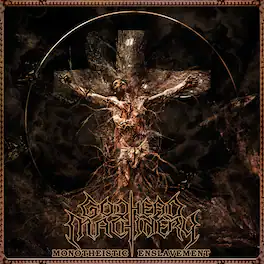
2021 . Hidden between the sacred and the damned, an essence both fierce and fair in it's duality. It's in this essence the subjective concept of good and evil can be exposed and revealed. Only by colliding harmony with dissonance can we create the necessary depth in our art, and therefore, our way of life. Monotheistic Enslavement doesn't stand by itself as a conceptual album but should rather be considered as a result of our evolvement. A step further from Godhead's light and therefore a step closer to the liberation that lies beyond the illuminated path. The creative forces within the band have increased during these times of global pandemic. Blessed by the curse has the sun fallen into eclipse and ones again revealed it's true self. Newly acquired revelations during this period is Monotheistic Enslavement.
Specs
Be the first to ask a question.
We’ll try to get your question answered within 24 hours by a Best Buy customer or brand representative.