Doisy / Plouvier / Lafasciano - The Charm of the Lyre-Guitar - COMPACT DISCS [CD]
Reviews coming soon
About this product
The lyre-guitar was a fascinating, upmarket instrument that originated in Paris. It's inventor, luthier Pierre-Charles Mareschal, dated it's creation to around 1780. It was very popular in the elite salons of Napoleonic era-Europe, between the late 18th and early 19th century. It's refined, elegant shape recalling the ancient Greek lyre, made it a much-vaunted status symbol among women, who believed it enhanced their grace and beauty. As well as being played by noblewomen, it was also used by musicians to accompany singers, including the French tenor Joseph Dominique Fabry-Garat and the Austrian baritone Johann Michael Vogl, a close friend of Franz Schubert. The lyre-guitar used on this recording comes from Domenico Lafasciano's private collection. It was built in Paris in 1806 by Henry Lejeune, part of an important dynasty of luthiers dating back to the 18th century. Lafasciano's lyre-guitar is an original and very rare instrument it has only 12 frets, and they are made of gut like on the lute or baroque guitar, making it suitable for playing works from the early 19th-century guitar repertoire. It is a brilliant example of the transition between the 18th and 19th centuries, a period when guitarists were still playing instruments with five double or single courses of strings, as well as six-string models. It appears that the lyre-guitar, which had six single strings from the outset, gave a definitive push to the addition of the sixth string to the guitar. This album contains some lovely musical gems written in the early 19th century by guitar-playing composers who remain largely unknown today. The first French publications, including the pieces featured on this recording, all contained the words 'pour Lyre ou Guitare' or 'pour Guitare ou Lyre', indicating very clearly that the works could be performed on either a lyre-guitar ('Lyre') or a five- or six-string guitar (
Specifications
- GenreClassicalDescriptionThe lyre-guitar was a fascinating, upmarket instrument that originated in Paris. It's inventor, luthier Pierre-Charles Mareschal, dated it's creation to around 1780. It was very popular in the elite salons of Napoleonic era-Europe, between the late 18th and early 19th century. It's refined, elegant shape recalling the ancient Greek lyre, made it a much-vaunted status symbol among women, who believed it enhanced their grace and beauty. As well as being played by noblewomen, it was also used by musicians to accompany singers, including the French tenor Joseph Dominique Fabry-Garat and the Austrian baritone Johann Michael Vogl, a close friend of Franz Schubert. The lyre-guitar used on this recording comes from Domenico Lafasciano's private collection. It was built in Paris in 1806 by Henry Lejeune, part of an important dynasty of luthiers dating back to the 18th century. Lafasciano's lyre-guitar is an original and very rare instrument it has only 12 frets, and they are made of gut like on the lute or baroque guitar, making it suitable for playing works from the early 19th-century guitar repertoire. It is a brilliant example of the transition between the 18th and 19th centuries, a period when guitarists were still playing instruments with five double or single courses of strings, as well as six-string models. It appears that the lyre-guitar, which had six single strings from the outset, gave a definitive push to the addition of the sixth string to the guitar. This album contains some lovely musical gems written in the early 19th century by guitar-playing composers who remain largely unknown today. The first French publications, including the pieces featured on this recording, all contained the words 'pour Lyre ou Guitare' or 'pour Guitare ou Lyre', indicating very clearly that the works could be performed on either a lyre-guitar ('Lyre') or a five- or six-string guitar (ArtistDOISY / PLOUVIER / LAFASCIANOTitleThe Charm of the Lyre-GuitarFormatCDLabelBrilliant Classics
Reviews
This product doesn't have any reviews yet.
Compare similar products

The lyre-guitar was a fascinating, upmarket instrument that originated in Paris. It's inventor, luthier Pierre-Charles Mareschal, dated it's creation to around 1780. It was very popular in the elite salons of Napoleonic era-Europe, between the late 18th and early 19th century. It's refined, elegant shape recalling the ancient Greek lyre, made it a much-vaunted status symbol among women, who believed it enhanced their grace and beauty. As well as being played by noblewomen, it was also used by musicians to accompany singers, including the French tenor Joseph Dominique Fabry-Garat and the Austrian baritone Johann Michael Vogl, a close friend of Franz Schubert. The lyre-guitar used on this recording comes from Domenico Lafasciano's private collection. It was built in Paris in 1806 by Henry Lejeune, part of an important dynasty of luthiers dating back to the 18th century. Lafasciano's lyre-guitar is an original and very rare instrument it has only 12 frets, and they are made of gut like on the lute or baroque guitar, making it suitable for playing works from the early 19th-century guitar repertoire. It is a brilliant example of the transition between the 18th and 19th centuries, a period when guitarists were still playing instruments with five double or single courses of strings, as well as six-string models. It appears that the lyre-guitar, which had six single strings from the outset, gave a definitive push to the addition of the sixth string to the guitar. This album contains some lovely musical gems written in the early 19th century by guitar-playing composers who remain largely unknown today. The first French publications, including the pieces featured on this recording, all contained the words 'pour Lyre ou Guitare' or 'pour Guitare ou Lyre', indicating very clearly that the works could be performed on either a lyre-guitar ('Lyre') or a five- or six-string guitar (

This product is an authorized manufactured on demand CD-R

The compositions on this , which walk along the border between past and present, were dedicated to the guitar by Glauco Cataldo. He is a free-thinking musician, working in self-imposed isolation, and deserving of fame not only for his experience and substantial output, but also for the quality of his work, the fruit of an extremely unusual artistic and intellectual personality. Cataldo was born in Naples in March 1920. He studied music first in Pesaro and later in Milan, with Giorgio Federico Ghedini and Antonio Votto. From 1948 onward, he served as a teacher at the G. Nicolini Conservatory of Piacenza. He passed away in 2009. The works on this album are performed by Italian guitarist Giancarlo Dellacasa.
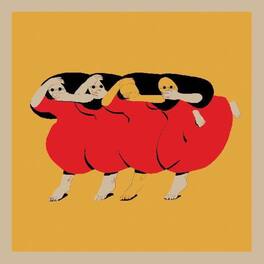
There are bands that come and go, and then there are those that carve their own unique path, leaving an indelible mark on the heart of listeners. Future Islands are unquestionably of the latter. They are a band that has defied convention, embraced vulnerability, and crafted a distinctive sound that resonates deeply with audiences around the globe. Now on their seventh , People Who Aren't There Anymore heralds a new chapter for Future Islands. For Future Islands, albums aren't a static reflection of a moment in time, they are a fluid chapter in their lives that can change and mutate. People change and pull away. The band is no different, coming up against their future while staring at their past. They're not the same people they were when Future Islands began nearly two decades ago. They are now spread about, some settled down and some still moving. InchWe're like waves, we're all changing,Inch says William. People Who Aren't There Anymore reflects the transience of a band's existence; the rare privilege of travelling all over the world contrasting with the sadness of fleeting moments in and out people's lives. Being everywhere but also nowhere. Remembering the lives lost and the living they'll never see again, cherishing the present and being grateful for the past.
Specs
Be the first to ask a question.
We’ll try to get your question answered within 24 hours by a Best Buy customer or brand representative.