Eleni Lydia Stamellou - Honegger: Petite Chapelle, Songs - COMPACT DISCS [CD]
Reviews coming soon
About this product
Arthur Honegger's song output falls into two distinct periods. The first spans his apprentice years from 1914 - the date of the first of the 4 Poemes H.7 - to 1924. He returned to art song on the eve of the Second World War, and Eleni-Lydia Stamellou sings two further sets of songs originally conceived as film accompaniments. In the 4 Poems there is a Debussyan turn to the harmony which mirrors the symbolist flavour of the text. More distinct from the model of Debussy is the album's title track, 'Petite Chapelle', with it's avowedly spiritual character. Honegger conceived his 3 Poemes de Paul Fort in the autumn of 1916. Here the relationship between music and text is more directly illustrative, as in the distant hunting horns to accompany the hunter lost in the forest. From February 1917, Nature morte stands alone as a musical still-life, a brief sketch of a bowl of peaches and white grapes. No less epigrammatic, but more musically adventurous as befitting the text, are Honegger's settings of the 6 Poemes d'Apollinaire which he composed between August 1915 and March 1917. But, for all Apollinaire's influence over the composers of 'Les Six' - Honegger included - Jean Cocteau was far more instrumental in determining their aesthetic aims. And though it was Apollinaire who had coined sur-realisme in response to seeing the premiere of Satie's ballet Parade in 1917, this new, mischievous spirit courses through Honegger's deft settings of Cocteau. Honegger makes a sincere tribute to one of France's most celebrated Renaissance-era poets in the Chanson de Ronsard from February 1924. From 1926, the 3 Chansons de La Petite Sirene feature whole-tone rising harmonies in the opening song, and the even briefer companions uphold a Satie-like inscrutability.At this point, Honegger continued in vocal music (operas, operettas and oratorio) but left song alone. However, in 1937, his soun
- GenreClassicalDescriptionArthur Honegger's song output falls into two distinct periods. The first spans his apprentice years from 1914 - the date of the first of the 4 Poemes H.7 - to 1924. He returned to art song on the eve of the Second World War, and Eleni-Lydia Stamellou sings two further sets of songs originally conceived as film accompaniments. In the 4 Poems there is a Debussyan turn to the harmony which mirrors the symbolist flavour of the text. More distinct from the model of Debussy is the album's title track, 'Petite Chapelle', with it's avowedly spiritual character. Honegger conceived his 3 Poemes de Paul Fort in the autumn of 1916. Here the relationship between music and text is more directly illustrative, as in the distant hunting horns to accompany the hunter lost in the forest. From February 1917, Nature morte stands alone as a musical still-life, a brief sketch of a bowl of peaches and white grapes. No less epigrammatic, but more musically adventurous as befitting the text, are Honegger's settings of the 6 Poemes d'Apollinaire which he composed between August 1915 and March 1917. But, for all Apollinaire's influence over the composers of 'Les Six' - Honegger included - Jean Cocteau was far more instrumental in determining their aesthetic aims. And though it was Apollinaire who had coined sur-realisme in response to seeing the premiere of Satie's ballet Parade in 1917, this new, mischievous spirit courses through Honegger's deft settings of Cocteau. Honegger makes a sincere tribute to one of France's most celebrated Renaissance-era poets in the Chanson de Ronsard from February 1924. From 1926, the 3 Chansons de La Petite Sirene feature whole-tone rising harmonies in the opening song, and the even briefer companions uphold a Satie-like inscrutability.At this point, Honegger continued in vocal music (operas, operettas and oratorio) but left song alone. However, in 1937, his sounArtistEleni Lydia StamellouTitleHonegger: Petite Chapelle, SongsFormatCDLabelBrilliant Classics
Reviews
This product doesn't have any reviews yet.
Compare similar products
![Eleni Lydia Stamellou - Honegger: Petite Chapelle, Songs - COMPACT DISCS [CD]](https://pisces.bbystatic.com/image2/BestBuy_US/images/products/c4b3fb90-1bc6-49c4-a8b1-c661b4053c07.jpg;maxHeight=422;maxWidth=264?format=webp)
Arthur Honegger's song output falls into two distinct periods. The first spans his apprentice years from 1914 - the date of the first of the 4 Poemes H.7 - to 1924. He returned to art song on the eve of the Second World War, and Eleni-Lydia Stamellou sings two further sets of songs originally conceived as film accompaniments. In the 4 Poems there is a Debussyan turn to the harmony which mirrors the symbolist flavour of the text. More distinct from the model of Debussy is the album's title track, 'Petite Chapelle', with it's avowedly spiritual character. Honegger conceived his 3 Poemes de Paul Fort in the autumn of 1916. Here the relationship between music and text is more directly illustrative, as in the distant hunting horns to accompany the hunter lost in the forest. From February 1917, Nature morte stands alone as a musical still-life, a brief sketch of a bowl of peaches and white grapes. No less epigrammatic, but more musically adventurous as befitting the text, are Honegger's settings of the 6 Poemes d'Apollinaire which he composed between August 1915 and March 1917. But, for all Apollinaire's influence over the composers of 'Les Six' - Honegger included - Jean Cocteau was far more instrumental in determining their aesthetic aims. And though it was Apollinaire who had coined sur-realisme in response to seeing the premiere of Satie's ballet Parade in 1917, this new, mischievous spirit courses through Honegger's deft settings of Cocteau. Honegger makes a sincere tribute to one of France's most celebrated Renaissance-era poets in the Chanson de Ronsard from February 1924. From 1926, the 3 Chansons de La Petite Sirene feature whole-tone rising harmonies in the opening song, and the even briefer companions uphold a Satie-like inscrutability.At this point, Honegger continued in vocal music (operas, operettas and oratorio) but left song alone. However, in 1937, his soun
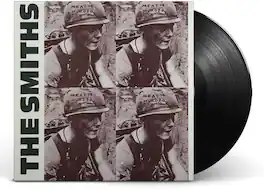
Vinyl LP pressing. Digitally remastered edition of this 1985 album from the legendary British quartet. With their second proper album Meat Is Murder, The Smiths began to branch out and diversify, while refining the jangling guitar pop of their debut. InchThe Headmaster RitualInch and InchI Want the One I Can't HaveInch are fine elaborations of the formula they laid out on the debut, while InchRusholme RuffiansInch is an infectious stab at Rockabilly. Such was their creative thrust at this point; they were seen as the most important British band since Joy Division. Above all though, there was no other British group making music quite like this in 1985. Album Tracks 1. The Headmaster Ritual (2011 Remastered Version) 2. Rusholme Ruffians (2011 Remastered Version) 3. I Want the One I Can't Have (2011 Remastered Version) 4. What She Said (2011 Remastered Version) 5. That Joke Isn't Funny Anymore (Single Version) 1. Nowhere Fast (2011 Remastered Version) 2. Well I Wonder (2011 Remastered Version) 3. Barbarism Begins at Home (2011 Remastered Version) 4. Meat Is Murder (2011 Remastered Version)
![Gratest Hits [Custard Yellow Vinyl] [Only @ Best Buy] [LP]](https://pisces.bbystatic.com/image2/BestBuy_US/images/products/ca23a7d3-5801-4fe9-aed1-d8d22f5ca7ad.jpg;maxHeight=422;maxWidth=264?format=webp)
![My Hero Academia: Season 7 [Original Soundtrack] [Translucent Sea Blue 2 LP] [Only @ Best Buy] [LP] [VINYL]](https://pisces.bbystatic.com/image2/BestBuy_US/images/products/ad658ab5-584e-481a-b93a-c8998e033654.jpg;maxHeight=422;maxWidth=264?format=webp)
| Pros for Eleni Lydia Stamellou - Honegger: Petite Chapelle, Songs - COMPACT DISCS [CD] | |||
|---|---|---|---|
| There were no pros for this product— | There were no pros for this product— | There were no pros for this product— | Playback Quality |
Specs
Be the first to ask a question.
We’ll try to get your question answered within 24 hours by a Best Buy customer or brand representative.