Ensemble Giardino Di Delizie Augustynowicz - Sinfonie a Tre - COMPACT DISCS [CD]
Reviews coming soon
About this product
Who was Lelio Colista (1629-1680)? Known by his early 20s as 'the Orpheus of Rome', he began his musical education as a choirboy before soon becoming a performer at the papal Barberini court. He then made his name as a lutenist and a theorbo virtuoso, but his talents evidently extended beyond music. He became an equerry to the Pope at the age of 26 and Keeper of the Sistine Chapel paintings from 1660 until his death around two decades later. He toured Europe widely, earning the admiration of King Louis XIV, before returning to Rome and teaching the art of lute-playing to notable composers of the next generation such as Gaspar Sanz. Very little of Colista's own music has been widely heard; a neglect which may be attributed to the composer's reluctance to have it published during his lifetime. The manuscript for these nine three-part sinfonias is kept by the National Library in Turin. They were performed on Christmas Eve 1664 at the Roman church of Santa Maria del Popolo and perhaps not since then, until this enterprising Polish-Italian group of period-instrument musicians has revived them for this recording. The sinfonias all follow a satisfying template, mostly opening with a grave slow movement, and reserving the practice of strict counterpoint for the penultimate movement before the upbeat finale. Only one of the nine is cast in a minor-key, but the recording is completed by another manuscript piece, the Ballo in G minor, which plays with Baroque expressions of mourning.
Specifications
- GenreClassicalDescriptionWho was Lelio Colista (1629-1680)? Known by his early 20s as 'the Orpheus of Rome', he began his musical education as a choirboy before soon becoming a performer at the papal Barberini court. He then made his name as a lutenist and a theorbo virtuoso, but his talents evidently extended beyond music. He became an equerry to the Pope at the age of 26 and Keeper of the Sistine Chapel paintings from 1660 until his death around two decades later. He toured Europe widely, earning the admiration of King Louis XIV, before returning to Rome and teaching the art of lute-playing to notable composers of the next generation such as Gaspar Sanz. Very little of Colista's own music has been widely heard; a neglect which may be attributed to the composer's reluctance to have it published during his lifetime. The manuscript for these nine three-part sinfonias is kept by the National Library in Turin. They were performed on Christmas Eve 1664 at the Roman church of Santa Maria del Popolo and perhaps not since then, until this enterprising Polish-Italian group of period-instrument musicians has revived them for this recording. The sinfonias all follow a satisfying template, mostly opening with a grave slow movement, and reserving the practice of strict counterpoint for the penultimate movement before the upbeat finale. Only one of the nine is cast in a minor-key, but the recording is completed by another manuscript piece, the Ballo in G minor, which plays with Baroque expressions of mourning.ArtistEnsemble Giardino Di Delizie AugustynowiczTitleSinfonie a TreFormatCDLabelBrilliant Classics
Reviews
This product doesn't have any reviews yet.
Compare similar products

Who was Lelio Colista (1629-1680)? Known by his early 20s as 'the Orpheus of Rome', he began his musical education as a choirboy before soon becoming a performer at the papal Barberini court. He then made his name as a lutenist and a theorbo virtuoso, but his talents evidently extended beyond music. He became an equerry to the Pope at the age of 26 and Keeper of the Sistine Chapel paintings from 1660 until his death around two decades later. He toured Europe widely, earning the admiration of King Louis XIV, before returning to Rome and teaching the art of lute-playing to notable composers of the next generation such as Gaspar Sanz. Very little of Colista's own music has been widely heard; a neglect which may be attributed to the composer's reluctance to have it published during his lifetime. The manuscript for these nine three-part sinfonias is kept by the National Library in Turin. They were performed on Christmas Eve 1664 at the Roman church of Santa Maria del Popolo and perhaps not since then, until this enterprising Polish-Italian group of period-instrument musicians has revived them for this recording. The sinfonias all follow a satisfying template, mostly opening with a grave slow movement, and reserving the practice of strict counterpoint for the penultimate movement before the upbeat finale. Only one of the nine is cast in a minor-key, but the recording is completed by another manuscript piece, the Ballo in G minor, which plays with Baroque expressions of mourning.

Alessandro Stradella's (1639-1682) latterday fame has tended to focus on his sudden death in February 1782 at the age of 41 in mysterious circumstances - Flotow even wrote an opera on the subject - to the expense of his music, which would otherwise guarantee him a place in posterity's estimation among the most individual voices of the Italian Baroque. Stradella's operas and oratorios have attracted recordings and performances from early-music luminaries such as Alan Curtis and Fabio Biondi; his relatively slender surviving output of instrumental music remains comparatively little-known and under-recorded. The first mention of Stradella's instrumental music occurs in a letter from 1676, while the composer was working in the service of Pope Clement X. Shady dealings soon compelled Stradella to leave quickly for Venice where, having just married the mistress of a nobleman belonging to one of the city's wealthiest and most influential families, he suffered a near-fatal assault in October 1677. We still do not know precisely how and when these Sinfonias were composed, though Stradella occasionally mentions them in his correspondence and borrowed passages from them in his operas and oratorios. They are structured in several brief sections, several with a grave and stately introduction, a dashing contrapuntal movement, a brief aria-like section and a dazzling finale, like a sonata in microcosm, with the dialogue weaving in and out of the solo violin and it's accompaniment. However, Stradella probably did not write the Sinfonias as a discrete set, given their internal variety. The sixth and eleventh of the set are at least twice as long as many of the others, and Stradella uses this space to spin an expressive mood of great stillness in his arching introductions.
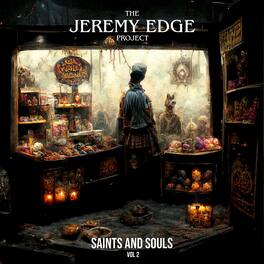
Vinyl LP pressing. After 4 top 50 Active Rock singles with Candlelight Red, Jeremy Edge launched The Jeremy Edge Project in 2020. Making adeparture stylistically with more blues based, guitar based rock. According to Edge, this project has been brewing for a while and came by accident as personnel changes mid-recording session prompted him to make some tough choices about moving forward and finishing the record as a solo artist. Now they are back with their sophomore effort Saints and Souls, being released in two volumes. This record was more than a year in the making and is in the spirit of the albums that inspired Jeremy to play. The album contains artwork and lyrical imagery inspired by New Orleans and some of the stories and folklore surrounding it. It is named as a tip of the hat to the Haitian traditions of InchAll Saints DayInch and InchAll Souls DayInch as a means of celebrating life and those who have passed. There is a recurring theme of light and dark and a struggle to overcome adversity. Some are personal stories, some about modern times and some based on fiction and folklore but all have this recurring theme. The band features a guest appearance by Derek Sherinian (Dream Theater, Black Country Communion) playing keys on InchMove OnInch, with select tracks mixed by Kevin InchCavemanInch Shirley (Aerosmith, The Black Crowes, Joe Bonamassa, etc...).

Blue Öyster Cult is an American rock band formed on Long Island, New York in 1967. They have sold 25 million records worldwide, and their fusion of hard rock with psychedelia and use of fantastical and tongue-in-cheek lyrics has had a major influence on heavy metal music. The band's most commercially successful lineup included Donald InchBuck DharmaInch Roeser (lead guitar, vocals), Eric Bloom (lead vocals, Inchstun guitarInch, keyboards, synthesizer), Allen Lanier (keyboards, rhythm guitar), Joe Bouchard (bass, vocals, keyboards), and Albert Bouchard (drums, percussion, vocals, miscellaneous instruments). The band's current lineup still includes Bloom and Roeser. The band continued making studio albums throughout the 1980s but were dropped by their longtime tag CBS/Columbia Records, following poor sales of their 11th studio album Imaginos in 1988. Their next new studio album Heaven Forbid was released some 10 years later in 1998, with it's follow-up Curse of the Hidden Mirror in 2001. Two more studio albums have been released, The Symbol Remains (2020) and Ghost Stories (2024). The band have continued touring throughout. This compilation was first released in 1990 and contains a mix of studio and live recordings including the classics InchGodzillaInch and Inch(Don't Fear) The ReaperInch.
Specs
Be the first to ask a question.
We’ll try to get your question answered within 24 hours by a Best Buy customer or brand representative.