
Holbling,Anna & Quido / Zsapka,Jozef - Two Violins & One Guitar 1 - COMPACT DISCS [CD]
About This Item
- Details
- Genre: Classical
- Description: The Trio Sonata, in it's various manifestations, came to be the most popular instrumental form at the close of the seventeenth century and in the first half of the following century, only superseded, in course of time, by the classical string quartet. It represented an ideal economy of means, in that it needed minimally only three or, more usually, four performers, while capable of expansion into a full concerto grosso by the addition of ripieno players to reinforce the louder sections. As it developed the Baroque trio sonata came to encompass two generally distinguishable categories of work, the Sonata da chiesa or Church Sonata, with it's alternation of slow and fast movements, the latter generally fugal in character, and the Sonata da camera, a suite of dance movements. Most commonly the trio sonata demanded the services of four players. Two melody instruments, normally violins, although publishers allowed some latitude in the matter, however unrealistically, were supplemented by a bass melody instrument and a chordal instrument in the form of a harpsichord, organ or lute. It was, however, always possible to play trio sonatas without chordal filling from the keyboard or it's equivalent. Published music sometimes described the second violin part as optional, although such an omission would normally be impossible. Generally trio sonatas would be issued with only three part-books, the third to be shared by keyboard-player and player of the viola da gamba, cello or violone. In texture they might differ between sonatas in which each melody instrument held a contrapuntal line and sonatas in which the lowest instrument simply provided a harmonic basis for melodic interchange between the violins, or a close shadowing of the first by the second. Album Tracks 1. Trio Sonata in a Minor Affettuso - Telemann 2. Trio Sonata in a Minor Vivace - Telemann 3. Trio Sonata
- Artist: HOLBLING,ANNA & QUIDO / ZSAPKA,JOZEF
- Title: Two Violins & One Guitar 1
- Format: CD
- Label: Naxos
- Release Date: 02/15/1994
- Genre: Classical
- Other
- Product Name: Holbling,Anna & Quido / Zsapka,Jozef - Two Violins & One Guitar 1 - COMPACT DISCS
- UPC: 730099540926
The Trio Sonata, in it's various manifestations, came to be the most popular instrumental form at the close of the seventeenth century and in the first half of the following century, only superseded, in course of time, by the classical string quartet. It represented an ideal economy of means, in that it needed minimally only three or, more usually, four performers, while capable of expansion into a full concerto grosso by the addition of ripieno players to reinforce the louder sections. As it developed the Baroque trio sonata came to encompass two generally distinguishable categories of work, the Sonata da chiesa or Church Sonata, with it's alternation of slow and fast movements, the latter generally fugal in character, and the Sonata da camera, a suite of dance movements. Most commonly the trio sonata demanded the services of four players. Two melody instruments, normally violins, although publishers allowed some latitude in the matter, however unrealistically, were supplemented by a bass melody instrument and a chordal instrument in the form of a harpsichord, organ or lute. It was, however, always possible to play trio sonatas without chordal filling from the keyboard or it's equivalent. Published music sometimes described the second violin part as optional, although such an omission would normally be impossible. Generally trio sonatas would be issued with only three part-books, the third to be shared by keyboard-player and player of the viola da gamba, cello or violone. In texture they might differ between sonatas in which each melody instrument held a contrapuntal line and sonatas in which the lowest instrument simply provided a harmonic basis for melodic interchange between the violins, or a close shadowing of the first by the second. Album Tracks 1. Trio Sonata in a Minor Affettuso - Telemann 2. Trio Sonata in a Minor Vivace - Telemann 3. Trio Sonata
Reviews
This product doesn't have any reviews yet.
Compare similar products
![Holbling,Anna & Quido / Zsapka,Jozef - Two Violins & One Guitar 1 - COMPACT DISCS [CD]](https://pisces.bbystatic.com/image2/BestBuy_US/images/products/ac2e8f4b-1d79-4835-a236-5d960a5a2e8f.jpg;maxHeight=422;maxWidth=264?format=webp)
The Trio Sonata, in it's various manifestations, came to be the most popular instrumental form at the close of the seventeenth century and in the first half of the following century, only superseded, in course of time, by the classical string quartet. It represented an ideal economy of means, in that it needed minimally only three or, more usually, four performers, while capable of expansion into a full concerto grosso by the addition of ripieno players to reinforce the louder sections. As it developed the Baroque trio sonata came to encompass two generally distinguishable categories of work, the Sonata da chiesa or Church Sonata, with it's alternation of slow and fast movements, the latter generally fugal in character, and the Sonata da camera, a suite of dance movements. Most commonly the trio sonata demanded the services of four players. Two melody instruments, normally violins, although publishers allowed some latitude in the matter, however unrealistically, were supplemented by a bass melody instrument and a chordal instrument in the form of a harpsichord, organ or lute. It was, however, always possible to play trio sonatas without chordal filling from the keyboard or it's equivalent. Published music sometimes described the second violin part as optional, although such an omission would normally be impossible. Generally trio sonatas would be issued with only three part-books, the third to be shared by keyboard-player and player of the viola da gamba, cello or violone. In texture they might differ between sonatas in which each melody instrument held a contrapuntal line and sonatas in which the lowest instrument simply provided a harmonic basis for melodic interchange between the violins, or a close shadowing of the first by the second. Album Tracks 1. Trio Sonata in a Minor Affettuso - Telemann 2. Trio Sonata in a Minor Vivace - Telemann 3. Trio Sonata
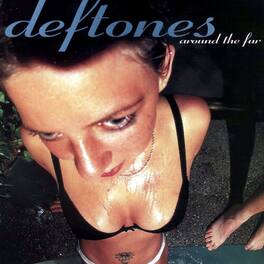
Around the Fur the follow-up to Deftones' passionate, aggressive Adrenaline, sees the California quartet expanding on the sheer rage of their earlier work, adding new, more sinister shades to their already extreme sound. The opening InchMy Own Summer (Shove It),Inch serves as an introduction to the album's sonic theme sinewy guitars and eerie whispers alternate with fast, violent crunch. Sepultura's Max Cavallero contributes guitar and vocals to InchHeadup,Inch while InchMXInch finds singer Chino trading off vocal lines with Annalynn Cunningham, (wife of Deftones' drummer Abe) in an acerbic take on the rock star mentality. Vocal acrobat Moreno attacks a variety of styles his breathy, psychotic recitations sound downright industrial, while the album's calmer, more brooding moments show his gift for haunting melody. Behind him, guitarist Stephen Carpenter's heavy wall of sound is astoundingly muscular, yet inspiringly agile. When Deftones' hellish fury hits full tilt, as it always does on this album, Moreno's voice erupts into screams which are best described as otherworldly, transforming this intense musical firestorm into a hurtling juggernaut of aggression. This LP version comes pressed on 180 gram vinyl. Album Tracks 1. My Own Summer (Shove It) 2. Lhabia 3. Mascara 4. Around the Fur 5. Rickets 6. Be Quiet and Drive (Far Away) 7. Lotion 8. Dai the Flu 9. Headup 10. MX
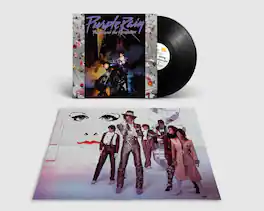
Limited 180 gram vinyl LP pressing. Purple Rain is the sixth studio album by Prince, the first to feature his backing band The Revolution, and is the soundtrack album to the 1984 film of the same name. Purple Rain is regularly ranked among the best albums in music history, and is widely regarded as Prince's magnum opus. Time magazine ranked it the 15th greatest album of all time in 1993, and it placed 18th on VH1's Greatest Rock and Roll Albums of All Time countdown. Rolling Stone ranked it the second-best album of the 1980s and 76th on their list of the 500 Greatest Albums of All Time. The first two singles from Purple Rain, InchWhen Doves CryInch and InchLet's Go CrazyInch, topped the US singles charts, and were hits around the world, while the title track went to number two on the Billboard Hot 100. The album was certified thirteen-times platinum (diamond) by the RIAA. Album Tracks 1. Let's Go Crazy 2. Take Me with U 3. The Beautiful Ones 4. Computer Blue 5. Darling Nikki 1. When Doves Cry 2. I Would Die 4 U 3. Baby I'm a Star 4. Purple Rain
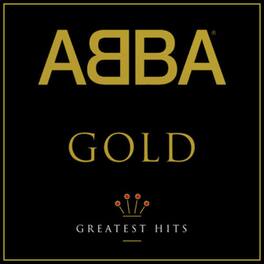
Special edition 40th anniversary 180-gram vinyl LP. 2014 import reissue. Take a chance on ABBA's greatest hits on vinyl. Knowing me knowing you, you won't be disappointed. Each hit is certified gold and is as catchy as pop music can get. This limited edition double album is pressed on 180-gram audiophile vinyl. Celebrating 40 years since their break-through hit in 1974, ABBA sounds just as good as ever back on an actual record. Hits include InchDancing Queen,Inch InchFernando,Inch InchWaterloo,Inch InchTake A Chance On MeInch, InchThank You For The MusicInch and many others. The album also includes a voucher to download an MP3 version of the album, which will take their music into the 21st century! Album Tracks 1. Dancing Queen 2. Knowing Me, Knowing You 3. Take a Chance on Me 4. Mamma Mia 5. Lay All Your Love on Me 6. Super Trouper 7. I Have a Dream 8. The Winner Takes It All 9. Money, Money, Money 10. S.O.S 11. Chiquitita 12. Fernando 13. Voulez-Vous 14. Gimme! Gimme! Gimme! (A Man After Midnight) 15. Does Your Mother Know 16. One of Us 17. The Name of the Game 18. Thank You for the Music 19. Waterloo
| Pros for Holbling,Anna & Quido / Zsapka,Jozef - Two Violins & One Guitar 1 - COMPACT DISCS [CD] | |||
|---|---|---|---|
| There were no pros for this product— | There were no pros for this product— | There were no pros for this product— | Audio Quality |