Jako Maron - Electro Maloya Experiments Of Jako Maron - Red - VINYL LP
Reviews coming soon
About this product
Irresistible electro Maloya from the island of Réunion in the Indian Ocean.When first released on Limited edition tape in 2018, Les Experience electro Maloya was the first ever compilation of Jako Maron's plugged-in updates of the traditional, politicized form of folk music from Réunion, a tiny island off the coast of Madagascar in the Indian Ocean. Like séga, Réunion's other main musical style, Maloya's origins can be traced back to African slaves and indentured Indian workers. But unlike séga, Maloya's stripped down drum 'n bow rhythms and call-and-response vocals, which were originally used as ritual mediations as far back as the 17th C., have become a form of protest music favoured by the island's creole population in the 1900's, leading it to be banned during the '70s because of it's associations with the Communist party.Jako Maron's electro Maloya instrumentals are perhaps less explicitly politicised, yet they still carry the charge of eons of encrypted ritual thru their geometric designs and inexorable dancefloor traction. In 11 parts, Maron uses modular synthesis and drum machines to mutate and relay Maloya's meaning for the island modern indigenous population as well as users far beyond the island. This new vinyl edition includes four previously unreleased tracks from the same period. The results are some of the canniest, most infectious recordings we've heard from this region of the world, all generally (but not exclusively) working with slow tempos and a range of humid, piquant, and hypnotic synthlines that lend the sound to strong comparison with everything from Equiknoxx's mutant dancehall, thru the current Flex sound outta NYC, to the sorta crooked dembow fusions explored by Brian Piñeyro (DJ Python/DJ Wey) and that recent Drew McDowell X Hiro Kone EP, or even the acid modulations of his Belgian namesake, Ro Maron.
Specifications
- GenreDance and electronicDescriptionIrresistible electro Maloya from the island of Réunion in the Indian Ocean.When first released on Limited edition tape in 2018, Les Experience electro Maloya was the first ever compilation of Jako Maron's plugged-in updates of the traditional, politicized form of folk music from Réunion, a tiny island off the coast of Madagascar in the Indian Ocean. Like séga, Réunion's other main musical style, Maloya's origins can be traced back to African slaves and indentured Indian workers. But unlike séga, Maloya's stripped down drum 'n bow rhythms and call-and-response vocals, which were originally used as ritual mediations as far back as the 17th C., have become a form of protest music favoured by the island's creole population in the 1900's, leading it to be banned during the '70s because of it's associations with the Communist party.Jako Maron's electro Maloya instrumentals are perhaps less explicitly politicised, yet they still carry the charge of eons of encrypted ritual thru their geometric designs and inexorable dancefloor traction. In 11 parts, Maron uses modular synthesis and drum machines to mutate and relay Maloya's meaning for the island modern indigenous population as well as users far beyond the island. This new vinyl edition includes four previously unreleased tracks from the same period. The results are some of the canniest, most infectious recordings we've heard from this region of the world, all generally (but not exclusively) working with slow tempos and a range of humid, piquant, and hypnotic synthlines that lend the sound to strong comparison with everything from Equiknoxx's mutant dancehall, thru the current Flex sound outta NYC, to the sorta crooked dembow fusions explored by Brian Piñeyro (DJ Python/DJ Wey) and that recent Drew McDowell X Hiro Kone EP, or even the acid modulations of his Belgian namesake, Ro Maron.ArtistJako MaronTitleElectro Maloya Experiments Of Jako Maron - RedFormatVINYLLabelNyege Nyege Tapes
Reviews
This product doesn't have any reviews yet.
Compare similar products
Irresistible electro Maloya from the island of Réunion in the Indian Ocean.When first released on Limited edition tape in 2018, Les Experience electro Maloya was the first ever compilation of Jako Maron's plugged-in updates of the traditional, politicized form of folk music from Réunion, a tiny island off the coast of Madagascar in the Indian Ocean. Like séga, Réunion's other main musical style, Maloya's origins can be traced back to African slaves and indentured Indian workers. But unlike séga, Maloya's stripped down drum 'n bow rhythms and call-and-response vocals, which were originally used as ritual mediations as far back as the 17th C., have become a form of protest music favoured by the island's creole population in the 1900's, leading it to be banned during the '70s because of it's associations with the Communist party.Jako Maron's electro Maloya instrumentals are perhaps less explicitly politicised, yet they still carry the charge of eons of encrypted ritual thru their geometric designs and inexorable dancefloor traction. In 11 parts, Maron uses modular synthesis and drum machines to mutate and relay Maloya's meaning for the island modern indigenous population as well as users far beyond the island. This new vinyl edition includes four previously unreleased tracks from the same period. The results are some of the canniest, most infectious recordings we've heard from this region of the world, all generally (but not exclusively) working with slow tempos and a range of humid, piquant, and hypnotic synthlines that lend the sound to strong comparison with everything from Equiknoxx's mutant dancehall, thru the current Flex sound outta NYC, to the sorta crooked dembow fusions explored by Brian Piñeyro (DJ Python/DJ Wey) and that recent Drew McDowell X Hiro Kone EP, or even the acid modulations of his Belgian namesake, Ro Maron.
Irresistible electro Maloya from the island of Réunion in the Indian Ocean. When first released on Limited edition tape in 2018, Les Experience electro Maloya was the first ever compilation of Jako Maron's plugged-in updates of the traditional, politicized form of folk music from Réunion, a tiny island off the coast of Madagascar in the Indian Ocean. Like séga, Réunion's other main musical style, Maloya's origins can be traced back to African slaves and indentured Indian workers. But unlike séga, Maloya's stripped down drum 'n bow rhythms and call-and-response vocals, which were originally used as ritual mediations as far back as the 17th C., have become a form of protest music favoured by the island's creole population in the 1900's, leading it to be banned during the '70s because of it's associations with the Communist party. Jako Maron's electro Maloya instrumentals are perhaps less explicitly politicised, yet they still carry the charge of eons of encrypted ritual thru their geometric designs and inexorable dancefloor traction. In 11 parts, Maron uses modular synthesis and drum machines to mutate and relay Maloya's meaning for the island modern indigenous population as well as users far beyond the island. This new vinyl edition includes four previously unreleased tracks from the same period. The results are some of the canniest, most infectious recordings we've heard from this region of the world, all generally (but not exclusively) working with slow tempos and a range of humid, piquant, and hypnotic synthlines that lend the sound to strong comparison with everything from Equiknoxx's mutant dancehall, thru the current Flex sound outta NYC, to the sorta crooked dembow fusions explored by Brian Piñeyro (DJ Python/DJ Wey) and that recent Drew McDowell X Hiro Kone EP, or even the acid modulations of his Belgian namesake, Ro Maron

Vinyl LP pressing. T?t 41 (Limited Edition Vinyl) by Jakojako T?t 41 is the latest record by modular synthesist and Berghain resident Jakojako (Sibel Koçer), marking her album debut for Mute. This is a driven by Koçer's desire to connect with her heritage and to document the potentials of analogue and modular synthesis. Available on vinyl in a limited run of just 500 copies worldwide. Recorded during a trip to Vietnam and bookended by field recordings from T?t Lunar New Year celebrations, the album is illuminated by references to her cultural roots. The melodic palette breaks away from traditional Western scales, drawing instead from the tonal intricacies of the Vietnamese language, inspired by overheard conversations of the locals. The album and track titles, written in Vietnamese, further honour the vibrant T?t festivities, shrines, and landmarks she encountered during her travels. Hailed by The Berliner as Inchone of the city's most sought-after electronic artists,Inch the album is rooted in Koçer's deep understanding of machine-based music. T?t 41 was crafted with a minimalist setup consisting of a Eurorack and Waldorf Iridium Core, and is a mesmerising blend of Inchquasi-stillInch ambient soundscapes and otherworldly compositions. As she vividly describes it, the album sounds Incha bit like an empty alien stomach.Inch The most remarkable aspect of T?t 41 is how it continues Jakojako's track record of creating fully realised works, despite still being at the dawn of her artistic evolution as a rising force in electronic music.
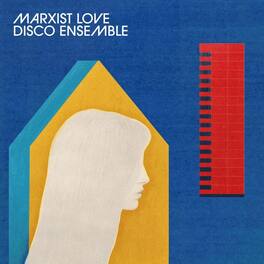
Sounding simultaneously from the past, the present, and the future, the debut album 'MLDE' by Marxist Love Disco Ensemble seeks to eradicate both the trite from disco and the sobriety from political music. Half poetic, half tongue-in-cheek, this stunning compact eight-track album is influenced by Eastern European and Mediterranean 70s disco records. In the words of band member Paolo, 'it was written in response to hearing 'I love America' by Patrick Juvet. The song prompted the question why does disco, a genre originally created by oppressed minorities, eventually become synonymous with American capitalist excess?Inch MLDE seeks to break this connection.Merging disco, post-disco 80s pop, and boogie into the fold, 'MLDE' was recorded using only analogue instruments, giving it warmth and space. Recorded on cassette, ¼ and ½ inch tape, this gives moments of lo-fi abstraction between the beats of an aggressive, tight drum kit. Instruments used for this recording range from saxophone, trumpet, harpsichord, guitar, and rare analogue synthesisers. The bass sound is shaped by early 80s boogie records, whilst the influence of artists such as Hamlet Minassian can be heard in some of MLDE's more driving-disco outings, such as 'Hues of Red'. In the tradition of Soviet vocal group records, which the band has studied, some songs are sung by a vocal quartet in homage to this tradition. Tracks such as '1905' and 'Brumaire' have a greater pop aesthetic, with Paolo's vocal style on these more pop-driven songs evoking early 80s bands such as Orange Juice and Chas Jankel. The and message of pop and disco are commonly viewed just to entertain and move bodies around a dancefloor; however, lyrically, the subjects range from dialectical and historical materialism, class struggle, Marxist theory and praxis, as well as the concept of Marxist disco music. Adding the icing to the cake, master