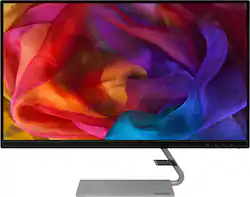
Lenovo - Q27q-1L 27" IPS LED QHD FreeSync Monitor Natural Low Blue Light Built-in Speakers (DisplayPort, HDMI) - Black
- Key Specs
- Refresh Rate: 75Hz (The number of frames per second the device can produce natively without enhancement. Higher rates help produce smooth, seamless pictures.)
- Maximum Resolution: 2560 x 1440 (Maximum resolution refers to the highest number of pixels that a screen can process and display. Higher resolution signals produce more detailed images.)
- Response Time: 4 milliseconds (The speed at which pixels can change colors is called response time. It is measured in milliseconds (ms).)
- Panel Type: IPS (Technology that affects response time and image quality.)
- Synchronization Technology: FreeSync (AMD Adaptive Sync) (Generally, these technologies allow syncing between a computer/console game's frame rate and the device's refresh rate for a smoother display without tearing.)
- Screen Size: 27 inches (Size of the screen, measured diagonally from corner to corner.)
- Display Connector(s): 1 x HDMI 1.4, 1 x DisplayPort 1.2 (The number and type of connectors used to connect to an external display.)
- General
- Brand: Lenovo
- Model Number: 66C1GCC3US
- Product Name: Q27q-1L 27" IPS LED QHD FreeSync Monitor Natural Low Blue Light Built-in Speakers (DisplayPort, HDMI)
- Color: Black
- Operating System Compatibility: Windows
- Display
- Refresh Rate: 75Hz (The number of frames per second the device can produce natively without enhancement. Higher rates help produce smooth, seamless pictures.)
- Maximum Resolution: 2560 x 1440 (Maximum resolution refers to the highest number of pixels that a screen can process and display. Higher resolution signals produce more detailed images.)
- Native Resolution: 2560 x 1440 (Native resolution of a screen refers to its single, fixed resolution. Sometimes screens must scale an image up or down in order to fit the native resolution. This can cause a loss of resolution or detail.)
- Contrast Ratio: 3,000,000:1 (Measured difference between a displayed image's brightest whites and darkest blacks. The larger the first number, the more detail and color that can be displayed.)
- Response Time: 4 milliseconds (The speed at which pixels can change colors is called response time. It is measured in milliseconds (ms).)
- Display Type: LED
- Panel Type: IPS (Technology that affects response time and image quality.)
- Synchronization Technology: FreeSync (AMD Adaptive Sync) (Generally, these technologies allow syncing between a computer/console game's frame rate and the device's refresh rate for a smoother display without tearing.)
- Aspect Ratio: 16:9 (The measurement of the width of a screen compared to the height of a screen, expressed as a ratio.)
- Curved Screen: false
- Pixel Density: 109 pixels per inch (The number of pixels present per inch on the device's display. Higher pixel density improves the clarity and sharpness of the displayed image.)
- Brightness: 250 candela per square meter (A measure of the total light output.)
- Screen Size: 27 inches (Size of the screen, measured diagonally from corner to corner.)
- High Dynamic Range (HDR): false (An HDR-compatible 4K TV or other HDR-compatible product displays HDR video content when it's available from sources like 4K Ultra HD Blu-ray Discs and 4K streaming services.)
- Horizontal Viewing Angle: 178 degrees (The maximum angle at which the display can be viewed with acceptable visual performance from either side.)
- Vertical Viewing Angle: 178 degrees (The maximum angle at which the display can be viewed with acceptable visual performance from above or below.)
- Connectivity
- Number of DisplayPort Inputs (Total): 1
- Number of HDMI Inputs (Total): 1
- Number of VGA Ports: 0 (VGA (Video Graphics Adapter or Video Graphics Array) is a display standard that transmits via analog signals. This type of interface is typically used to connect a computer to a display device such as a monitor, projector, or TV.)
- Number of DVI Inputs: 0 (The number of digital cables carrying analog (VGA) video signals that can be connected to the product.)
- Number of Mini DisplayPort Inputs: 0
- Number of Thunderbolt Ports (Total): 0
- Display Connector(s): 1 x HDMI 1.4, 1 x DisplayPort 1.2 (The number and type of connectors used to connect to an external display.)
- Headphone Jack: true (The device features an interface that allows for the connection of headphones.)
- Compatibility
- Wall Mountable: true (The product is able to be secured to a wall. Some products are designed ready to mount, while others may require additional hardware/accessories for installation.)
- VESA Wall Mount Standard: 100mm x 100mm (VESA wall mount standards refer to the spacing of screw holes built into a TV in order to fit with standard TV wall mounts. These standards are implemented into most TVs and monitors.)
- Features
- Tiltable: true
- Adjustable Stand Height: true
- Anti-Glare: true (Product has features, such as a matte finish, that reduce the likelihood for screen glare.)
- Eye Relief Features: Low blue light
- Built-In Webcam: false
- Integrated Speaker(s): true
- Built-in Speaker Type: Downward firing (Backward, downward, and front-firing speakers direct sound into the room from those respective directions. A soundbar is typically long and rectangular, and designed to act as an all-in-one speaker with greater sound production than that of a TV alone. An acoustic surface is the result of small sound actuators embedded directly behind the screen, turning the entire screen's surface into a speaker.)
- Dimensions
- Product Height With Stand: 17.91 inches
- Product Height Without Stand: 14.42 inches
- Product Width: 24.18 inches (The out of box width of the item. Width is measured as the horizontal distance from one side of the item to the other as it would be primarily used or placed.)
- Product Depth (With Stand): 7.07 inches
- Product Depth Without Stand: 1.49 inches
- Product Weight: 11.67 pounds (The out of box weight of the item.)
- Stand Included: true
- Power
- Power Consumption: 40 watts
- Power Saving/Off Mode: 0.5 watts (This mode will turn the display and/or the device off, or into a standby mode, after a preset length of time with no activity to conserve power.)
- Certifications Listings & Approvals
- ENERGY STAR Certified: false (Devices carrying the ENERGY STAR service mark, such as computer products and peripherals, kitchen appliances, and other products, generally use 20% to 30% less energy than required by federal standards.)
- EPEAT Qualified: false (The Electronic Product Environmental Assessment Tool (EPEAT) was designed to provide an environmental assessment tool for purchasers. In order to qualify for EPEAT, a product must meet all 23 required criteria.)
- Warranty
- Warranty - Parts: 1 year
- Warranty - Labor: 1 year
- Other
- UPC: 195235901335
Designed to make a definite style statement in any space, the ultra-slim Lenovo Q27q-1L is a perfect blend of elegance and functionality. No matter how you look at it, the Lenovo Q27q-1L perfectly projects the vibrancy of colors on its In-Plane Switching (IPS) display. Paired with dual speakers, the Lenovo Q27q-1L leverages both the audio and visuals for an immersive entertainment experience. Enjoy flawless gaming and binge-watch shows without straining your eyes. Its premium design, accentuated by ultra-narrow bezels and QHD display, makes this ultra-slim monitor a stunning addition to your home. The latest eye comfort innovation, Natural Low Blue Light and Eyesafe Display Certification, provides maximum color accuracy minus the yellow distortions—so you can consume your favorite content without straining your eyes.
- 2K Quad HD 2560 x 1440 resolution: High resolutions that deliver a solid gaming or video experience without undue strain on your graphics card.
- 4 ms response time: Delivers solid performance for precise gaming and video work.
- 75 Hz refresh rate: Provides smooth video and good refresh rates for everyday use.
- 27" antiglare LED monitor: Efficient screen type uses LEDs to provide precise backlighting to pixels.
- FreeSync Technology: Adaptive synchronization technology that matches the frame rate of the monitor to any compatible AMD graphics card.
- HDMI and DisplayPort inputs: Allow you to set up DVD players and other AV sources for a clear, high quality audio and video signal.
- 178° horizontal and vertical viewing angles: Allow you to view the screen from a wide range of angles.
- 3-watt built-in speakers: Let you enjoy your favorite entertainment in stereo sound.
- 3,000,000:1 dynamic contrast ratio (1,000:1 typical): Ensures images are crisp and clear with deep blacks and bright highlights.
- 250 cd/m² brightness: Produces bright images that can clearly be seen even in well-lit rooms.
- Natural Low Blue Light: Reduce harmful blue light and minimize eye strain while maintaining color accuracy
Whats Included
- Q27q-1L 27" IPS LED QHD FreeSync Monitor
- Power cable - 3 ft
- HDMI cable - 6 ft
- Quick setup guide
- Screwdriver and screws
- Warranty booklet
Product Manuals
A: Here is a link to the User Guide for this Lenovo Q27q-1L Monitor. It will illustrate the settings that are available on this monitor as well as the on-screen settings menus that are available. There are calibration settings also available within the Windows 10 Operating System. Here is a link to more information: https://www.windowscentral.com/how-calibrate-your-pcs-monitor-windows-10
A: Here is a link to some information about connecting a ChromeCast Device to a Monitor: https://www.androidcentral.com/can-you-use-chromecast-monitor
Q: Is this a computer or just the monitor
A: Just a monitor
A: You will need to connect the ThinkPad 480s via a 3.5mm audio cable to the back of the monitor through the 3.5mm jack on the back of the monitor to generate audio. If you continue to have issues, we recommend you contact lenovo Tech Support for monitors, at: 866-426-0911.
Q: Is this monitor g-sync compatible?
A: It has Freesync by AMD not G-Sync which is Nvidia I believe
Q: Can this be mounted on a Vesa mount?
A: Yes. The Lenovo Q27q-1L Monitor model number 66C1GCC3US, is compatible with a 100 x 100 mm format VESA Mount. This mount is sold separately.
A: In order to use two of these monitors with a work-provided laptop, we employed a docking station. It interfaces to the computer using a USB-C connection, then the monitors connected to it using Display Ports, though HDMI was also an option. Look for a docking station that indicates it would be compatible with your computer, and provides your preferred type of digital video output. The safest option would always be if you could find one that's the same brand as your computer.
Today's top picks
 $499.99The price was $749.99
 $199.99The price was $249.99
 $789.99The price was $1,049.99