Letizia Butterin - Ars Magna Consoni Et Di - COMPACT DISCS [CD]
Reviews coming soon
About this product
The music of Johann Speth (1664-1719) has featured here and there on many compilations of instrumental music from mid-17th century Germany. However, until now there has never been a complete recording of the sole collection which carries his name down to us today. Published in 1693, this volume of keyboard toccatas, partitas and Magnificats takes it's title from an influential treatise on the science and aesthetics of music from 1650 by the Jesuit scholar Athanasius Kircher. Kircher attempted to show how the balance of dissonance with consonance in harmony mirrored the presence of good and evil in the universe. There is in turn something attractively compendious about Speth's musical response, which Speth appears to have produced as a bona fide for his successful application to become organist of the cathedral in Augsburg. Very little is known of his life until that point in 1692, and not much after, save that in 1719 he was still living and active in the city which at the time was politically significant and prosperous as a seat of the Hapsburgs Ars Magna Consoni et Dissoni opens with a sequence of 10 toccatas, quite brief and owing something to the influence of contemporary southern German composers such as Georg Muffat and Johann Caspar Ferdinand Fischer. There follows the more Italianate strains of three 'partitas.' The remainder of Speth's collection synthesizes Italian and German styles in eight Magnficats. Each of the Magnificats takes it's tonal base - the equivalent of it's key signature - from a different musical mode, each starting on their own note. The collection as a whole adds up to a colorful snapshot of the invention and variety of German keyboard music beyond Bach, and as a notable predecessor to the compendious ambitions of The Well-Tempered Clavier.
- GenreClassicalDescriptionThe music of Johann Speth (1664-1719) has featured here and there on many compilations of instrumental music from mid-17th century Germany. However, until now there has never been a complete recording of the sole collection which carries his name down to us today. Published in 1693, this volume of keyboard toccatas, partitas and Magnificats takes it's title from an influential treatise on the science and aesthetics of music from 1650 by the Jesuit scholar Athanasius Kircher. Kircher attempted to show how the balance of dissonance with consonance in harmony mirrored the presence of good and evil in the universe. There is in turn something attractively compendious about Speth's musical response, which Speth appears to have produced as a bona fide for his successful application to become organist of the cathedral in Augsburg. Very little is known of his life until that point in 1692, and not much after, save that in 1719 he was still living and active in the city which at the time was politically significant and prosperous as a seat of the Hapsburgs Ars Magna Consoni et Dissoni opens with a sequence of 10 toccatas, quite brief and owing something to the influence of contemporary southern German composers such as Georg Muffat and Johann Caspar Ferdinand Fischer. There follows the more Italianate strains of three 'partitas.' The remainder of Speth's collection synthesizes Italian and German styles in eight Magnficats. Each of the Magnificats takes it's tonal base - the equivalent of it's key signature - from a different musical mode, each starting on their own note. The collection as a whole adds up to a colorful snapshot of the invention and variety of German keyboard music beyond Bach, and as a notable predecessor to the compendious ambitions of The Well-Tempered Clavier.ArtistLetizia ButterinTitleArs Magna Consoni Et DiFormatCDLabelBrilliant Classics
Reviews
This product doesn't have any reviews yet.
Compare similar products
![Letizia Butterin - Ars Magna Consoni Et Di - COMPACT DISCS [CD]](https://pisces.bbystatic.com/image2/BestBuy_US/images/products/ea5256a2-35a1-4b47-9668-400930ff724f.jpg;maxHeight=422;maxWidth=264?format=webp)
The music of Johann Speth (1664-1719) has featured here and there on many compilations of instrumental music from mid-17th century Germany. However, until now there has never been a complete recording of the sole collection which carries his name down to us today. Published in 1693, this volume of keyboard toccatas, partitas and Magnificats takes it's title from an influential treatise on the science and aesthetics of music from 1650 by the Jesuit scholar Athanasius Kircher. Kircher attempted to show how the balance of dissonance with consonance in harmony mirrored the presence of good and evil in the universe. There is in turn something attractively compendious about Speth's musical response, which Speth appears to have produced as a bona fide for his successful application to become organist of the cathedral in Augsburg. Very little is known of his life until that point in 1692, and not much after, save that in 1719 he was still living and active in the city which at the time was politically significant and prosperous as a seat of the Hapsburgs Ars Magna Consoni et Dissoni opens with a sequence of 10 toccatas, quite brief and owing something to the influence of contemporary southern German composers such as Georg Muffat and Johann Caspar Ferdinand Fischer. There follows the more Italianate strains of three 'partitas.' The remainder of Speth's collection synthesizes Italian and German styles in eight Magnficats. Each of the Magnificats takes it's tonal base - the equivalent of it's key signature - from a different musical mode, each starting on their own note. The collection as a whole adds up to a colorful snapshot of the invention and variety of German keyboard music beyond Bach, and as a notable predecessor to the compendious ambitions of The Well-Tempered Clavier.
![Gratest Hits [Custard Yellow Vinyl] [Only @ Best Buy] [LP]](https://pisces.bbystatic.com/image2/BestBuy_US/images/products/ca23a7d3-5801-4fe9-aed1-d8d22f5ca7ad.jpg;maxHeight=422;maxWidth=264?format=webp)
![My Hero Academia: Season 7 [Original Soundtrack] [Translucent Sea Blue 2 LP] [Only @ Best Buy] [LP] [VINYL]](https://pisces.bbystatic.com/image2/BestBuy_US/images/products/ad658ab5-584e-481a-b93a-c8998e033654.jpg;maxHeight=422;maxWidth=264?format=webp)
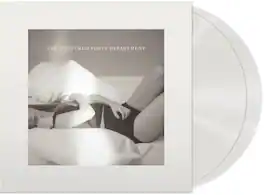
Double white colored vinyl LP pressing. 2024 . The Tortured Poets Department (also shortened to Tortured Poets) is the eleventh studio album by the American singer-songwriter Taylor Swift. Shortly after finishing work on Midnights, Swift conceived The Tortured Poets Department and developed it during the Eras Tour (2023-2024). She described the album as her InchlifelineInch record, a product of imperative songwriting. It consists of sixteen songs, featuring collaborations with the American rapper Post Malone features on InchFortnightInch and the English indie rock band Florence and the Machine on InchFlorida!!!Inch. Each of the four physical versions of the album include one additional bonus track. Album Tracks 1. Fortnight (Feat. Post Malone) 2. The Tortured Poets Department 3. My Boy Only Breaks His Favorite Toys 4. Down Bad 1. So Long London 2. But Daddy I Love Him 3. Fresh Out the Slammer 4. Florida!!! (Feat. Florence + the Machine) 1. Guilty As Sin? 2. Who's Afraid of Little Old Me? 3. I Can Fix Him (No Really I Can) 4. Loml 1. I Can Do It with a Broken Heart 2. The Smallest Man Who Ever Lived 3. The Alchemy 4. Clara Bow 5. The Manuscript (Bonus Track)
| Pros for Letizia Butterin - Ars Magna Consoni Et Di - COMPACT DISCS [CD] | |||
|---|---|---|---|
| There were no pros for this product— | There were no pros for this product— | Playback Quality | Sound Quality |
Specs
Be the first to ask a question.
We’ll try to get your question answered within 24 hours by a Best Buy customer or brand representative.