L'Orfeo Barockorchester - Complete Symphonies & Fragment - COMPACT DISCS [CD]
Reviews coming soon
About this product
On the occasion of it's twenty-fifth anniversary, the L'Orfeo Baroque Orchestra is releasing the present recording of Franz Schubert's complete symphonies and complete symphonic fragments. It is the most recent gem in this orchestra's multifaceted repertoire ranging from the suite of the French, German, and Austrian Baroque through the sinfonia of the Mannheim School to Viennese Classicism and Early Romanticism. Although Joseph von Spaun termed Schubert a Inchsong composerInch not long after his death, Schubert's compositional oeuvre may be said to be framed by a symphonic fragment and a sketch for a symphony. The first of these fragments was the score for an overture (D. 2 A) committed to paper around 1810/11 and abandoned in the middle of the exposition, and the last was a draft of three movements for a Symphony in D major (D. 936 A), largely worked out in full, from the last weeks, if not from the last days, of his life. During the period of some eighteen years between these two manuscripts, Schubert occupied himself creatively with almost all the established forms, ensembles, and genres. The symphonic fragments heard here often consist of scores containing only a few measures with the later addition of the instrumentation of a piece, for example, measures 209 to 223 from the first movement of the String Quartet D. 74. Since the composer assigned the date Inch3 September 1813Inch to this movement following it's final notes, he must have written the fragment immediately prior to beginning his work on the Symphony No. 1 in D major (D. 82).
Specifications
- GenreClassicalDescriptionOn the occasion of it's twenty-fifth anniversary, the L'Orfeo Baroque Orchestra is releasing the present recording of Franz Schubert's complete symphonies and complete symphonic fragments. It is the most recent gem in this orchestra's multifaceted repertoire ranging from the suite of the French, German, and Austrian Baroque through the sinfonia of the Mannheim School to Viennese Classicism and Early Romanticism. Although Joseph von Spaun termed Schubert a Inchsong composerInch not long after his death, Schubert's compositional oeuvre may be said to be framed by a symphonic fragment and a sketch for a symphony. The first of these fragments was the score for an overture (D. 2 A) committed to paper around 1810/11 and abandoned in the middle of the exposition, and the last was a draft of three movements for a Symphony in D major (D. 936 A), largely worked out in full, from the last weeks, if not from the last days, of his life. During the period of some eighteen years between these two manuscripts, Schubert occupied himself creatively with almost all the established forms, ensembles, and genres. The symphonic fragments heard here often consist of scores containing only a few measures with the later addition of the instrumentation of a piece, for example, measures 209 to 223 from the first movement of the String Quartet D. 74. Since the composer assigned the date Inch3 September 1813Inch to this movement following it's final notes, he must have written the fragment immediately prior to beginning his work on the Symphony No. 1 in D major (D. 82).ArtistL'Orfeo BarockorchesterTitleComplete Symphonies & FragmentFormatCDLabelCpo Records
Reviews
This product doesn't have any reviews yet.
Compare similar products

On the occasion of it's twenty-fifth anniversary, the L'Orfeo Baroque Orchestra is releasing the present recording of Franz Schubert's complete symphonies and complete symphonic fragments. It is the most recent gem in this orchestra's multifaceted repertoire ranging from the suite of the French, German, and Austrian Baroque through the sinfonia of the Mannheim School to Viennese Classicism and Early Romanticism. Although Joseph von Spaun termed Schubert a Inchsong composerInch not long after his death, Schubert's compositional oeuvre may be said to be framed by a symphonic fragment and a sketch for a symphony. The first of these fragments was the score for an overture (D. 2 A) committed to paper around 1810/11 and abandoned in the middle of the exposition, and the last was a draft of three movements for a Symphony in D major (D. 936 A), largely worked out in full, from the last weeks, if not from the last days, of his life. During the period of some eighteen years between these two manuscripts, Schubert occupied himself creatively with almost all the established forms, ensembles, and genres. The symphonic fragments heard here often consist of scores containing only a few measures with the later addition of the instrumentation of a piece, for example, measures 209 to 223 from the first movement of the String Quartet D. 74. Since the composer assigned the date Inch3 September 1813Inch to this movement following it's final notes, he must have written the fragment immediately prior to beginning his work on the Symphony No. 1 in D major (D. 82).
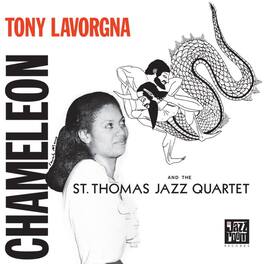
A totally obscure from Youngstown, Ohio's Tony Lavorgna and his late 70's early 1980's band The St. Thomas Quartet. Like many private press albums, I was an ad for their set list, recorded on the cusp of cassettes and definitely before CD's. So strictly vinyl it is. A mixed bag of tunes and influences, but two of the tunes absolutely leap into your ears.A Hammond led Soul Jazz version of Herbie Hancock's 'Chameleon' at nearly ten minutes that seems to just get more drivingly funky and intense is absolutely inspired on this monster of a track. It makes you wonder why on earth more Hammond players didn't make a feature of this tune?The other inspired choice is War's 'The World Is A Ghetto' which just has to be one of the funkiest versions of this much covered tune. Some soulful sax from leader Lavorgna signposts the way for the rest of the band's soulful and jazzy contributions. With Hammond man David Thomas underpinning the song with his funk drenched riffs.Tony Lavorgna is a one off too, his life story is available in Comic Book form under the title 'Bebopman' by American Splendor writer Harvey Pekar.

Beethoven's symphonic cycle is one of the most quintessential in the Western classical canon. They chart a course from the influence of Haydn and Classical models in the early symphonies; through works of startling innovation and the birth of Romanticism; to his monumental Ninth Symphony for soloists; chorus and orchestra. Zubin Mehta conducts the Orchestra del Maggio Musicale Fiorentino in these live recordings from 2021/22.

The acclaimed Schubert symphonies recordings by B'Rock Orchestra and Rene Jacobs now appear in a complete boxset. Finally recording Schubert offered Jacobs the opportunity to return to his first great musical love. His interpretation is rooted in profound research into early nineteenth-century developments and ideas, as well as a thorough exploration of Schubert's music and persona. Jacobs perceives this cycle as a series of multiple contrasting tandems of symphonies, oscillating between Italianate lightness and darker currents of Romanticism, between elegant forms and expansive endeavours, all in line with Schubert's dynamic, multi-faceted personality. Schubert's symphonies never acquired the paradigmatic status of his contemporary Beethoven, but with these recordings, Jacobs makes a compelling case to value and understand them on their own terms. He performs these works together with B'Rock Orchestra, one of the most adventurous period instrument ensembles of our times, with whom he has built up a congenial working relationship. In addition to his Schubert symphonies, multi-award-winning conductor Rene Jacobs released Haydn's Stabat Mater (2023) on PENTATONE, together with the Kammerorchester Basel and Zurcher Sing-Akademie. B'Rock Orchestra returned to the tag with Antwerp Requiem (2022) and Handel Water & Fire (2023).