Max De Wardener - Kolmar - COMPACT DISCS [CD]
Reviews coming soon
About this product
For innovative composer Max de Wardener, music is a kind of time travel, a means of exploring the antique and the arcane and repurposing them for a forward-facing now. Classically trained, de Wardener is nevertheless renowned for compositions that explore everything from church organs to self-built instruments, as well as electronics and more orthodox chamber configurations. On Kolmar, his debut album for Village Green, the composer teases pure, dream-like sine wave tones from recondite, early-to-mid 20th century instruments like the ondes martenot, the Cristal Baschet and the glass harmonica. de Wardener melds these seamlessly with heavily manipulated Buchla and Oberheim analogue synthesisers, grand pipe organs pitched down several octaves (or with all the stops pushed in Inchso that the sound collapsesInch) and miscellaneous exotic but precisely applied acoustic percussion, most of it courtesy of prodigious jazz drummer Moses Boyd. Yet for all it's vintage kit, this is no techno-historical grab bag or sonic museum piece. Nor is it merely an exercise in arch retro-futurism. Kolmar, over two years in the making, is often ravishingly mellifluous and emotionally stirring, while simultaneously retaining the power to disorient - provoking and unsettling the ear as readily as charming and seducing it. Kolmar was recorded at Tramways Studios in London, at synth specialists Simon Sound in Brighton and at the Alsace-Lorraine studio of rare instrument collector and sometime Radiohead and Tom Waits affiliate Thomas Bloch, whose painstaking glass instrument multi-tracking was crucial in realising what de Wardener had envisioned for these delicate devices (he is Incha craftsman of the monophonicInch, the composer submits). The album is in fact named after the small town in the Franco-German borderlands, Colmar, close to Bloch's studio. Propelled and defined by such playful means
Specifications
- GenreDance and electronicDescriptionFor innovative composer Max de Wardener, music is a kind of time travel, a means of exploring the antique and the arcane and repurposing them for a forward-facing now. Classically trained, de Wardener is nevertheless renowned for compositions that explore everything from church organs to self-built instruments, as well as electronics and more orthodox chamber configurations. On Kolmar, his debut album for Village Green, the composer teases pure, dream-like sine wave tones from recondite, early-to-mid 20th century instruments like the ondes martenot, the Cristal Baschet and the glass harmonica. de Wardener melds these seamlessly with heavily manipulated Buchla and Oberheim analogue synthesisers, grand pipe organs pitched down several octaves (or with all the stops pushed in Inchso that the sound collapsesInch) and miscellaneous exotic but precisely applied acoustic percussion, most of it courtesy of prodigious jazz drummer Moses Boyd. Yet for all it's vintage kit, this is no techno-historical grab bag or sonic museum piece. Nor is it merely an exercise in arch retro-futurism. Kolmar, over two years in the making, is often ravishingly mellifluous and emotionally stirring, while simultaneously retaining the power to disorient - provoking and unsettling the ear as readily as charming and seducing it. Kolmar was recorded at Tramways Studios in London, at synth specialists Simon Sound in Brighton and at the Alsace-Lorraine studio of rare instrument collector and sometime Radiohead and Tom Waits affiliate Thomas Bloch, whose painstaking glass instrument multi-tracking was crucial in realising what de Wardener had envisioned for these delicate devices (he is Incha craftsman of the monophonicInch, the composer submits). The album is in fact named after the small town in the Franco-German borderlands, Colmar, close to Bloch's studio. Propelled and defined by such playful meansArtistMax De WardenerTitleKolmarFormatCDLabelVillage Green
Reviews
This product doesn't have any reviews yet.
Compare similar products

For innovative composer Max de Wardener, music is a kind of time travel, a means of exploring the antique and the arcane and repurposing them for a forward-facing now. Classically trained, de Wardener is nevertheless renowned for compositions that explore everything from church organs to self-built instruments, as well as electronics and more orthodox chamber configurations. On Kolmar, his debut album for Village Green, the composer teases pure, dream-like sine wave tones from recondite, early-to-mid 20th century instruments like the ondes martenot, the Cristal Baschet and the glass harmonica. de Wardener melds these seamlessly with heavily manipulated Buchla and Oberheim analogue synthesisers, grand pipe organs pitched down several octaves (or with all the stops pushed in Inchso that the sound collapsesInch) and miscellaneous exotic but precisely applied acoustic percussion, most of it courtesy of prodigious jazz drummer Moses Boyd. Yet for all it's vintage kit, this is no techno-historical grab bag or sonic museum piece. Nor is it merely an exercise in arch retro-futurism. Kolmar, over two years in the making, is often ravishingly mellifluous and emotionally stirring, while simultaneously retaining the power to disorient - provoking and unsettling the ear as readily as charming and seducing it. Kolmar was recorded at Tramways Studios in London, at synth specialists Simon Sound in Brighton and at the Alsace-Lorraine studio of rare instrument collector and sometime Radiohead and Tom Waits affiliate Thomas Bloch, whose painstaking glass instrument multi-tracking was crucial in realising what de Wardener had envisioned for these delicate devices (he is Incha craftsman of the monophonicInch, the composer submits). The album is in fact named after the small town in the Franco-German borderlands, Colmar, close to Bloch's studio. Propelled and defined by such playful means

Max de Wardener returns to Village Green with an album of detuned acoustic piano pieces, performed by British jazz pianist Kit Downes (ECM).Drawing inspiration from modernist composers James Tenney, Harry Partch and La Monte Young, de Wardener's intentions here were Inchto try and bend something established and monumental into something newInch. The resulting album is deceptively simple, belying the project's myriad technical challenges, (pianos are immensely stubborn when subject to unorthodox tuning methods). Captured over a two year period, Downes' enlivening improvisations do justice to de Wardener's vision in creating an elegant record that feels at once familiar, yet otherworldly.The Sky Has A FilmBismuth DreamRedshiftBlueshiftDeranged LandscapeColor CrySpellFoxtrotStar SongDoppelgänger

The Stuarts were a jazz vocal group of the 1950's consisting of Louise Stuart on lead vocals with Roy Hunter, Don Siemers, Paul Reeves, Will Scott and Bill Stuart. On this classic 1959 recording, the Stuarts run through a set of jazz standards backed by Andy Sannella and His Orchestra with vocal arrangements by Bill Comstock, Frank Hunter and Louise Stuart. All selections newly re-mastered.
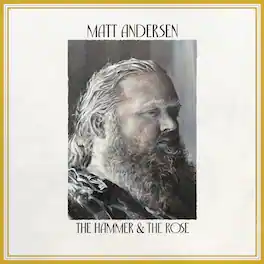
Vinyl LP pressing. 2025 . Matt Andersen's 12th studio album, produced by Joshua Van Tassel.
Specs
Be the first to ask a question.
We’ll try to get your question answered within 24 hours by a Best Buy customer or brand representative.