Musical Journey: Salzburg City of Mozart - DVD
Reviews coming soon
About this product
Mozart's father Leopold settled in Salzburg in 1737 and in 1744, entered the service of the city's ruling Prince-Archbishop as a violinist. The city underwent various changes of regime in the first years of the 19th century, but in 1825.
Specifications
- GenreMusicDescriptionMozart's father Leopold settled in Salzburg in 1737 and in 1744, entered the service of the city's ruling Prince-Archbishop as a violinist. The city underwent various changes of regime in the first years of the 19th century, but in 1825.TitleMusical Journey: Salzburg City of MozartFormatDVDMPAA RatingNRStudioNaxos
Reviews
This product doesn't have any reviews yet.
Compare similar products
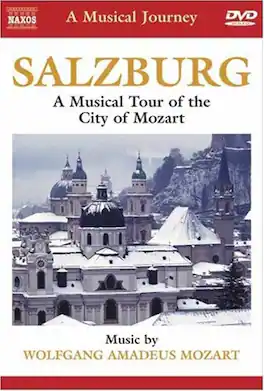
Mozart's father Leopold settled in Salzburg in 1737 and in 1744, entered the service of the city's ruling Prince-Archbishop as a violinist. The city underwent various changes of regime in the first years of the 19th century, but in 1825.

The Places • The tour begins in the Salzkammergut, most of which lies nowadays in Upper Austria. It includes Hellbrunn Palace and the Residenz in Salzburg and the Styrian city of Graz. The Music • The music for our journey is taken from Mozart's Haffner Serenade, written in honour of a friend in Mozart's native city of Salzburg.
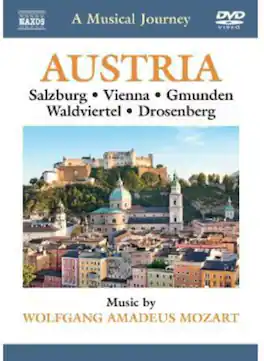
A tour of Salzburg, Vienna, Gmunden, Waldvirtel and Drosenberg set to three Serenades by Mozart including Eine kleine Nachtmusik.

The Places The tour relates to the life of Mozart, from his native Salzburg to his final precarious independence in Vienna. There are glimpse of the Salzburg Church of St Peter and of the Cathedral, with which Mozart and his father, members of the musical establishment of the ruling Prince-Archbishops of Salzburg, were closely concerned. Memorials of Mozart and other composers are seen in Vienna, while a brief detour to Belgium to the idiosyncratic Musée Wiertz and to the Tournai Musée des Beaux Arts, brings another aspect to the journey. The Music Mozart's Requiem Mass was commissioned anonymously in July 1791 by Count Franz Walsegg zu Stuppach, who sought to commemorate the recent death of his wife by the performance of a work of this kind that he might, at least by implication, claim as his own. An initial fee of sixty ducats was paid, with promise of a further sum when the Requiem was completed. But in November Mozart was taken ill and within a fortnight he was dead. His widow, Constanze, who needed the rest of the fee for the work, asked Joseph Eybler, who had assisted Mozart in rehearsals for Cose fan tutte, to finish the composition and the scoring. He later gave up the task and the unfinished score finally came into the hands of Franz Xaver Süssmayr, so that the best known form of the Requiem is that started by Mozart, continued briefly by Eybler and completed by Süssmayr.
Specs
Be the first to ask a question.
We’ll try to get your question answered within 24 hours by a Best Buy customer or brand representative.