Orchestra Orfeo - Music for Strings - COMPACT DISCS [CD]
Reviews coming soon
About this product
The golden age of string orchestra repertoire must certainly be the period spanning the final decades of the 19th century to the early 20th century. The density of sound, great dynamic range, long phrases and virtuosity that are uniquely possible with this combination of instruments saw it become a particularly cherished ensemble for many of the greatest composers of the day. Tchaikovsky's Andante Cantabile is the composer's own transcription of the second movement from his famous String Quartet No.1, prepared for a private concert in Paris (February 1888) with cellist Anatoly Brandukov and the Edouard Colonne Orchestra conducted by the composer. Russian composer and pianist Anton Arensky (1861-1906), who was strongly influenced by Tchaikovsky's style, is particularly known for his Variations Op.35a on a theme by Tchaikovsky. Again, this is an own-arrangement of the second movement of Arensky's String Quartet No.2 in A minor. Written in 1894 on the occasion of Tchaikovsky's death, the work takes as it's theme Tchaikovsky's song 'Legend', adding seven variations and a coda. Elgar's Elegy for Strings was written in 1909 after the funeral of Robert Hadden - one of the members of the Worshipful Company of Musicians in London - at the suggestion of Elgar's Alfred Littleton and intended as a commemorative piece for future ceremonies. It was first performed in St Paul's Cathedral in 1914, where it is still heard for commemorative celebrations today. It's popularity is justified by the poignant beauty of every single musical phrase. Most famous for his series of serenades for string orchestra, Robert Fuchs (1847-1927) is considered a worthy heir to the Viennese romantic musical tradition. Album Tracks 1. String Quartet No. 1, Op. 11 2. Variations on a Theme By Tchaikovsky, Op. 35A 3. Elegy for Strings Op. 58 4. Serenade No. 3 in E minor
Specifications
- GenreClassicalDescriptionThe golden age of string orchestra repertoire must certainly be the period spanning the final decades of the 19th century to the early 20th century. The density of sound, great dynamic range, long phrases and virtuosity that are uniquely possible with this combination of instruments saw it become a particularly cherished ensemble for many of the greatest composers of the day. Tchaikovsky's Andante Cantabile is the composer's own transcription of the second movement from his famous String Quartet No.1, prepared for a private concert in Paris (February 1888) with cellist Anatoly Brandukov and the Edouard Colonne Orchestra conducted by the composer. Russian composer and pianist Anton Arensky (1861-1906), who was strongly influenced by Tchaikovsky's style, is particularly known for his Variations Op.35a on a theme by Tchaikovsky. Again, this is an own-arrangement of the second movement of Arensky's String Quartet No.2 in A minor. Written in 1894 on the occasion of Tchaikovsky's death, the work takes as it's theme Tchaikovsky's song 'Legend', adding seven variations and a coda. Elgar's Elegy for Strings was written in 1909 after the funeral of Robert Hadden - one of the members of the Worshipful Company of Musicians in London - at the suggestion of Elgar's Alfred Littleton and intended as a commemorative piece for future ceremonies. It was first performed in St Paul's Cathedral in 1914, where it is still heard for commemorative celebrations today. It's popularity is justified by the poignant beauty of every single musical phrase. Most famous for his series of serenades for string orchestra, Robert Fuchs (1847-1927) is considered a worthy heir to the Viennese romantic musical tradition. Album Tracks 1. String Quartet No. 1, Op. 11 2. Variations on a Theme By Tchaikovsky, Op. 35A 3. Elegy for Strings Op. 58 4. Serenade No. 3 in E minorArtistOrchestra OrfeoTitleMusic for StringsFormatCDLabelBrilliant Classics
Reviews
This product doesn't have any reviews yet.
Compare similar products
![Orchestra Orfeo - Music for Strings - COMPACT DISCS [CD]](https://pisces.bbystatic.com/image2/BestBuy_US/images/products/26ee3ddb-944b-4429-83d4-a2b017f7e390.jpg;maxHeight=422;maxWidth=264?format=webp)
The golden age of string orchestra repertoire must certainly be the period spanning the final decades of the 19th century to the early 20th century. The density of sound, great dynamic range, long phrases and virtuosity that are uniquely possible with this combination of instruments saw it become a particularly cherished ensemble for many of the greatest composers of the day. Tchaikovsky's Andante Cantabile is the composer's own transcription of the second movement from his famous String Quartet No.1, prepared for a private concert in Paris (February 1888) with cellist Anatoly Brandukov and the Edouard Colonne Orchestra conducted by the composer. Russian composer and pianist Anton Arensky (1861-1906), who was strongly influenced by Tchaikovsky's style, is particularly known for his Variations Op.35a on a theme by Tchaikovsky. Again, this is an own-arrangement of the second movement of Arensky's String Quartet No.2 in A minor. Written in 1894 on the occasion of Tchaikovsky's death, the work takes as it's theme Tchaikovsky's song 'Legend', adding seven variations and a coda. Elgar's Elegy for Strings was written in 1909 after the funeral of Robert Hadden - one of the members of the Worshipful Company of Musicians in London - at the suggestion of Elgar's Alfred Littleton and intended as a commemorative piece for future ceremonies. It was first performed in St Paul's Cathedral in 1914, where it is still heard for commemorative celebrations today. It's popularity is justified by the poignant beauty of every single musical phrase. Most famous for his series of serenades for string orchestra, Robert Fuchs (1847-1927) is considered a worthy heir to the Viennese romantic musical tradition. Album Tracks 1. String Quartet No. 1, Op. 11 2. Variations on a Theme By Tchaikovsky, Op. 35A 3. Elegy for Strings Op. 58 4. Serenade No. 3 in E minor
![Schonberg / Rondeleux / Boulez - Arnold Schonberg: Serenade 24 - COMPACT DISCS [CD]](https://pisces.bbystatic.com/image2/BestBuy_US/images/products/d5dd042a-87d6-4340-be10-2dd35779e9e7.jpg;maxHeight=422;maxWidth=264?format=webp)
Album Tracks 1. Marsch 2. Menuett 3. Variationen 4. Sonett No. 217 Von Petrarca 5. Tanzscene 6. Lied (Ohne Worte) 7. Finale
![Orchestra Orfeo - Sibelius, Britten, Barber & Part: Romanza - Music for Strings - COMPACT DISCS [CD]](https://pisces.bbystatic.com/image2/BestBuy_US/images/products/91fac550-1c8a-4be4-965b-92bcde1ca6ce.jpg;maxHeight=422;maxWidth=264?format=webp)
This album features two compositionsby Jean Sibelius from differentmoments in the Finnish musician's life.The Impromptu Op.5 for stringensemble is an early work from 1894, inwhich Sibelius uses some thematicmaterials from his solo pianoimpromptus Nos. 5 and 6 from the Op.5set. The Romance in C Op.42 (1903) wascomposed during a difficult phase in thecomposer's life caused by excessivealcohol consumption, which promptedhim to leave Helsinki and move with hiswife near to Lake Tuusula, where hecould dedicate himself to compositionfar from the temptations of the Finnishcapital. The piece is divided into shortsections in which the melodic ideasarise from fragments of the octatonic,or diminished, scale of alternatingwhole and half steps supported bydissonant harmonies that add furthertonal instability.Samuel Barber's typically inspiredmelodic vein emerges from the verybeginning in his Serenade Op.1 for StringQuartet or String Orchestra, dating from 1928.Featuring chromaticism's and dissonantpassages, a duality is established between afirst, rhythmic and impetuous thematic ideaand a lyrical melody. The final movementbrings greater serenity and joy through thechoice of a major mode and the adoption of agraceful and leaping theme whose fragmentspass in counterpoint between one voice andanother.When Benjamin Britten composed his SimpleSymphony Op.4 he was just 20 years old, andhe describes the idea in an introduction to thescore 'This InchSimple SymphonyInch is entirelybased on material from works which thecomposer wrote between the ages of nineand twelve [.]. Although the development ofthese themes is in many places quite new,there are large stretches of the work whichare taken bodily from the early pieces - savefor the re-scoring for strings'. In effect, Brittenextrapolates eight themes from his juvenilecompositional production, associates two ofthem with each movement and cr
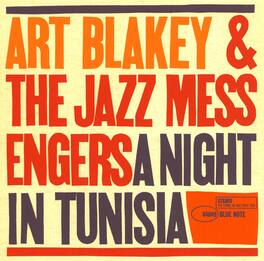
Part of Universal Japan's 'Everything Jazz - Vol. 3 Concord Edition' reissue campaign. Features the high-fidelity UHQCD . Green color tag coating. Universal. 2025. Album Tracks 1. A Night in Tunisia 2. Sincerely Diana 3. So Tired 4. Yama 5. Kozo's Waltz 6. When Your Lover Has Gone 7. Sincerely Diana (Alternate Take)
Specs
Be the first to ask a question.
We’ll try to get your question answered within 24 hours by a Best Buy customer or brand representative.