Orchestre Philharmonique Royal De Liege Neschling - Transcriptions of Bach - SUPER-AUDIO CD [Super Audio CD (SACD)]
Reviews coming soon
About this product
The success of Ottorino Respighi's 'Roman Trilogy' brought the composer international fame as an outstanding orchestrator. One side effect of this are the orchestral transcriptions gathered on this album all made in 1929-30 and commissioned by eminent conductors such as Arturo Toscanini and Serge Koussevitzky for their American orchestras. Respighi's wide-ranging musical tastes included an interest in early music which probably contributed to him taking on the task of transcribing organ works by Bach - or creating 'orchestral interpretations', as he himself called the results. Among the Bach works are the celebrated Passacaglia in C minor - which Stokowski had orchestrated just a few years earlier - as well as the Prelude and Fugue in D major. Both are given the full treatment by Respighi, with orchestral forces including strings, triple woodwind, bass clarinet, contrabassoon, four horns, three trumpets, three trombones, tuba, timpani and piano four hands for the Prelude and Fugue. The score for the Passacaglia asks for even greater forces (including an organ); Respighi compared Bach's original to 'a cathedral built exclusively of sound' - a description equally valid for his own arrangement. The Passacaglia was a success for Toscanini in New York, possibly influencing Koussevitsky in Boston to place a commission of his own. For him and the Boston Symphony Orchestra Respighi transcribed five of Rachmaninov's etudes-Tableaux for solo piano. Although these are programmatic pieces, their subject matter had not been disclosed in the editions for piano, but the Russian composer revealed his inspiration to Respighi in order to help him 'find the appropriate colors'. With the present album, l'Orchestre Philharmonique Royal de Liege and John Neschling bring us the fifth installment in a series that has been called 'the finest-ever survey of the composer's orchestral output un
Specifications
- GenreClassicalDescriptionThe success of Ottorino Respighi's 'Roman Trilogy' brought the composer international fame as an outstanding orchestrator. One side effect of this are the orchestral transcriptions gathered on this album all made in 1929-30 and commissioned by eminent conductors such as Arturo Toscanini and Serge Koussevitzky for their American orchestras. Respighi's wide-ranging musical tastes included an interest in early music which probably contributed to him taking on the task of transcribing organ works by Bach - or creating 'orchestral interpretations', as he himself called the results. Among the Bach works are the celebrated Passacaglia in C minor - which Stokowski had orchestrated just a few years earlier - as well as the Prelude and Fugue in D major. Both are given the full treatment by Respighi, with orchestral forces including strings, triple woodwind, bass clarinet, contrabassoon, four horns, three trumpets, three trombones, tuba, timpani and piano four hands for the Prelude and Fugue. The score for the Passacaglia asks for even greater forces (including an organ); Respighi compared Bach's original to 'a cathedral built exclusively of sound' - a description equally valid for his own arrangement. The Passacaglia was a success for Toscanini in New York, possibly influencing Koussevitsky in Boston to place a commission of his own. For him and the Boston Symphony Orchestra Respighi transcribed five of Rachmaninov's etudes-Tableaux for solo piano. Although these are programmatic pieces, their subject matter had not been disclosed in the editions for piano, but the Russian composer revealed his inspiration to Respighi in order to help him 'find the appropriate colors'. With the present album, l'Orchestre Philharmonique Royal de Liege and John Neschling bring us the fifth installment in a series that has been called 'the finest-ever survey of the composer's orchestral output unArtistOrchestre Philharmonique Royal De Liege NeschlingTitleTranscriptions of BachFormatSuper Audio CD (SACD)LabelBis
Reviews
This product doesn't have any reviews yet.
Compare similar products

The success of Ottorino Respighi's 'Roman Trilogy' brought the composer international fame as an outstanding orchestrator. One side effect of this are the orchestral transcriptions gathered on this album all made in 1929-30 and commissioned by eminent conductors such as Arturo Toscanini and Serge Koussevitzky for their American orchestras. Respighi's wide-ranging musical tastes included an interest in early music which probably contributed to him taking on the task of transcribing organ works by Bach - or creating 'orchestral interpretations', as he himself called the results. Among the Bach works are the celebrated Passacaglia in C minor - which Stokowski had orchestrated just a few years earlier - as well as the Prelude and Fugue in D major. Both are given the full treatment by Respighi, with orchestral forces including strings, triple woodwind, bass clarinet, contrabassoon, four horns, three trumpets, three trombones, tuba, timpani and piano four hands for the Prelude and Fugue. The score for the Passacaglia asks for even greater forces (including an organ); Respighi compared Bach's original to 'a cathedral built exclusively of sound' - a description equally valid for his own arrangement. The Passacaglia was a success for Toscanini in New York, possibly influencing Koussevitsky in Boston to place a commission of his own. For him and the Boston Symphony Orchestra Respighi transcribed five of Rachmaninov's etudes-Tableaux for solo piano. Although these are programmatic pieces, their subject matter had not been disclosed in the editions for piano, but the Russian composer revealed his inspiration to Respighi in order to help him 'find the appropriate colors'. With the present album, l'Orchestre Philharmonique Royal de Liege and John Neschling bring us the fifth installment in a series that has been called 'the finest-ever survey of the composer's orchestral output un

Respighi / Liege Royal Philharmonic / Neschling - Metamorphoseon [SUPER-AUDIO CD] Hybrid SACD date 08/14/2015
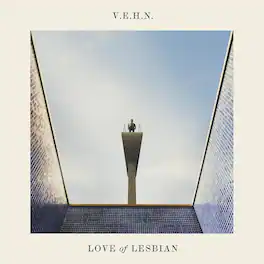
V.E.H.N., was nominated for a Latin Grammy and helped propel the band back into the spotlight, returning to the stage with one of the best tours of their career to date. The album features collaborations with Bunbury, as well as Cristina Martínez and Álvaro Arizaleta from El Columpio Asesino. The artwork was created by the award-winning and renowned designer Javier Jaén. Double vinyl edition.

Few literary works exerted as strong an influence on European culture in the 19th century as Goethe's play Faust. While several important composers drew inspiration from it, Franz Liszt seems to have had a particularly close relationship with Goethe's masterpiece. He came up with the idea of a symphony 'in three characteristic pictures', each devoted to a key character in the play Faust, Gretchen and Mephistopheles. Rather than telling the story of the play, Liszt composed a psychological exploration of these three main figures. He was also a pioneer in his use of leitmotifs, i.e. short musical ideas that underline a trait of character or evoke feelings, a process that his future son-in-law, Richard Wagner, would take even further in his operas.This recording presents the original, purely instrumental version of the Faust Symphony from 1854. This gigantic work is complemented by the first of the Mephisto Waltzes, inspired by Nikolaus Lenau's vision of the Faust myth. These two works offer two very different perspectives on Liszt's intense relationship with the character of Faust, and in particular with that of Mephistopheles, around whom many of his compositions are structured. They are key works for understanding Liszt's aesthetic project and the typical nineteenth-century tendency towards a combination of the arts.
Specs
Be the first to ask a question.
We’ll try to get your question answered within 24 hours by a Best Buy customer or brand representative.