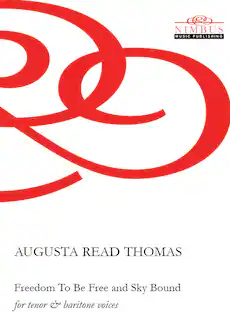
PopMarket - Julius Rontgen - Toccata for solo piano - Multicolor
Reviews coming soon
About this product
This edition marks the first publication of Rontgen's Toccata. This work was discovered while digging through countless manuscripts of solo piano music in the Rontgen Archives at the Netherlands Music Institute in The Hague in 2019 (catalogue No.107/087). The work is undated and has never been published. It is titled Toccata and has no dedication or other information regarding it's creation (date or location). Given the relative neatness of the manuscript, it is presumed that the composer intended it's publication. It's style suggests being composed during Rontgen's mature period, certainly after the first decade of the 20th Century. It is the only known stand-alone Toccata in Rontgen's output. In the present edition, editorial markings are in brackets, and fingering is by the editor. All pedal indications are by the composer unless otherwise indicated. © Mark Anderson
Features
SPECIAL PRODUCTS
Julius Rontgen Studio/Label/Brand: Nimbus Records
Classical Artists
Specifications
- BrandPopMarketModel Number9790708219446Product NameJulius Rontgen - Toccata for solo pianoColorMulticolorTitleToccata for solo pianoUPC9790708219446
Reviews
This product doesn't have any reviews yet.
Compare similar products

This edition marks the first publication of Rontgen's Toccata. This work was discovered while digging through countless manuscripts of solo piano music in the Rontgen Archives at the Netherlands Music Institute in The Hague in 2019 (catalogue No.107/087). The work is undated and has never been published. It is titled Toccata and has no dedication or other information regarding it's creation (date or location). Given the relative neatness of the manuscript, it is presumed that the composer intended it's publication. It's style suggests being composed during Rontgen's mature period, certainly after the first decade of the 20th Century. It is the only known stand-alone Toccata in Rontgen's output. In the present edition, editorial markings are in brackets, and fingering is by the editor. All pedal indications are by the composer unless otherwise indicated. © Mark Anderson

Julius Rontgen's Passacaglia and Fugue dates from 1911 but was not published until 2007 by Friedrich Hofmeisterverlag, Leipzig (FH3247). While studying and preparing the work for recording from the first edition, I discovered significant and numerous errors and decided that a second edition was necessary. The manuscripts for the Passacaglia and Fugue reside in the Rontgen Archives in the Netherlands Music Institute in The Hague. The catalogue numbers associated with this work are 107/027A (MS1), 107/027B (MS2) and 107/027C (MS3), each being a complete version. In preparing this edition, the latter version (107/027C) was used as the primary source as there is a clear progression of reworking and detail evident beginning with version A and ending with C. One obvious difference between the first edition (Hofmeister) and the present edition is the inclusion of four missing measures, m.217-220, that have been restored in this score. These measures are included in multiple versions of the manuscript, namely 107/027B and C. Editorial suggestions, such as metronome indications, are in brackets. Unless otherwise indicated, fingering and hand distribution suggestions are editorial. With some minor exceptions, pedal indications are by the composer. This is a major solo piano work from the early 20th Century that is a significant addition to the piano literature. This work demonstrates Rontgen's great artistry and expressive character and deserves a wider audience. I hope other pianists find this monumental piece important and feel compelled to perform it. © Mark Anderson

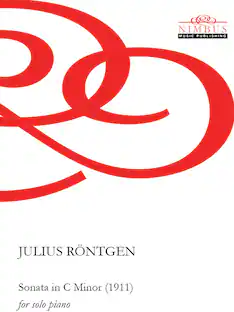
This edition marks the first publication of Rontgen's Sonata in C Minor (1911). This work was discovered while visiting the Rontgen Archives at the Netherlands Music Institute in The Hague in 2019. Being previously unpublished and unrecorded, I am grateful to Rik Hendriks at the Netherlands Music Institute for his assistance and unrestricted access to Rontgen's manuscripts. There is a single manuscript source for this work (NMI Catalogue No.107/017). It is neatly penned, and great care has been taken in it's detail. This manuscript contains no corrected notes, scratched-out errors, or pencilled-in changes. Clearly, Rontgen prepared this work for publication, but he never saw that realized. It is a single-movement sonata that should interest both pianists and musicologists. The textures, form and expressive qualities are well defined, and I believe it deserves a wider audience. I hope other pianists find the work intriguing and feel compelled to perform it. Fingering, metronome suggestions and hand re-distribution suggestions are editorial. All pedal indications are by the composer. © Mark Anderson

Among his many compositions, Kenneth V. Jones wrote a concerto for string orchestra (1956), a concerto for oboe and strings (1963), The Pollock, an orchestral prelude (1963), O Light Invisible, a cantata for soprano, mixed chorus and orchestra (1963), a sonata for solo violin (1967), Dialysis, for violin and harpsichord (1973), Quaquaverse, for saxophone quartet (1979), Paean for organ (1983), three Sinfonias for orchestra, as well as piano works, song cycles, film, play and television scores and church music, including hymns and anthems. The Piano Sonata, Op. 4 (1950) is a concise, sharply defined score, written while the composer was still a student at the Royal College of Music. The opening Allegro moderato begins without preamble, presenting the movement's principal, upward lyrising idea at the outset. Some of the sonata's main ideas are also exploited in the lively, dance-like 'Rondo Burlesca' that taps into a vein of extrovert eccentricity, not unlike Dukas's The Sorcerer's Apprentice, or 'Uranus the Magician' from Holst's orchestral suite, The Planets. Near the end of this rumbustious finale, Jones broadens the tempo to reveal hitherto unsuspected lyrical qualities in the material before the exuberant, gawky dance prevails again.
Specs
Be the first to ask a question.
We’ll try to get your question answered within 24 hours by a Best Buy customer or brand representative.
Customers often buy these together


More to consider




Immerse yourself in sound Sponsored
Costway 88-Key Keyboard Piano Set with Adjustable Stand & 2 Keyboard Mode 2 Speakers
$159.99The price was $289.98Costway 88-Key Digital Piano Semi-Weighted Keyboard with 3 Pedal Unit & 80 Demos
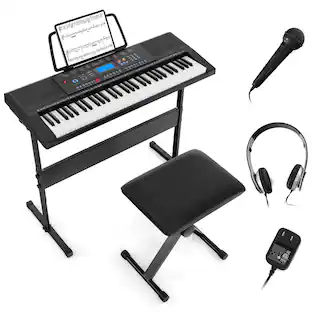
$149.99The price was $269.98Costway Sonart 61-Key Electronic Keyboard Piano Starter Set Toy w/Stand Bench Headphones
$129.99The price was $239.98Costway 88-Key Electric Piano Keyboard with Adjustable Stand Stool, Light-up Keys & Buttons
$179.99The price was $289.98