PopMarket - Lloyd: An African Shrine for Solo Piano - Multicolor
Reviews coming soon
About this product
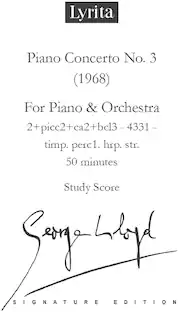
Lloyd's first solo piano piece, An African Shrine (1966), was written for the great British pianist, John Ogdon, who premiered it on 30 August 1969 for a BBC Radio 3 broadcast and recorded it a year later for EMI. The material teems with invention of the highest quality, yet the composer keeps a tight rein on his ideas. Weighty, dramatic sequences are counterpoised convincingly with gentler, lyrical episodes inside an expansive, sweeping canvas that honours the depth and seriousness of the music's underlying theme. Above all, the music is unequivocally, and compellingly, pianistic and could not have been written for any other medium.
Features
SPECIAL PRODUCTS
LLOYD,GEORGE Studio/Label/Brand: Lyrita
Classical Artists
Specifications
- BrandPopMarketModel Number9790708221135Product NameLloyd: An African Shrine for Solo PianoColorMulticolorTitleLloyd: An African Shrine for Solo PianoUPC9790708221135
Reviews
This product doesn't have any reviews yet.
Compare similar products
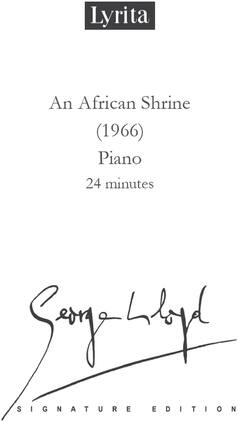
Lloyd's first solo piano piece, An African Shrine (1966), was written for the great British pianist, John Ogdon, who premiered it on 30 August 1969 for a BBC Radio 3 broadcast and recorded it a year later for EMI. The material teems with invention of the highest quality, yet the composer keeps a tight rein on his ideas. Weighty, dramatic sequences are counterpoised convincingly with gentler, lyrical episodes inside an expansive, sweeping canvas that honours the depth and seriousness of the music's underlying theme. Above all, the music is unequivocally, and compellingly, pianistic and could not have been written for any other medium.

Lullaby (Intercom Baby) was originally written for violin and piano in the mid-1970s, but Lloyd arranged it for solo piano in 1987 for the present recording. The composer wrote of the work, 'It is really a lullaby, but the mother does not rock the cradle, she is in another room at the end of an intercom listening for her baby; what she hears is not always as peaceful as it should be'. This gentle berceuse has a lilting warmth, with delightfully puckish central excursions. There is an old-world charm to the piece that belies it's modish title.

Echo, the first of three songs, was written as a memorial to my friend Sandrey Date who died in 2020. In September 2021 I conducted it at a concert in his honour given by the Bournemouth Symphony Chorus, for which Sandrey was a Trustee and Musical Adviser for many years. It opens with a short cello prelude whose theme is developed as short commentaries between the three verses. It opens with a short cello prelude whose theme is developed as short commentaries between the three verses. The baritone melody, also derived from the cello's, rises to a passionate climax on the words InchCome back in tears, O memory.Inch The chorus takes the lead in the second verse, with the baritone commenting simply on the contemplation of Paradise. The final verse builds once more to a climax on the words InchPulse for pulse, breath for breath,Inch before dying gently away. I wrote the second two songs at Carolyn Date's invitation and was glad of the opportunity to explore more of Christina Rossetti's spiritual poems. The second song Uphill, opens once again with the solo cello playing a descending sequence marked pesante. I loved the call-and-response structure of this poem, the chorus answering the simple questions of the traveller/pilgrim whose destination is unknown. On his final question, InchWill there be beds for all who seek?Inch the chorus erupts in a joyful response, InchYea, beds for all who come!Inch and repeat the words in joyful counterpoint. A Hope Carol opens with the wordless chorus singing rhythmically, like pealing bells. The baritone's melody is less straightforward dropping from B-flat minor to A-minor in the first verse. The celebratory mood continues with the cello depicting both the sounds of angels and birds in counterpoint to the chorus. In the final verse the chorus sing the main tune, with the baritone providing a descant before coming together for the final b

St. Antony and the Beggar (1972) juxtaposes a variety of styles and moods, from dark introspection and violence outbursts to sequences of prayerful hope. A lively waltz also recurs in the varied and engaging narrative. After a stormy climax is reached, the closing section is serene and spacious.
Specs
Be the first to ask a question.
We’ll try to get your question answered within 24 hours by a Best Buy customer or brand representative.
More to consider




Immerse yourself in sound Sponsored
Donner music Donner DDP-60 Wooden 88-Key Semi-Weighted Upright Digital Piano with 3-Pedal for Beginner Color
$320.99The price was $329.99