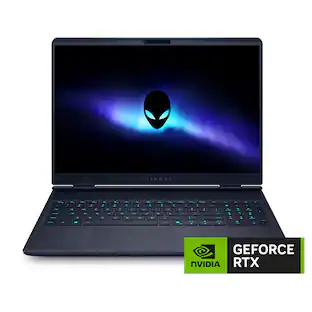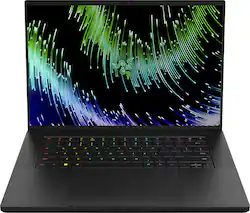
Razer - Blade 16 - 16'' Gaming Laptop - QHD+ 240 Hz - Intel 24-Core i9-13950HX - NVIDIA GeForce RTX 4080 - 32GB RAM - 1TB SSD - Black
Model: RZ09-0483TEH3-R3U1
SKU: 6533838
This item is no longer available in new condition. See similar items below
- Key Specs
- Screen Type: IPS
- Screen Size: 16 inches (Size of the screen, measured diagonally from corner to corner.)
- Screen Resolution: 3840 x 2160 (4K) (Screens come in a range of resolutions (measured in pixels, horizontal x vertical). The higher the resolution, the greater the picture quality.)
- Touch Screen: false (Touch-screen devices make navigating more intuitive. Using a touch-screen display, you can do things such as tap to select, hold and drag to move items, swipe to scroll, and pinch to zoom.)
- Refresh Rate: 240Hz (The number of frames per second the device can produce natively without enhancement. Higher rates help produce smooth, seamless pictures.)
- Brightness: 500 nits (A measure of the total light output.)
- Processor Model: Intel 13th Generation Core i9 (Your computer's processor is like its brain. Working in combination with system memory, the power of the processor determines the complexity of software you can run, how many programs you can have open at the same time, and how fast those programs will run. Most computers feature an AMD, Intel or Snapdragon processor.)
- CPU Base Clock Frequency: 2.2 gigahertz (Actual central processing unit (CPU) speed may vary by device configuration and design. The average rate at which the processor is able to execute tasks under normal operating conditions as asserted by the manufacturer.)
- Storage Type: SSD, HDD
- Total Storage Capacity: 5000 gigabytes
- System Memory (RAM): 32 gigabytes (Random-access memory (RAM) is a computing device's short-term data storage, which allows active information to be accessed quickly. The size and type of RAM determines how efficiently the device can handle large amounts of information at one time. For example, gaming or video editing requires more RAM for optimal performance.)
- Graphics: NVIDIA GeForce RTX 4080 (Often referred to as a "graphics processing unit" (GPU), this device is responsible for displaying image content and decoding/encoding video content in programs and games.)
- Display Connector(s): 1 x HDMI 2.1, 1 x Thunderbolt 4 (The number and type of connectors used to connect to an external display.)
- Battery Chemistry: Lithium-ion
- 2-in-1 Design: false (A laptop and a tablet combined in one lightweight, portable device. Sometimes referred to as "convertible" or "hybrid" laptops, these devices deliver the processing power and keyboard of a laptop. When you're ready to play, either detach the screen or fold your 2-in-1 into tablet mode to comfortably watch movies, play games, read an e-book and more.)
- Backlit Keyboard: true (Integrated lights allow for visibility of the keys in low-light conditions.)
- General
- Brand: Razer
- Model Number: RZ09-0483TEH3-R3U1
- Product Name: Blade 16 - 16'' Gaming Laptop - QHD+ 240 Hz - Intel 24-Core i9-13950HX - NVIDIA GeForce RTX 4080 - 32GB RAM - 1TB SSD
- Color: Black
- Year of Release: 2023
- Display
- Display Type: LCD
- Screen Type: IPS
- Screen Size: 16 inches (Size of the screen, measured diagonally from corner to corner.)
- Screen Resolution: 3840 x 2160 (4K) (Screens come in a range of resolutions (measured in pixels, horizontal x vertical). The higher the resolution, the greater the picture quality.)
- Touch Screen: false (Touch-screen devices make navigating more intuitive. Using a touch-screen display, you can do things such as tap to select, hold and drag to move items, swipe to scroll, and pinch to zoom.)
- Refresh Rate: 240Hz (The number of frames per second the device can produce natively without enhancement. Higher rates help produce smooth, seamless pictures.)
- Brightness: 500 nits (A measure of the total light output.)
- Color Gamut (Standard RGB): 100 percent
- Processor
- Processor Brand: Intel
- Processor Model: Intel 13th Generation Core i9 (Your computer's processor is like its brain. Working in combination with system memory, the power of the processor determines the complexity of software you can run, how many programs you can have open at the same time, and how fast those programs will run. Most computers feature an AMD, Intel or Snapdragon processor.)
- Processor Model Number: 13950HX
- CPU Base Clock Frequency: 2.2 gigahertz (Actual central processing unit (CPU) speed may vary by device configuration and design. The average rate at which the processor is able to execute tasks under normal operating conditions as asserted by the manufacturer.)
- CPU Boost Clock Frequency: 5.5 gigahertz (Actual central processing unit (CPU) speed may vary by device configuration and design. The maximum rate at which the processor is able to execute tasks, typically only used for a short period of time as needed. This rate may temporarily boost the processor's performance, but may result in overheating, shutdown, or damage to equipment if sustained.)
- Number of CPU Cores: 24-core (A core, or "brain" of a CPU, allows it to receive and execute instructions. Each core can work independently or together to perform parallel operations.)
- Number of CPU Threads: 32 (Generally, the more threads, the faster and more responsive the operating system.)
- Unlocked Processor: true
- CPU Cache Memory Level: L1, L2, L3
- L1 Cache: 80 megabytes (Cache memory, also called CPU memory, is random-access memory (RAM) that a computer microprocessor can access more quickly than it can access regular RAM. This memory is typically integrated directly with the CPU chip or placed on a separate chip that has a separate bus interconnect with the CPU.)
- L2 Cache: 2 megabytes (Cache memory, also called CPU memory, is random-access memory (RAM) that a computer microprocessor can access more quickly than it can access regular RAM. This memory is typically integrated directly with the CPU chip or placed on a separate chip that has a separate bus interconnect with the CPU.)
- L3 Cache: 36 megabytes (Cache memory, also called CPU memory, is random-access memory (RAM) that a computer microprocessor can access more quickly than it can access regular RAM. This memory is typically integrated directly with the CPU chip or placed on a separate chip that has a separate bus interconnect with the CPU.)
- Neural Processing Unit (NPU): false (Whether the product comes with an integrated neural processing unit (NPU) that performs computations for AI (artificial intelligence) functions to increase proficiency of the CPU and reduce power consumption.)
- Storage
- Storage Type: SSD, HDD
- Total Storage Capacity: 5000 gigabytes
- Solid State Drive Capacity: 1000 gigabytes (The amount of data that can be stored on the device's solid state drive (SSD). SSD is a flash-based storage with faster speeds than a hard disk drive (HDD).)
- Hard Drive Capacity: 4000 gigabytes (The amount of data that can be stored on the device's mechanical hard drive. Hard disk drives (HDDs) typically have larger capacities than solid state drives (SSDs) but may have slower speeds.)
- Solid State Drive Interface: NVMe (Connects the solid state drive to the host system. PCI and SATA interfaces are the most common; PCI interfaces are typically faster, but SATA interfaces are compatible with a wider range of systems.)
- Memory
- System Memory (RAM): 32 gigabytes (Random-access memory (RAM) is a computing device's short-term data storage, which allows active information to be accessed quickly. The size and type of RAM determines how efficiently the device can handle large amounts of information at one time. For example, gaming or video editing requires more RAM for optimal performance.)
- Type of Memory (RAM): GDDR5 (Each type of RAM delivers a different level of speed, bandwidth, energy efficiency and performance.)
- System Memory RAM Speed: 5600 megahertz (How fast the information-storing hardware operates. The faster the RAM, the faster memory can be transferred to other system components. Ultimately, faster RAM improves operational efficiency.)
- Number Of Memory Slots: 2
- Number of Memory Sticks Included: 2
- System Memory RAM Expandable To: 64 gigabytes (Adding more random-access memory (RAM) to a computer speeds up performance and improves efficiency. Upgrades to memory are limited by the number of expansion slots for additional RAM and existing RAM installed on the device.)
- Graphics
- Graphics Type: Dedicated (Dedicated graphics uses a separate graphics card for processing video images. Because it does not use memory from the system's RAM, there is no extra burden on the CPU and graphics are processed more efficiently. Integrated graphics shares system RAM to process video images.)
- GPU Brand: NVIDIA
- Graphics: NVIDIA GeForce RTX 4080 (Often referred to as a "graphics processing unit" (GPU), this device is responsible for displaying image content and decoding/encoding video content in programs and games.)
- Advanced Graphics Rendering Technique(s): DLSS 3 (Deep Learning Super Sampling), Ray tracing (Imaging technology designed to improve graphics rendering.)
- Unlocked GPU: false
- GPU Base Clock Frequency: 1.35 gigahertz (The minimum rate at which the graphics controller is guaranteed to operate.)
- GPU Boost Clock Frequency: 2.28 gigahertz (The maximum ideal rate at which the graphics controller is able to operate, typically only for a short period of time.)
- GPU Video Memory (RAM): 12 gigabytes (Random-access memory (RAM) is a GPU’s, or graphics cards, short-term data storage, which allows active information to be accessed quickly. The size and type of RAM determines how efficiently the GPU can handle large amounts of information at one time. For example, larger amounts of RAM for gaming or video editing increases performance.)
- GPU Video Memory Type (RAM): GDDR6 (Each type of RAM delivers a different level of speed, bandwidth, energy efficiency and performance.)
- Compatibility
- Operating System: Windows 11 Home (The operating system manages all software and hardware, including files, memory and connected devices. Most importantly, it lets you interact with your device and your programs in a visual way; otherwise, you'd be typing computer code to get anything done.)
- Operating System Architecture: 64-bit (An operating system (OS) manages computer hardware, software resources, and programs in conjunction with the system's processor. 64-bit operating systems can handle more data at once than 32-bit systems, resulting in faster speeds, more effiency, and overall improved performance.)
- Voice Assistant Built-in: Cortana (A digital assistant built into the device that uses voice commands to answer questions and control smart devices.)
- Works With: Cortana (Compatible with or able to be connected to other smart devices or applications.)
- Connectivity
- Display Connector(s): 1 x HDMI 2.1, 1 x Thunderbolt 4 (The number and type of connectors used to connect to an external display.)
- Number of HDMI Outputs (Total): 1
- Number of DisplayPort Outputs (Total): 1
- Number of Thunderbolt Ports (Total): 1
- USB Ports: 3 x USB-A 3.2, 2 x USB-C 3.2 (The number and type of USB ports the product has.)
- Number of USB Ports (Total): 5
- Headphone Jack: true (The device features an interface that allows for the connection of headphones.)
- Microphone Input: true (The device features an input for connecting an external microphone.)
- Wireless Connectivity: Wi-Fi, Bluetooth (The manner in which a device sends data to another device over a short distance without the use of wires or cables.)
- Wireless Standard: AX (The wireless networking protocol used by the device. Each iteration of the protocol is based on the 802.11 standard developed by the Institute of Electrical and Electronics Engineers (IEEE) Standards Association. Denoted by letters following 802.11 (802.11a, 802.11ac, etc.), each version, published in alphabetical order, encompasses all previous versions.)
- Wireless Networking Standard: Wi-Fi 6E (The wireless networking standard used by the device. Each iteration of the standard developed by the Wi-Fi Alliance corresponds to an existing IEEE 802.11 protocol; for example, standard 802.11ac (or AC) is termed Wi-Fi 5. Refers specifically to the standard the device is designed to use, but ultimately determines product interoperability and backward compatibility including previous versions.)
- Number Of Ethernet Ports: 0
- Cooling
- CPU Cooling System: Liquid
- Number of CPU Cooling Fans: 2 (The quantity of fans contained within the device designed to cool the Central Processing Unit (CPU).)
- GPU Cooling System: Liquid
- Number of GPU Cooling Fans: 2 (The quantity of fans contained within the graphics card, or graphics processing unit (GPU) designed to cool it.)
- Power
- Power Supply Maximum Wattage: 330 watts
- Battery Cells: 4-cell
- Battery Chemistry: Lithium-ion
- Expansion
- Number of M.2 Slots: 2 (This interface is most commonly used for high-speed solid state drives (SSDs), and is often used in laptops due to its small size.)
- Number Of Internal 2.5" Bays: 0
- Camera
- Front-Facing Camera: true
- Front Facing Camera Video Resolution: 1080p (Refers to the number of pixels, both horizontally and vertically, used by the camera facing the user to capture video. The higher the resolution the finer the video detail that can be seen.)
- Built-In Microphone: true
- Features
- 2-in-1 Design: false (A laptop and a tablet combined in one lightweight, portable device. Sometimes referred to as "convertible" or "hybrid" laptops, these devices deliver the processing power and keyboard of a laptop. When you're ready to play, either detach the screen or fold your 2-in-1 into tablet mode to comfortably watch movies, play games, read an e-book and more.)
- Backlit Keyboard: true (Integrated lights allow for visibility of the keys in low-light conditions.)
- Customizable Keyboard Lighting: RGB
- Keyboard Technology: Membrane (Type of technology that detects a key press.)
- Foldable Screen: false
- Touchpad Type: Precision
- Media Card Reader: true (A hardware device that allows for access to data on a memory card and enables the transfer of its files to a computer. These devices may have one or multiple slots for various types of memory cards, and may be integrated into the computer or available as an external device.)
- Media Card Slot: Secure Digital
- Audio Technology: THX Spatial Audio
- Speaker Type: 4 speaker array (tweeters x2, sub x2)
- Security Features: Cable lock slot, Facial recognition
- Cable Lock Slot: Kensington Security Slot (K-Slot)
- Stylus Dock: None
- Casing Material: Aluminum
- Dimensions
- Product Height: 0.87 inches (The out of box height of the item. Height is measured as the vertical distance from the bottom of the item to the top as it would be primarily used or placed.)
- Product Width: 9.61 inches (The out of box width of the item. Width is measured as the horizontal distance from one side of the item to the other as it would be primarily used or placed.)
- Product Depth: 13.98 inches (The out of box depth of the item. Depth is measured as the distance from the front of the item to the back as it would be primarily used or placed.)
- Product Weight: 5.4 pounds (The out of box weight of the item.)
- Certifications Listings & Approvals
- ENERGY STAR Certified: false (Devices carrying the ENERGY STAR service mark, such as computer products and peripherals, kitchen appliances, and other products, generally use 20% to 30% less energy than required by federal standards.)
- EPEAT Qualified: false (The Electronic Product Environmental Assessment Tool (EPEAT) was designed to provide an environmental assessment tool for purchasers. In order to qualify for EPEAT, a product must meet all 23 required criteria.)
- Included
- Included Software: Razer Synapse 3
- Optical Drive Type: None (An optical disk drive (ODD) uses a laser light to read data from or write data to an optical disc. These discs include CDs, DVDs, and Blu-ray Discs. This allows you to play music or watch movies using prerecorded discs.)
- Numeric Keypad: false
- Stylus Included: false
- Warranty
- Warranty - Parts: 1 year
- Warranty - Labor: 1 year
- Other
- UPC: 840272906774
Experience insane performance and ultra-portability with the Razer Blade 16—featuring more graphics power per inch³ than any other 16” gaming laptop.
- NVIDIA GeForce RTX 40 Series Graphics: Packed for pure performance with 1.50 gPD (Graphics Power Density) and delivers up to 35% more graphic power per inch than any other 16 gaming laptop
- 13th Gen Intel Core i9 13950HX Processor: From full-blown AAA gaming to full-on content creation, run resource-intensive tasks flawlessly with the most powerful mobile processor leveraging desktop-grade silicon
- QHD+ 240 Hz Display: Experience smooth, responsive gaming that comes with a greater level of detail—enable NVIDIA G-SYNC to eliminate screen tearing for an immersive, stutter-free experience
- 16 inch Display in a 15 inch Body: Built with similar chassis dimensions to a typical 15” gaming laptop, it's just as ultra-portable yet offers even more screen real estate—a solution that’s the best of both worlds
- Ultra-Compact GaN Charger (Up to 280W): Stay ready to go with a charger that’s not only faster and more power-efficient than standard adapters, but also up to 60% smaller
- Anodized Aluminum Unibody: CNC-milled from a single aluminum block, the chassis achieves optimal strength-to-weight ratio and is anodized with a matte black finish for a smooth, scratch-resistant surface
Whats Included
- Razer Blade 16
- Power Adapter
- Power Cord
- Micro-fiber Cleaning Cloth
- Important Product Information Guide
A: Yes this is incorrect. This model has the 2560 x 1600 screen. The other 16" model has a 4K panel + Mini LED Screen + RTX 4090.
A: undefined
Q: Is this screen touch screen?
A: No
People also viewed
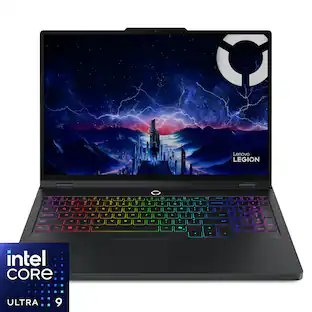 $2,129.99The price was $2,149.99
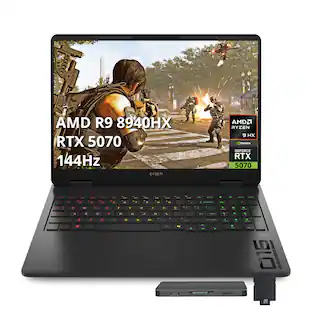 $1,679.00The price was $2,398.57
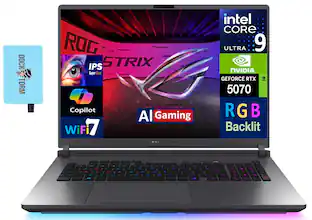 $2,459.00The price was $2,491.24
 $662.99The price was $762.00
 $1,679.00The price was $2,398.57




Today's top picks
 $789.99The price was $1,049.99
 $1,799.99The price was $2,199.99
 $1,564.99The price was $1,774.99
 $1,849.99The price was $2,149.99
 $1,299.99The price was $1,599.99
 $1,779.99The price was $1,899.99
 $1,539.99The price was $2,219.99
 $2,394.99The price was $2,549.99
 $1,459.99The price was $1,649.99