Rating 4.8 out of 5 stars with 4615 reviews
4.8- Usb ports (351)
- Surge protection (327)
- Price (235)
- Outlets (211)
- Easy to use (69)
- Size (12)
- Warranty (6)
- Internet speed (3)
Customer Images
The vast majority of our reviews come from verified purchases. Reviews from customers may include My Best Buy members, employees, and Tech Insider Network members (as tagged). Select reviewers may receive discounted products, promotional considerations or entries into drawings for honest, helpful reviews.
- Rated 5 out of 5 stars
Best Designed Surge Protector Strip
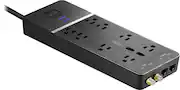
I bought 2 of these Rocketfish 8 Outlet Surge Protector Strips from Best Buy. I plan to buy several more to replace some older units. I love how any size plug-in transformers will fit in 6 outlets, without rearranging each one. The outlet layout is the best I have ever seen. LIKES: 1- 6 Outlets with plenty of space between for the largest plug-in transformers plus 2 more outlets close by. This is the only strip I own that will accommodate 6 large transformers side by side with room to spare. 2- Rugged construction. 3- 6 foot extremely soft & flexible heavy duty cord. 4- 2) 5 Volt USB jacks. The power supply is built-in with power to charge 1) iPad or other tablet or 2) phones. 5- On / Off Switch / resettable circuit breaker is flush mounted. In addition to the sleek design, this makes the strip very low profile & much less likely for the power switch / circuit breaker to be accidentally bumped & turned off or on. 6- Right angle power plug fits in tight places. 7- Cable F-type in / out & telephone in / out protection. 8- 3600-joule protection rating - much larger than most surge protector strips. 9- Noise filter (47eB EMI/RFI) built in to remove interference from the power line. 10- 2 LEDs show protection is working & ground is present. DISLIKES: NONE!
Posted by gadgetguy11
- Rated 5 out of 5 stars
Excellent Surge Protector!
I bought this surge protector after doing some research. I discovered this surge protector covered met all of my needs for my home office. It has plenty of outlets and even has two USB ports for charging my phones. It's a high-quality product and stylish too!
Posted by onthelevel
- Rated 5 out of 5 stars
Works perfectly
After 3 power surges I can say that this thing works like a charm, my Xbox, monitor, lamp, charger and air purifier are all connected to this going strong.
Posted by DavidH
- Rated 5 out of 5 stars
Just right for me!!!
Not too much to say about this plug except i like the design of it. Its giving me more than enough power to handle my tv, receiver, blu-ray player, speakers and roku stick. Hopefully the surge protector wirks perfectly when the power goes out.
Posted by Alex
- Rated 5 out of 5 stars
Works great
I bought this after having a tv ruined from lightning coming through the cable wire. It is easy to use and protects cable and ethernet cords. It has plenty of ports, and even usb ports. Great for protecting a tv and videogame system.
Posted by Ryan