Rating 4.1 out of 5 stars with 139 reviews
4.1- Heating Speed (35)
- Ease of use (25)
- Appearance (11)
- Design (9)
- Induction (5)
- Noise Level (4)
- Reliability (4)
- WiFi (3)
Customer Images
The vast majority of our reviews come from verified purchases. Reviews from customers may include My Best Buy members, employees, and Tech Insider Network members (as tagged). Select reviewers may receive discounted products, promotional considerations or entries into drawings for honest, helpful reviews.
- Rated 4 out of 5 stars
Good but subpar touch sensors
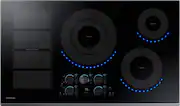
It’s been 6 months since we got this cooktop to replace an old GE profile. On the good side: looks and design are great, it heats everything really fast, it’s very versatile with one very large burner and the square flex burner. On the not so good side: the beep alarm is not loud enough, the blue LED lights are not as fancy as the pics show, the flex burners are tricky to use and the timer is not easy to use. On the bad side: the touch sensors are not sensitive enough nor are they accurate enough and make it worse the magnetic knob is not any better. It’s a bit pricey compared to other induction cooktop.
This review is from Samsung - 36" Induction Cooktop with WiFi and Virtual Flame - Stainless Steel
Posted by ElKadete
- Rated 5 out of 5 stars
Surprisingly
We are loving how quick it heats up water to boil. No joke around a minute for water to boil! Can’t get no faster. Very slick design and easy to use and pair with hood vent and to phone.
This review is from Samsung - 36" Induction Cooktop with WiFi and Virtual Flame - Stainless Steel
Posted by Los713
- Rated 5 out of 5 stars
Modern gorgeous Samsung stovetop - 36” touchscreen
Love this stovetop! It’s easy to use, and looks so good in our newly renovated kitchen. Heats up quickly and easy to clean. Be careful not to get too much water on it as it will turn off from it, clean only with stove top cleaners. Highly recommend! We almost got a smaller size and I’m so glad we stuck with the 36” as we have usually four items at least cooking at the same time. Great design!
Posted by Kathy
- Rated 2 out of 5 stars
Induction Great, Touch Controls are Awful
We have been this new house for 15 months and love the idea of Induction Cooking. The flexibility of this unit is commendable. The touch controls however are a constant problem. If something boils over, the controls go berserk. Burners may turn all the way up or turn off. Controls do not always respond, often my wife will have me come to adjust the temperature because it doesn't respond to her fingers. The magnetic knob is worthless. Also, if removing a lid and a drop us water lands near one of the controls, what was on simmer is suddenly at the highest heat setting. We did all Samsung, dbl oven, dishwasher, clothes washer & dryer. This cooktop is our only regret because the controls will not stay in control.
This review is from Samsung - 36" Induction Cooktop with WiFi and Virtual Flame - Stainless Steel
Posted by BarnBuilderBob
- Rated 3 out of 5 stars
I would choose another brand!
Honestly, this cooktop is not great. It is very sleek and looks nice but the controls on it suck! They're hard to press sometimes, super sensitive sometimes. If you remove a pan from the burner for just 20 seconds, for example, to drain water, the burner turns off automatically. I had high hopes and was hoping some of the other reviews were being over picky but I would choose something else. In fact, I wouldn't choose Samsung appliances at all. Other than our dishwasher, we have been very disappointed by all the Samsung appliances we purchased.
This review is from Samsung - 36" Induction Cooktop with WiFi and Virtual Flame - Stainless Steel
Posted by RachelJ