Sarah Willis BBC Philharmonic - Martin Owen Plays Strauss Schumann & Weber - COMPACT DISCS [CD]
Reviews coming soon
About this product
Regarded as one of Europe's leading horn players, Martin Owen appears as a soloist and chamber musician around the world. Currently principal horn at the BBC Symphony Orchestra, he has previously served as principal horn of the Royal Philharmonic Orchestra and as solo horn of the Berliner Philharmoniker. Weber's Concertino was written for the old, valveless 'natural horn'; it's limited range of notes (tied to the harmonic series) was extended mechanically with additional tubing ('crooks') and, more artfully, by virtuoso players bending notes, and varied hand stopping. The technical demands of the Concertino are testament to the extraordinary facility of the hornists of the period. The first Horn Concerto by Richard Strauss, written at the age of nineteen, whilst a student, is widely considered his first uncontested masterpiece. Although the influence of Brahms and Schumann are evident, his own compositional voice is unmistakable. Strauss would continue to write significant parts for horn in all of his orchestral scores (possibly an influence of his father, who was a virtuoso hornist), but the second Concerto was not composed until 1942 - some sixty years later. The style is much more neo-classical, even 'Mozartian'. Schumann's riotous Concertstück for four horns opens the programme, and features three more outstanding soloists Christopher Parkes (Swedish Radio Symphony Orchestra, Sinfonia of London), Alec Frank-Gemmill (Gothenburg Symphony Orchestra), and Sarah Willis (Berliner Philharmoniker).
Specifications
- GenreClassicalDescriptionRegarded as one of Europe's leading horn players, Martin Owen appears as a soloist and chamber musician around the world. Currently principal horn at the BBC Symphony Orchestra, he has previously served as principal horn of the Royal Philharmonic Orchestra and as solo horn of the Berliner Philharmoniker. Weber's Concertino was written for the old, valveless 'natural horn'; it's limited range of notes (tied to the harmonic series) was extended mechanically with additional tubing ('crooks') and, more artfully, by virtuoso players bending notes, and varied hand stopping. The technical demands of the Concertino are testament to the extraordinary facility of the hornists of the period. The first Horn Concerto by Richard Strauss, written at the age of nineteen, whilst a student, is widely considered his first uncontested masterpiece. Although the influence of Brahms and Schumann are evident, his own compositional voice is unmistakable. Strauss would continue to write significant parts for horn in all of his orchestral scores (possibly an influence of his father, who was a virtuoso hornist), but the second Concerto was not composed until 1942 - some sixty years later. The style is much more neo-classical, even 'Mozartian'. Schumann's riotous Concertstück for four horns opens the programme, and features three more outstanding soloists Christopher Parkes (Swedish Radio Symphony Orchestra, Sinfonia of London), Alec Frank-Gemmill (Gothenburg Symphony Orchestra), and Sarah Willis (Berliner Philharmoniker).ArtistSarah Willis BBC PhilharmonicTitleMartin Owen Plays Strauss Schumann & WeberFormatCDLabelChandos
Reviews
This product doesn't have any reviews yet.
Compare similar products

Regarded as one of Europe's leading horn players, Martin Owen appears as a soloist and chamber musician around the world. Currently principal horn at the BBC Symphony Orchestra, he has previously served as principal horn of the Royal Philharmonic Orchestra and as solo horn of the Berliner Philharmoniker. Weber's Concertino was written for the old, valveless 'natural horn'; it's limited range of notes (tied to the harmonic series) was extended mechanically with additional tubing ('crooks') and, more artfully, by virtuoso players bending notes, and varied hand stopping. The technical demands of the Concertino are testament to the extraordinary facility of the hornists of the period. The first Horn Concerto by Richard Strauss, written at the age of nineteen, whilst a student, is widely considered his first uncontested masterpiece. Although the influence of Brahms and Schumann are evident, his own compositional voice is unmistakable. Strauss would continue to write significant parts for horn in all of his orchestral scores (possibly an influence of his father, who was a virtuoso hornist), but the second Concerto was not composed until 1942 - some sixty years later. The style is much more neo-classical, even 'Mozartian'. Schumann's riotous Concertstück for four horns opens the programme, and features three more outstanding soloists Christopher Parkes (Swedish Radio Symphony Orchestra, Sinfonia of London), Alec Frank-Gemmill (Gothenburg Symphony Orchestra), and Sarah Willis (Berliner Philharmoniker).

The renowned horn player Martin Owen is joined by the violinist Francesca Dego and pianist Alessandro Taverna in this varied and compelling programme. Mozart's Horn Quintet, KV 407 is one of the earliest examples of the horn in chamber music - although this partnership was embraced by Beethoven, Schubert, Brahms, and Schumann among many others. The Quintet is unusually scored for horn, violin, two violas, and cello, but the majority of the melodic interplay in the work occurs between the horn and the violin, so replacing the lower strings with piano works very well. Brahms's Horn Trio was the first major work for this instrumentation, and remains one of the finest in the repertoire. The horn is often seen as symbolic of the forest - an important entity in German culture - and Brahms commented that his inspiration for the piece came to him whilst out walking though woodland. Ligeti's Hommage à Brahms was very much inspired by Brahms's Trio, although influences of Bartok and Hungarian folk music also play their part. In the final piece, Schumann's 'Duet' from Phantasiestucke, the horn simply replaces the original cello part in this ultra-romantic miniature.
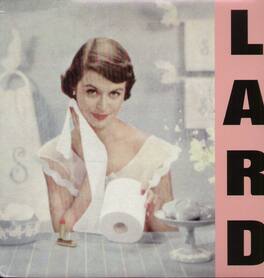
Lard's Pure Chewing Satisfaction is the second landmark album of the industrial-hardcore collision between vocals of Jello Biafra with the patented wall of noise assault and studio wizardry of Ministry founders Paul Barker and Al Jourgensen! Originally released in 1997, Pure Chewing Satisfaction is a dark, frightening look at everything wrong in America, and it rings as true now as it ever has. Lyrically it's pessimistic and apocalyptic, tackling topics like looking for work, the legacy of the Me Generation and their failures, to environmental disasters. Sonically, the album is an avalanche of both real and electronic drums, menacing effects galore, and layers of machine gun guitars. Not quite punk rock, nor completely industrial-this is Lardcore for the people! A must have for fans of Jello Biafra's work and of Ministry, the result remains another classic from this legendary collaboration. This long awaited repress now features in addition to the wide on black vinyl, a limited solid-pink vinyl edition! Praise The Lard!

Witty, winsome and wise, Bicycle features Livingston in eleven original compositions backed by an ensemble that includes his brother James Taylor. The music ranges from jazz swing to bluesy instrumentals to country swing.
Specs
Be the first to ask a question.
We’ll try to get your question answered within 24 hours by a Best Buy customer or brand representative.