Simon Callaghan - British Piano Concertos, Vol. 3 - COMPACT DISCS [CD]
Reviews coming soon
About this product
Philip Cannon's Concertino for piano and strings (1951) dates from his formative years. It was written for the Petersfield Festival, where it was premiered on 27 January 1951 by soloist Joseph Cooper, with the Petersfield Orchestra conducted by Kathleen Merritt. This lively, neo-classical piece has achieved over a thousand performances internationally. Though John Addison's Concertino for piano and orchestra is, for the most part, couched in a light-hearted language, it is the product of a serious, and unfailingly inventive, approach to keyboard and orchestral writing. Speaking of the work to Lesie Ayre of the London Evening News, the composer remarked that, 'it is a real concerto in the full sense of the word I would not be ashamed to show the work to any first-class pianist'. Francis Chagrin maintained an intensely practical and unpretentious attitude towards his own craft, observing that, 'My music is not for first performances - it is just to be played'. His Piano Concerto was first performed by soloist Franz Osborn, with the London Symphony Orchestra, conducted by the composer, at an SPNM Experimental Rehearsal held at the Royal College of Music on 4 February 1944. Conversation Piece by John Addison was written in 1958 to a commission from the BBC Concert Orchestra for that year's British Light Music Festival. John Addison felt that, by the late-1950s, too great a divide had opened up between serious and light music 'Concertgoers think contemporary music is so alarmingly serious that when confronted with a mildly witty turn of phrase, they assume something has gone wrong. I remember the astonished sigh of relief when, in the course of introducing one of my chamber works, I told the audience I would not mind if they smiled'. In Conversation Piece, Addison exploits to the full his talent to amuse and divert.
Specifications
- GenreClassicalDescriptionPhilip Cannon's Concertino for piano and strings (1951) dates from his formative years. It was written for the Petersfield Festival, where it was premiered on 27 January 1951 by soloist Joseph Cooper, with the Petersfield Orchestra conducted by Kathleen Merritt. This lively, neo-classical piece has achieved over a thousand performances internationally. Though John Addison's Concertino for piano and orchestra is, for the most part, couched in a light-hearted language, it is the product of a serious, and unfailingly inventive, approach to keyboard and orchestral writing. Speaking of the work to Lesie Ayre of the London Evening News, the composer remarked that, 'it is a real concerto in the full sense of the word I would not be ashamed to show the work to any first-class pianist'. Francis Chagrin maintained an intensely practical and unpretentious attitude towards his own craft, observing that, 'My music is not for first performances - it is just to be played'. His Piano Concerto was first performed by soloist Franz Osborn, with the London Symphony Orchestra, conducted by the composer, at an SPNM Experimental Rehearsal held at the Royal College of Music on 4 February 1944. Conversation Piece by John Addison was written in 1958 to a commission from the BBC Concert Orchestra for that year's British Light Music Festival. John Addison felt that, by the late-1950s, too great a divide had opened up between serious and light music 'Concertgoers think contemporary music is so alarmingly serious that when confronted with a mildly witty turn of phrase, they assume something has gone wrong. I remember the astonished sigh of relief when, in the course of introducing one of my chamber works, I told the audience I would not mind if they smiled'. In Conversation Piece, Addison exploits to the full his talent to amuse and divert.ArtistSimon CallaghanTitleBritish Piano Concertos, Vol. 3FormatCDLabelLyrita
Reviews
This product doesn't have any reviews yet.
Compare similar products

Philip Cannon's Concertino for piano and strings (1951) dates from his formative years. It was written for the Petersfield Festival, where it was premiered on 27 January 1951 by soloist Joseph Cooper, with the Petersfield Orchestra conducted by Kathleen Merritt. This lively, neo-classical piece has achieved over a thousand performances internationally. Though John Addison's Concertino for piano and orchestra is, for the most part, couched in a light-hearted language, it is the product of a serious, and unfailingly inventive, approach to keyboard and orchestral writing. Speaking of the work to Lesie Ayre of the London Evening News, the composer remarked that, 'it is a real concerto in the full sense of the word I would not be ashamed to show the work to any first-class pianist'. Francis Chagrin maintained an intensely practical and unpretentious attitude towards his own craft, observing that, 'My music is not for first performances - it is just to be played'. His Piano Concerto was first performed by soloist Franz Osborn, with the London Symphony Orchestra, conducted by the composer, at an SPNM Experimental Rehearsal held at the Royal College of Music on 4 February 1944. Conversation Piece by John Addison was written in 1958 to a commission from the BBC Concert Orchestra for that year's British Light Music Festival. John Addison felt that, by the late-1950s, too great a divide had opened up between serious and light music 'Concertgoers think contemporary music is so alarmingly serious that when confronted with a mildly witty turn of phrase, they assume something has gone wrong. I remember the astonished sigh of relief when, in the course of introducing one of my chamber works, I told the audience I would not mind if they smiled'. In Conversation Piece, Addison exploits to the full his talent to amuse and divert.

Jacob's Piano Concerto no.2 in E flat was completed in 1957 and premiered on 11 July of that year at the Winter Gardens, Bournemouth by the soloist Edith Vogel. A Proms performance took place at the Royal Albert Hall on 9 August 1957 with the same soloist. A review in The Times of the 1957 Proms performance of Gordon Jacob's Piano Concerto No.2 declared that 'the composer's masterly understanding of the orchestra enables him to express each idea economically and in the most clean and attractive colours', while The Sunday Times' critic wrote that, 'having taught the craft of orchestration to a whole generation of composers, Dr. Jacob is himself a past master at clear and effective scoring'. Addison's Variations for Piano and Orchestra was written in 1948 and revised the following year. According to Alan Poulton's Dictionary-Catalog of Modern British Composers, It was first performed in a BBC broadcast in 1960 by Margaret Kitchin. The work is written for a small orchestra, comprising double woodwind, four horns, a pair each of trumpets and trombones, bass trombone, timpani, modest percussion and strings. Though the piano had played a prominent role in an earlier student piece by Rubbra, his Piano Concerto, Op.30 (1932) is the composer's first fully-fledged, large-scale work for soloist and orchestra. The score features an elaborate solo part and requires substantial orchestral forces. [Paul Conway]
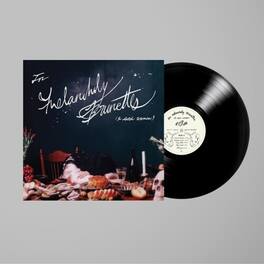
After a decade making the most of improvised recording spaces set in warehouses, trailers and lofts, Japanese Breakfast's fourth album, For Melancholy Brunettes (& sad women), marks the band's first proper studio . Produced by Grammy Award winner Blake Mills, the record sees front-woman and songwriter Michelle Zauner pull back from the bright extroversion that defined it's predecessor Jubilee to examine the darker waves that roil within, the moody, fecund field of melancholy, long held to be the psychic state of poets on the verge of inspiration. The result is an artistic statement of purpose a mature, intricate, contemplative work that conjures the romantic thrill of a gothic novel.For Melancholy Brunettes follows a transformative period in Zauner's life during which her 2x GRAMMY nominated breakthrough album Jubilee and her bestselling memoir Crying In H Mart catapulted her into the cultural mainstream, delivering on her deepest artistic ambitions. Reflecting on that success, Zauner came to appreciate the irony of desire, which so often commingles bliss and doom. InchI felt seduced by getting what I always wanted,Inch she says. InchI was flying too close to the sun, and I realized if I kept going I was going to die.InchThe plight of Icarus and other such condemned ones lends For Melancholy Brunettes it's most persistent theme, the perils of desire. Like light dispersed, it's spectral parts take the album's characters through cycles of temptation, transgression and retribution. On InchOrlando in LoveInch - a riff on John Cheever's riff on Orlando Innamorato, an unfinished epic made up of 68 ½ cantos by the Renaissance poet Matteo Maria Boiardo - the hero is a well meaning poet who parks his Winnebago by the sea and falls victim to a siren's call, his 69th canto (even in the lofty realm of classical myth Zauner has a soft spot for innuendo). InchHoney WaterInch plum

Bennett was acknowledged both in England and Germany as an outstanding pianist, and his finest and most characteristic music was composed for his own instrument. As well as numerous works for solo piano, including two sonatas, he composed six piano concertos and a single-movement Caprice for piano and orchestra. He gave public performances of all his works for piano and orchestra with himself as soloist.It was during the heady days of Bennett's third long visit to his friends in Leipzig, from January to March 1842, that he mentioned in correspondence that he was working on a new concerto, which he hoped to perform before leaving for London. In the event, this did not happen, but a substantial amount of work must have been done at this stage on what was to become the unpublished Piano Concerto No. 6 in A minor, WO 48. Bennett did further work on the concerto in the summer of 1843 and hoped to publish it, but changes to his personal circumstances contributed towards further delays. His son claimed that he always intended it to be published, but as the years passed, the more out-of-date it became.
Specs
Be the first to ask a question.
We’ll try to get your question answered within 24 hours by a Best Buy customer or brand representative.