Walter Gatti - Organ Music - COMPACT DISCS [CD]
Reviews coming soon
About this product
Johann Schneider was a German organist, violinist and composer (1702, Lautertal-1788, Leipzig). He was a pupil of Nicolas Mueller in his hometown and continued his studies with Johann Hartmann Reinmann in Saalfeld between 1717 and 1720. Around 1720, he became Johann Sebastian Bach's organ and harpsichord pupil in Köthen. In conjunction with his keyboard work with Bach, he studied violin with Johann Gottlieb Graun in Merseburg and with Johann Graf in Rudolstadt. In 1721, Johann Schneider became court organist and first violinist (concertmaster) in Saalfeld in his native Coburg. From 1726 he was employed as violinist in the court chapel in Weimar (Weimarer Hofkapelle), and he was later appointed organist of the Nicolaikirche in Leipzig in 1729, holding this position for the rest of his career. Schneider achieved a commendable reputation as a truly great organist, as Lorenz Mizler quotes 'His organ preludes are of such good taste in this field, with the exception of Mr. Bach, whose pupil he was, that one cannot hear better in Leipzig'. A small number of his works are contained in the manuscript Mus. Ms. 30377, preserved in the Berlin State Library. His style shows a correlation with that of J.S. Bach, but the influence of the Galant style is also detected in various moments of his music. Johann Philipp Kirnberger was born in Saalfeld in 1721 and died in Berlin in 1783. He received his first training in harpsichord and violin within his family and then continued his studies with the organist Johann Peter Kellner in Gräfenroda. In 1738, he was an organ pupil under Heinrich Nikolaus Gerber in Sondershausen, then pursued further studies with Johann Sebastian Bach in Leipzig between 1739 and 1741, which proved pivotal to his development. More than a composer, he is remembered as a 'witness' to Bach's work he took charge of copying much of his master's music. He kept the man
Specifications
- GenreClassicalDescriptionJohann Schneider was a German organist, violinist and composer (1702, Lautertal-1788, Leipzig). He was a pupil of Nicolas Mueller in his hometown and continued his studies with Johann Hartmann Reinmann in Saalfeld between 1717 and 1720. Around 1720, he became Johann Sebastian Bach's organ and harpsichord pupil in Köthen. In conjunction with his keyboard work with Bach, he studied violin with Johann Gottlieb Graun in Merseburg and with Johann Graf in Rudolstadt. In 1721, Johann Schneider became court organist and first violinist (concertmaster) in Saalfeld in his native Coburg. From 1726 he was employed as violinist in the court chapel in Weimar (Weimarer Hofkapelle), and he was later appointed organist of the Nicolaikirche in Leipzig in 1729, holding this position for the rest of his career. Schneider achieved a commendable reputation as a truly great organist, as Lorenz Mizler quotes 'His organ preludes are of such good taste in this field, with the exception of Mr. Bach, whose pupil he was, that one cannot hear better in Leipzig'. A small number of his works are contained in the manuscript Mus. Ms. 30377, preserved in the Berlin State Library. His style shows a correlation with that of J.S. Bach, but the influence of the Galant style is also detected in various moments of his music. Johann Philipp Kirnberger was born in Saalfeld in 1721 and died in Berlin in 1783. He received his first training in harpsichord and violin within his family and then continued his studies with the organist Johann Peter Kellner in Gräfenroda. In 1738, he was an organ pupil under Heinrich Nikolaus Gerber in Sondershausen, then pursued further studies with Johann Sebastian Bach in Leipzig between 1739 and 1741, which proved pivotal to his development. More than a composer, he is remembered as a 'witness' to Bach's work he took charge of copying much of his master's music. He kept the manArtistWalter GattiTitleOrgan MusicFormatCDLabelBrilliant Classics
Reviews
This product doesn't have any reviews yet.
Compare similar products
![Walter Gatti - Organ Music - COMPACT DISCS [CD]](https://pisces.bbystatic.com/image2/BestBuy_US/images/products/f96a318e-e225-46b3-bed1-edf383e608ae.jpg;maxHeight=422;maxWidth=264?format=webp)
Johann Schneider was a German organist, violinist and composer (1702, Lautertal-1788, Leipzig). He was a pupil of Nicolas Mueller in his hometown and continued his studies with Johann Hartmann Reinmann in Saalfeld between 1717 and 1720. Around 1720, he became Johann Sebastian Bach's organ and harpsichord pupil in Köthen. In conjunction with his keyboard work with Bach, he studied violin with Johann Gottlieb Graun in Merseburg and with Johann Graf in Rudolstadt. In 1721, Johann Schneider became court organist and first violinist (concertmaster) in Saalfeld in his native Coburg. From 1726 he was employed as violinist in the court chapel in Weimar (Weimarer Hofkapelle), and he was later appointed organist of the Nicolaikirche in Leipzig in 1729, holding this position for the rest of his career. Schneider achieved a commendable reputation as a truly great organist, as Lorenz Mizler quotes 'His organ preludes are of such good taste in this field, with the exception of Mr. Bach, whose pupil he was, that one cannot hear better in Leipzig'. A small number of his works are contained in the manuscript Mus. Ms. 30377, preserved in the Berlin State Library. His style shows a correlation with that of J.S. Bach, but the influence of the Galant style is also detected in various moments of his music. Johann Philipp Kirnberger was born in Saalfeld in 1721 and died in Berlin in 1783. He received his first training in harpsichord and violin within his family and then continued his studies with the organist Johann Peter Kellner in Gräfenroda. In 1738, he was an organ pupil under Heinrich Nikolaus Gerber in Sondershausen, then pursued further studies with Johann Sebastian Bach in Leipzig between 1739 and 1741, which proved pivotal to his development. More than a composer, he is remembered as a 'witness' to Bach's work he took charge of copying much of his master's music. He kept the man
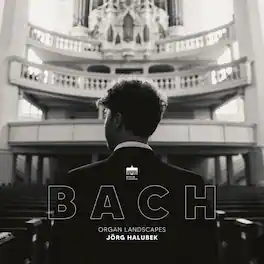
Baroque mastermind Jörg Halubek finishes his journey around the great historic organs of Germany. The final installment of his series Organ Landscapes on vinyl. Halubek plays the Silbermann organ (1710-1714) in the Dom St. Marien Church in Freiberg, the Hildebrandt organ (1746) in St. Wenzel Church in Naumburg, and in the St. Johannis Church in Lüneburg.
![Alessandro Perin - Organ Music 1 - COMPACT DISCS [CD]](https://pisces.bbystatic.com/image2/BestBuy_US/images/products/cb3f63a9-15d4-45f7-a246-0de96fa367a3.jpg;maxHeight=422;maxWidth=264?format=webp)
The output of Marcel Dupré (1886-1971) is so vast and various that only scholars and fellow organists can expect to grasp it's scale. Most listeners require a discerning ear to pull out some of the many highlights. The Italian organist Alessandro Perin has done so here, without confining himself to Dupré's 'greatest hits', the characteristic pile-ups of chorale harmonies and torrents of semiquavers in toccatas and variations that find their natural home on the instruments of Cavaille-Coll as an apotheosis of the French Gothic organ style. Instead, Perin's selection is more diverse. It begins with the Suite Op.39 four pieces originally written as part of a collection of 12 Studies, though they bear no trace of didacticism. Rather, there is a Lisztian quality of invention to their virtuosity, from the glittering cascades of the opening Allegro agitato to the driving counterpoint of the finale. The four settings of the Ave maris stella chant are progressively more ornate, from a simple statement of the chant over a walking bass, through an intricate Bachian chorale prelude, to a final, brilliant toccata. The 'old Christmas carol' featured in Op.20 variations is known in English as Now the green blade riseth in one of his most justly celebrated works, Dupré treats the theme to a dazzling array of transformations, stretching the organist's technique to the limit. At the height of the Second World War, Dupré composed the Evocation in memory of his father, and gave it's first performance at the Cathedral in Rouen in 1941. Exactly what is being evoked is left to the listener to decide, though only the tender second-movement elegy casts it's gaze back with fondness; the strident progress of the first movement seems to reflect the troubled times, and the finale has it's own struggles to overcome in a final blaze of C major triumph. Album Tracks 1. Suite in F minor Op. 3
![V. Benatti - Allegro / Sinfonia E Polacca Per Organo - COMPACT DISCS [CD]](https://pisces.bbystatic.com/image2/BestBuy_US/images/products/fb773c15-ec80-4a1c-8a05-c42e8f623d2d.jpg;maxHeight=422;maxWidth=264?format=webp)
V. Benatti - Allegro / Sinfonia E Polacca Per Organo [COMPACT DISCS] date 01/01/2008
Specs
Be the first to ask a question.
We’ll try to get your question answered within 24 hours by a Best Buy customer or brand representative.