Yoruba Singers - Ojingas Own - VINYL LP
Reviews coming soon
About this product
The 1974 debut album Ojinga's Own and single Basa Bongo/Black Pepper by Guyanese Afro-Folk band The Yoruba Singers has been remastered for vinyl and digital. The Yoruba Singers formed in Georgetown, Guyana in 1971. Despite their name they were not from Nigeria, but identified strongly with the area from which so many of the African diaspora in Guyana and neighbouring regions were originally descended. The group started adapting Guyanese traditional folk music as well as writing their own - blending a mixture of protest, social commentary, blues, and genres inspired by the times. Beginning with about 12 people sharing vocal duties, most of the early repertoire was inspired by folk songs that started life on plantations or in religious settings accompanied by a few sparse musical instruments. Integral to the Yoruba Singers' sound are echoes of Obeah traditions which are very closely related to the Santería religion of Cuba and the Orisha and Shango traditions of Trinidad and Tobago. Calypso and steel-band culture from nearby Trinidad and Tobago was to some extent part of the musical DNA of the group, but they were naturally also influenced by the massive volume of rocksteady and roots-reggae coming from Jamaica. A1. Ojinga's OwnA2. What To DoA3. Stay AwayA4. Uncomprehensidensible Radio-Matic WomanA5. Neighbour JeanA6. G. o. -GoB1. Massacura ManB2. Woman A Dead Ya Fuh ManB3. Ka DumaB4. I've Got To Be SomebodyB5. No Intention
Specifications
- GenreForeignDescriptionThe 1974 debut album Ojinga's Own and single Basa Bongo/Black Pepper by Guyanese Afro-Folk band The Yoruba Singers has been remastered for vinyl and digital. The Yoruba Singers formed in Georgetown, Guyana in 1971. Despite their name they were not from Nigeria, but identified strongly with the area from which so many of the African diaspora in Guyana and neighbouring regions were originally descended. The group started adapting Guyanese traditional folk music as well as writing their own - blending a mixture of protest, social commentary, blues, and genres inspired by the times. Beginning with about 12 people sharing vocal duties, most of the early repertoire was inspired by folk songs that started life on plantations or in religious settings accompanied by a few sparse musical instruments. Integral to the Yoruba Singers' sound are echoes of Obeah traditions which are very closely related to the Santería religion of Cuba and the Orisha and Shango traditions of Trinidad and Tobago. Calypso and steel-band culture from nearby Trinidad and Tobago was to some extent part of the musical DNA of the group, but they were naturally also influenced by the massive volume of rocksteady and roots-reggae coming from Jamaica. A1. Ojinga's OwnA2. What To DoA3. Stay AwayA4. Uncomprehensidensible Radio-Matic WomanA5. Neighbour JeanA6. G. o. -GoB1. Massacura ManB2. Woman A Dead Ya Fuh ManB3. Ka DumaB4. I've Got To Be SomebodyB5. No IntentionArtistYoruba SingersTitleOjingas OwnFormatVINYLLabelSoundway Records
Reviews
This product doesn't have any reviews yet.
Compare similar products
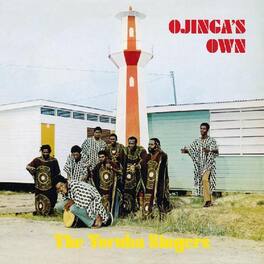
The 1974 debut album Ojinga's Own and single Basa Bongo/Black Pepper by Guyanese Afro-Folk band The Yoruba Singers has been remastered for vinyl and digital. The Yoruba Singers formed in Georgetown, Guyana in 1971. Despite their name they were not from Nigeria, but identified strongly with the area from which so many of the African diaspora in Guyana and neighbouring regions were originally descended. The group started adapting Guyanese traditional folk music as well as writing their own - blending a mixture of protest, social commentary, blues, and genres inspired by the times. Beginning with about 12 people sharing vocal duties, most of the early repertoire was inspired by folk songs that started life on plantations or in religious settings accompanied by a few sparse musical instruments. Integral to the Yoruba Singers' sound are echoes of Obeah traditions which are very closely related to the Santería religion of Cuba and the Orisha and Shango traditions of Trinidad and Tobago. Calypso and steel-band culture from nearby Trinidad and Tobago was to some extent part of the musical DNA of the group, but they were naturally also influenced by the massive volume of rocksteady and roots-reggae coming from Jamaica. A1. Ojinga's OwnA2. What To DoA3. Stay AwayA4. Uncomprehensidensible Radio-Matic WomanA5. Neighbour JeanA6. G. o. -GoB1. Massacura ManB2. Woman A Dead Ya Fuh ManB3. Ka DumaB4. I've Got To Be SomebodyB5. No Intention


Triple vinyl LP pressing, includes . Soul Jazz Records' new Nigeria Soul Fever is their first to explore the vast wealth of Nigerian music recorded in the 1970s. The new album comes with introductory sleeve-notes by Bill Brewster (author of Last Night A DJ Saved My Life). Packed-full with Afro-Funk, Disco and Boogie all from Nigeria, this triple album/double CD set brings together a stunning collection of diverse West African sounds. Whilst a small handful of the artists featured (Joni Haastrup, Tee Mac, Christy Essien) have seen the light of day outside Africa, this is essentially a collection of killer tracks by an array of artists completely unknown outside of Nigeria. Artists such as Don Bruce & The Angels, Akin Richards & The Executives, Angela Starr, Jimmy Sherry & The Music Agents. It's no surprise that these records are extremely rare and expensive to buy individually so this album will save you going broke trying to find them. These recordings were made at a time when Nigeria's trade restrictions banned imported records. Whilst new musical trends (such as American soul, funk, disco etc) entered and influenced the country, the local music scene remained just that - local. Consequently, these recordings remain practically unknown to anyone outside of the country.

Syncho Sound System & Power features the music of Nigeria Fuji Machine, which includes some of the country's finest Fuji master drummers and singers, and is newly recorded by Soul Jazz Records in Lagos, Nigeria.Fuji is the heavily percussive and improvisational style of Nigerian popular music, at once modern and yet deeply rooted in the traditional Islamic Yoruba culture of Nigeria, a hi-energy street music which evolved out of the Islamic celebration of Ramadan. Here on this album Nigeria Fuji Machine's striking and powerful lead vocalist Taofik Yemi Fagbenro soars above a wild and energetic backdrop of polyrhythms played on traditional talking drums, trap drums, electronic and street percussion to create a powerful wall of intense sound.By the early 1970s this music had crossed-over into popular Nigerian culture where it came to be known as Fuji, first made popular by the artist Alhaji Sikiru Ayinde Barrister. In the 1970s and 1980s three Nigerian artists King Sunny Ad, Chief Ebonezer Obey and Fela Kuti all secured international major record deals bringing popularity to the Nigerian musical styles of Juju (Ad and Obey) and Afro-Beat (Fela Kuti's unique mixture of highlife, funk and jazz) abroad, but in the process ignoring much of Nigeria's rich musical landscape. Fuji is, alongside Highlife, Juju, Afro-Beat, Sakara, Afro-Reggae, Waka, Igbo rap, Apala and numerous others one of these central styles of Nigerian music.The singer Barrister described the music as follows Fuji music is a combination of music consisting of Sakara, Apala, Juju, Aro, Afro, Gudugudu, and possibly Highlife. Today it remains a popular music with deep Islamic roots which continues to modernise and Nigeria Fuji Machine's Syncho Sound System & Power is a powerful and intense musical experience.A1. Iba2. Orin Gidi3. Ilu4. Eyo SeseB1. Garaje2. Ore Owe3. Ire
Specs
Be the first to ask a question.
We’ll try to get your question answered within 24 hours by a Best Buy customer or brand representative.